Three Cases Allowing Moving a Car from the Accident Site: What Are They?
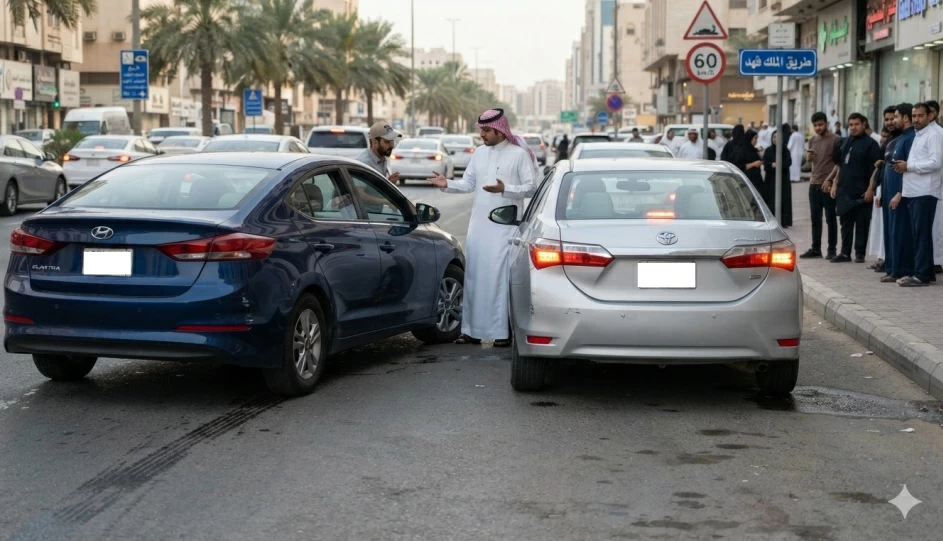
Some minor traffic accidents that do not involve injuries, fatalities, or significant damage create obstacles and cause 'snarls' on streets and roads, resulting in the paralysis of traffic and hindering emergency and ambulance vehicles. This situation worsens during peak hours in the morning and afternoon when students and employees are going to and returning from their schools and workplaces.
To address these issues, the traffic department has permitted the movement of vehicles from the accident site before the arrival of the relevant authority in three cases: the first is if the accident is minor and one of the parties involved has accurately photographed the vehicles, the second is if the accident site poses a threat to public safety and the lives of others and passing vehicles or obstructs traffic flow on the street, and the third case is when instructions are issued by the relevant authority to move the vehicles.
In all three cases, it is advisable to document the accident with clear photos from all angles before moving the vehicles from their location, then safely park the vehicles on the side of the road to avoid any additional collisions. The next step is to contact the relevant authorities to report the details immediately.
Conversely, it is prohibited to leave the vehicle at the accident site in major accidents, and it is also prohibited to fail to assist the injured in the traffic accident, to replace the driver of the vehicle that caused the accident, or to participate in such actions, or to fabricate a traffic accident for any excuse. Every driver involved in a major traffic accident must stop the vehicle at the accident site, promptly inform the relevant department, and provide any possible assistance to the injured.
Some minor traffic accidents that do not involve injuries, fatalities, or significant damage can create obstacles and cause "snarls" on streets and roads, resulting in the paralysis of traffic and hindering emergency and ambulance vehicles. This situation worsens during peak hours in the morning and afternoon when students and employees are going to and returning from their schools and workplaces.
To address these issues, the traffic department has permitted the movement of vehicles from the accident site before the arrival of the relevant authority in three cases: the first is if the accident is minor and one of the parties involved has accurately photographed the vehicles, the second is if the accident site poses a threat to public safety and the lives of others and passing vehicles or obstructs traffic flow on the street, and the third case is when instructions are issued by the relevant authority to move the vehicles.
In all three cases, it is advisable to document the accident with clear photos from all angles before moving the vehicles from their location, then safely park the vehicles on the side of the road to avoid any additional collisions. The next step is to contact the relevant authorities to report the details immediately.
Conversely, it is prohibited to leave the vehicle at the accident site in major accidents, and it is also prohibited to fail to assist the injured in the traffic accident, to replace the driver of the vehicle that caused the accident, or to participate in such actions, or to fabricate a traffic accident for any excuse. Every driver involved in a major traffic accident must stop the vehicle at the accident site, promptly inform the relevant department, and provide any possible assistance to the injured.
Original source: Okaz


Comments (0)
Be the first to comment.