Abdul Hamid al-Awak: Who is the first speaker of the Syrian People's Assembly after the fall of the Assad regime?
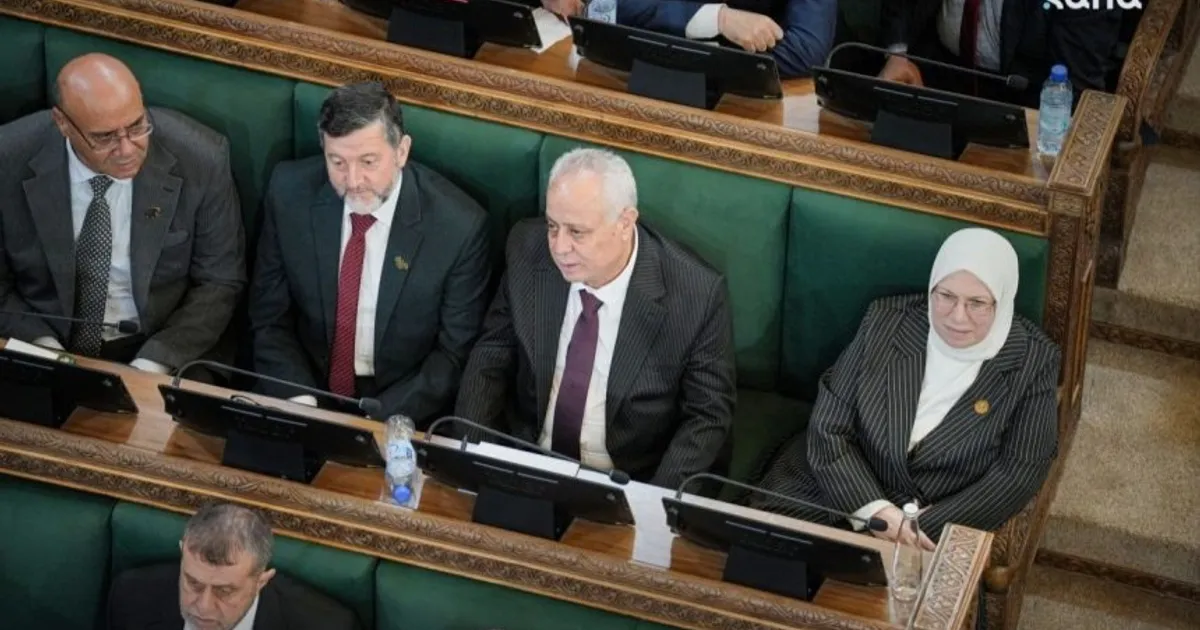
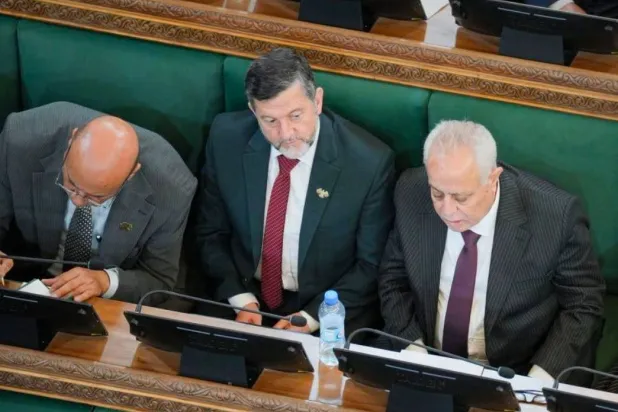
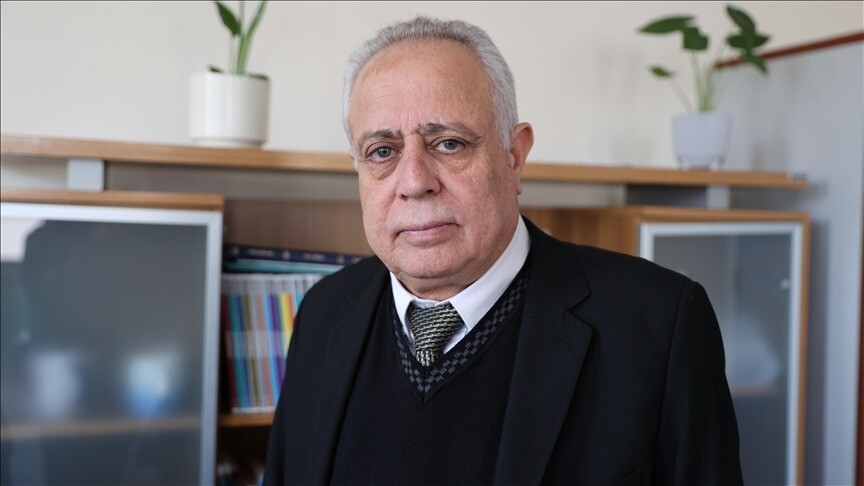
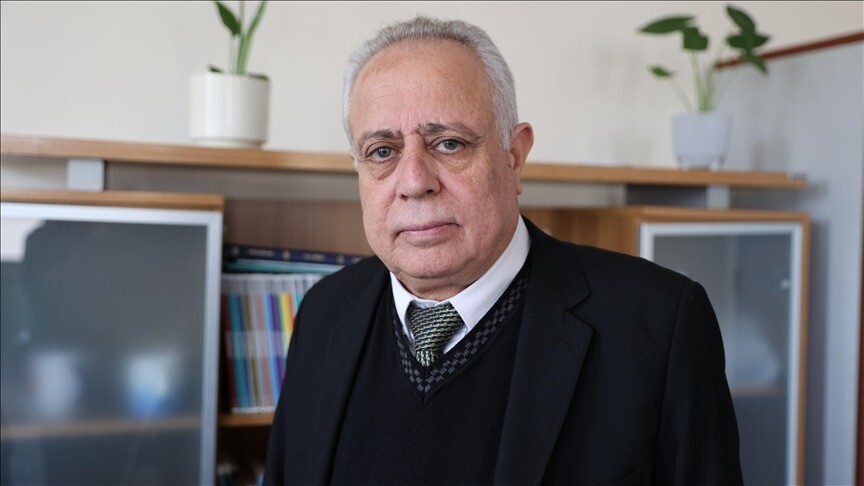
On Sunday, members of the Syrian People's Assembly elected Deputy Abdul Hamid Akeel al-Awak as speaker of parliament, securing 99 votes out of 206 members. Thus, he becomes the first speaker of the Syrian parliament since the fall of Bashar al-Assad's regime.
Al-Awak outperformed Muayad Hayel al-Qablawi and Muhammad Ramez Kurj in the elections for the presidency of the Syrian parliament, according to the Syrian Arab News Agency (SANA).
Who is Abdul Hamid al-Awak?
Al-Awak served as a member of the committee drafting the constitutional declaration, worked as an assistant professor in the Department of Political Science and International Relations at Mardin Artuklu University in Turkey since 2016, and as a lecturer at the Faculty of Law at Al-Furat University.
Al-Awak was born in the city of Hasaka in 1966, obtained a law degree from the University of Aleppo in 1990, a diploma in public law from the Islamic University, a master's in administrative law from the Islamic University in Lebanon in 2009, and a PhD in constitutional law from Beirut Arab University.
Al-Awak held the position of Director of Legal Affairs in the Tigris and Khabur Basin Directorate between 1993 and 1998, and also worked as a judge with the rank of advisor at the Syrian Ministry of Justice between 1998 and 2014.
According to SANA, al-Awak has numerous books, research papers, reviewed articles, conference papers, policy papers, and published research in study centers.
Among Abdul Hamid al-Awak's most prominent publications: 'The Social Contract and Aspirations of Local Communities,' 'Syria's Future Constitution Between the Vision of Specialists and Local Communities,' 'Introduction to the Science of Law,' 'Federalism in Syria and Contemporary Issues,' 'Centralization and Decentralization in Syria Between Theory and Practice,' 'Security Change in Syria,' and 'Liability of Administration and Contractor for Damages Arising from Public Works Contracts.'
Al-Sharaa: A new history for Syria
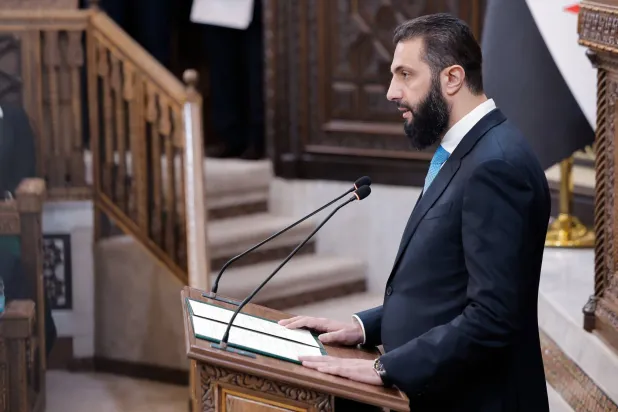
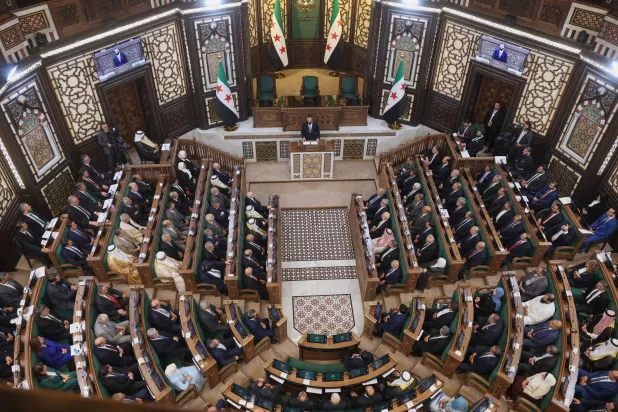
On Sunday, the first session of the Syrian People's Assembly commenced with the presence of President Ahmad al-Sharaa, Head of the Supreme Committee for Assembly Elections Muhammad Taha al-Ahmad, members of the assembly, and a number of ministers.
In a speech before the assembly members, al-Sharaa called for working to bring viewpoints closer and expanding consultation to achieve what benefits the people, noting that 'acceptance and satisfaction are great matters in driving away division, rejecting discord, attracting consensus, and rightness of opinion.'
He added, 'Today, Syria is writing a new history that expresses its civilization, values, and heritage, to craft a new chapter in building modern Syria,' stressing that everyone faces a great responsibility, and that 'what the years of tyranny, war, and destruction have left on man, urbanization, and the economy requires prioritizing the nation's interest, working as one team, making serving the people a goal for every policy, and building the state a criterion for every decision.'
The Syrian president said the country has entered a new phase based on establishing state institutions and building them on foundations of responsibility and efficiency, ensuring the preservation of dignity and respect for the will of citizens.
He pointed out that rebuilding the economy, improving services, creating an attractive environment for investment, providing job opportunities, and increasing production represent a shared national responsibility that requires cooperation of all state institutions, foremost among them the People's Assembly, through enacting legislation that keeps pace with the reconstruction phase, meets the aspirations of Syrians, and supports the development path.
Al-Sharaa urged members of the People's Assembly to exert effort to make the assembly a model of responsibility and efficiency, and to contribute to entrenching a culture of dialogue, rule of law, and respect for institutions, stressing the importance of their role as partners in building 'the new Syria.'
The Head of the Supreme Committee for People's Assembly Elections, Muhammad Taha al-Ahmad, described the convening of the assembly's first session as a 'historic moment' in Syria's journey, reflecting what he considered the sacrifices of the Syrian people, and heralding the beginning of a new phase of national work.
Al-Ahmad explained that the committee supervised the first electoral process under the temporary electoral system, covering 13 governorates and 57 electoral districts, with more than 500 candidates competing, while an electoral body comprising more than 6,800 members selected the assembly members, considering this process a step towards forming an assembly that expresses the will and aspirations of Syrians.
Members of the People's Assembly took the constitutional oath during the session in the presence of al-Sharaa, with the oldest member, Osama al-Assaf, tasked with overseeing the formation of a temporary legal committee to manage the procedures for electing the assembly's presidential office and vote counting.
The formation of the People's Assembly, including the complementing third whose list was announced at the beginning of last July, comes within a transitional constitutional mechanism stipulated by the temporary electoral system, with the aim of enabling the assembly to perform its tasks during the transitional phase the country is witnessing, as a temporary arrangement that does not represent the permanent legislative model in Syria, according to SANA.
Original source: Asharq News

Comments (0)
Be the first to comment.