الأسهم العالمية تستعيد خسائرها والعوائد لأعلى مستوياتها مع استمرار مخاوف التضخم

استقرت عوائد السندات قرب أعلى مستوياتها منذ عقود في ظل ارتفاع النفط بسبب الصراع في الشرق الأوسط، بينما ارتفعت الأسهم فوق أدنى مستوياتها الأسبوعية. وتتزايد توقعات رفع الفائدة مع بيانات اقتصادية متباينة.
Global stocks recoup losses, yields at multi-year highs as inflation fears persist
Global bond yields steadied near multi-decade highs on Friday as high oil prices driven by the conflict in the Middle East stoked inflation and interest rate hike fears, while U.S. and European stocks edged slightly above their lows for the week.
News that the U.S. administration imposed higher tariffs on goods from 60 trading partners did little to improve the inflation outlook, with 30-year U.S. Treasury yields heading towards their highest since 2007, while Germany's 10-year bond yield—the benchmark for the euro zone—hovered near its highest since 2011.
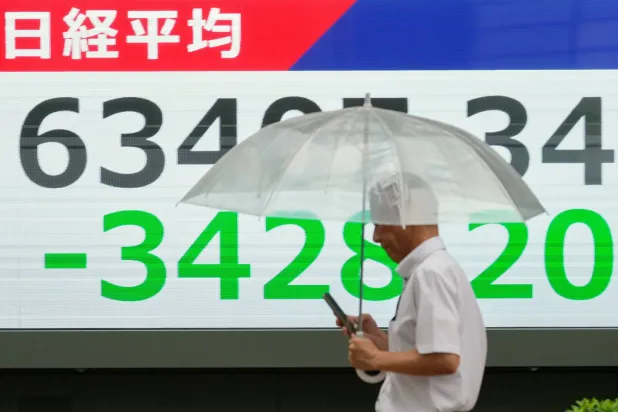
Europe's STOXX 600 rose 0.3% after falling over 1% in the previous session, on track for a slight weekly gain, while U.S. stock index futures also pointed to a modest recovery following Thursday's weakness.
Nasdaq futures edged up 0.1%, with Intel shares jumping nearly 4% in premarket trading after strong earnings. Tech stocks came under pressure this week as investors grew more anxious about billions of dollars in AI spending that has yet to prove its worth decisively.
Brent crude fell 3% to $97.69 a barrel, after surging 7% overnight to a two-month high of $102. Iran-aligned Houthi attacks on Saudi oil tankers in the Red Sea threaten to cut off a second vital Middle Eastern artery for global oil supplies, alongside Iran's near-total closure of the Strait of Hormuz.
President Donald Trump threatened "major military punishment" against Iran and its Houthi allies, while the U.S. military launched strikes for the 13th consecutive night. Shanel Ramjee, co-head of multi-asset investment at Pictet Asset Management in London, said: "The dollar has been rising for a few days, clearly signaling increasing risk, and oil prices staying at these elevated levels for several days have already begun affecting the correlation of different assets."
Most major currencies steadied against the dollar on Friday, though the dollar index was on track for its biggest weekly jump in about a month, largely driven by rising expectations of a Federal Reserve rate hike.
Markets suggest traders believe central banks will likely raise borrowing costs, with a one-third probability of a Fed rate hike as soon as next week—a dramatic shift from just a week ago—while a September move is fully priced in.
The European Central Bank kept rates unchanged on Thursday, but a September rate hike is nearly 70% priced in. Data on Friday offered a more optimistic economic outlook, with German private sector returning to growth in July for the first time in four months, and France's private sector contraction easing this month.
Global tech stocks fell earlier this week after Alphabet and Tesla, the first two of the 'Magnificent Seven' tech giants to report this season, posted results that unsettled investors as both burned through cash in the last quarter due to heavy AI infrastructure spending.
Gabriele Foà, global credit portfolio manager at Algebris Investments in Milan, said: "U.S. equity valuations have risen significantly despite weak cash flows generated by the tech sector, which is the most volatile in the market. Overall, this market is showing some positive signs."
The U.S. dollar is set for strong weekly gains on rate hike expectations. In bond markets, the benchmark 10-year U.S. Treasury yield hit a more than 18-month high of 4.7135%, up 14 basis points this week. The 30-year yield steadied at 5.1606%, not far from its 19-year high of 5.201%.
The yen hovered near a 40-year low of 163.77 per dollar, prompting warnings from the U.S. Treasury about excessive currency volatility and from Japan's finance minister.
Original source: Al-Riyadh




Comments (0)
Be the first to comment.