Export Restrictions Curb China's Fuel Despite June Improvement
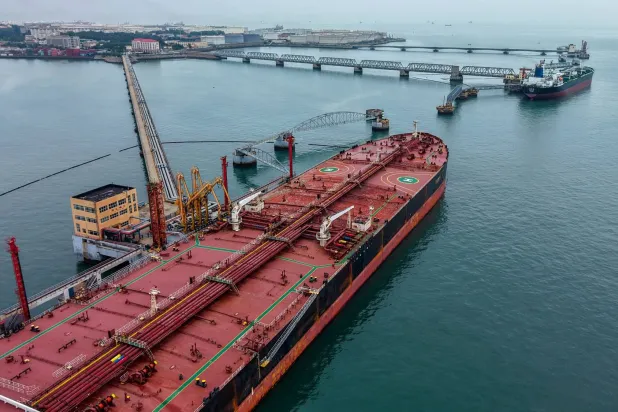
Chinese trade data showed a limited improvement in exports of refined oil products in June compared to the previous month, but levels remained far below those of last year, a direct reflection of the restrictions Beijing has imposed since mid-March to protect domestic supplies after the outbreak of the Iranian war and disruption of crude oil flows to Asia.
China's exports of gasoline, diesel, and jet fuel to markets outside Hong Kong and Macau amounted to about 805,000 tons in June, up 11 percent from May, but down 64 percent compared with the same month last year. This disparity reveals that the monthly improvement does not represent a full return to normal export levels, but rather a limited easing within a policy that still prioritizes securing domestic market needs.
China's policy carries broad regional significance, as the country is one of Asia's largest fuel exporters. The reduction in its exports coincided with Asian refineries having to cut production due to a shortage of crude supplies linked to the war, tightening supply and raising pressure on fuel prices in the region.
China's gasoline exports, amounting to about 76,800 tons outside Hong Kong and Macau, were mainly distributed among Asian markets, led by Cambodia and Sri Lanka. Diesel exports reached about 246,000 tons, with Bangladesh being the largest single destination at about 118,000 tons. Jet fuel exports fell to 426,000 tons, down 15 percent from May and 64 percent year-on-year, with Vietnam topping the list of buyers.
* Chinese caution
The weakness in jet fuel exports in particular reflects China's continued caution in allowing large quantities of strategically important products to leave, at a time when energy markets face risks related to shipping costs, disrupted trade routes, and high crude prices. It also indicates that Beijing seeks to maintain larger safety margins to meet domestic demand, even if that leads to tight supplies in neighboring markets.
In contrast, fuel oil, mainly used for bunkering, performed differently, with exports rising 55 percent month-on-month to 2.73 million tons, the highest level in 2026, and up 18 percent compared with June last year. Total exports of this product rose 7.7 percent in the first half of the year to 10.87 million tons. This increase is linked to the price advantage enjoyed by Chinese ports, as low-sulfur fuel oil in Zhoushan and Shanghai was about $50 per ton cheaper than in Singapore, the largest regional bunkering hub, encouraging shipping companies to increase their purchases from Chinese ports.
China's fuel oil imports also recovered in June, rising 76 percent from May to about 983,000 tons, but remained 30 percent below their year-ago level. Demand from refineries remained weak, as refineries preferred to buy cheaper crude oil and use it as feedstock.
These moves show that Beijing's policy does not completely close the export door, but rather manages a precise control over the types of products and quantities allowed for export. While it continues to restrict gasoline, diesel, and jet fuel to protect the domestic market, it leverages its competitiveness in fuel oil to enhance the presence of its ports in the bunkering trade. In the coming period, Asian fuel markets will remain vigilant for any increase in Chinese export quotas, as any further easing of restrictions could help ease supply shortages and prices. However, the continuation of the war and disruption of crude supplies will make domestic energy security a priority for Beijing, meaning the return of exports to last year's levels remains unlikely in the near term.
Original source: Asharq Al-Awsat


Comments (0)
Be the first to comment.