Kuwait and Bahrain in the Crosshairs of Iranian Attacks.. Why Are They Repeatedly Targeted?
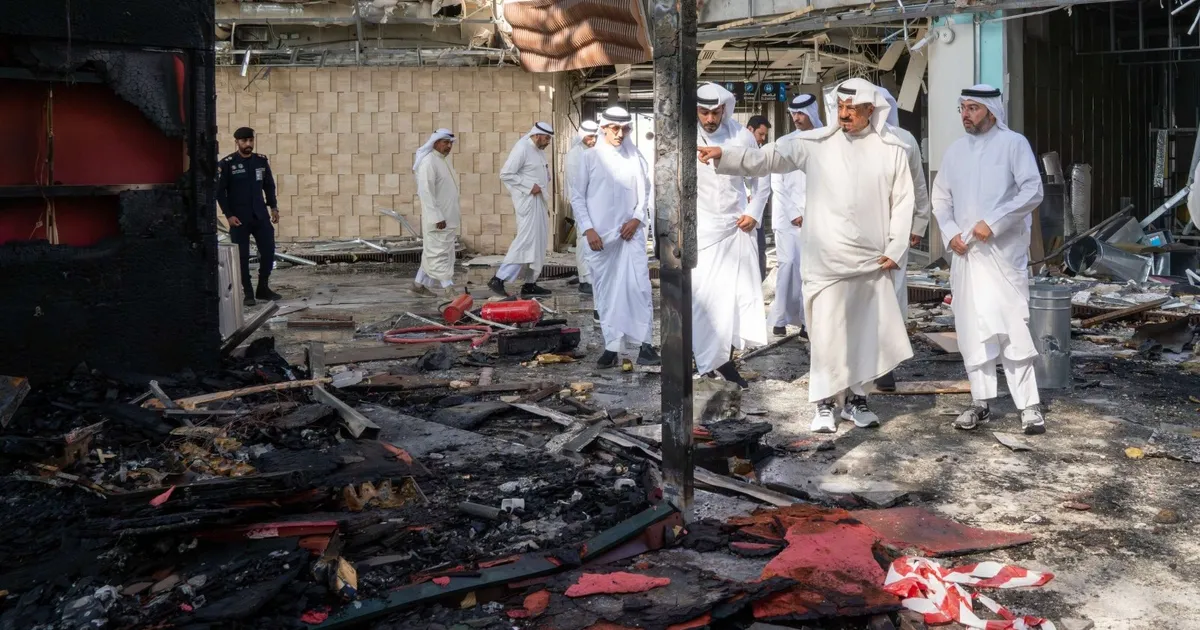
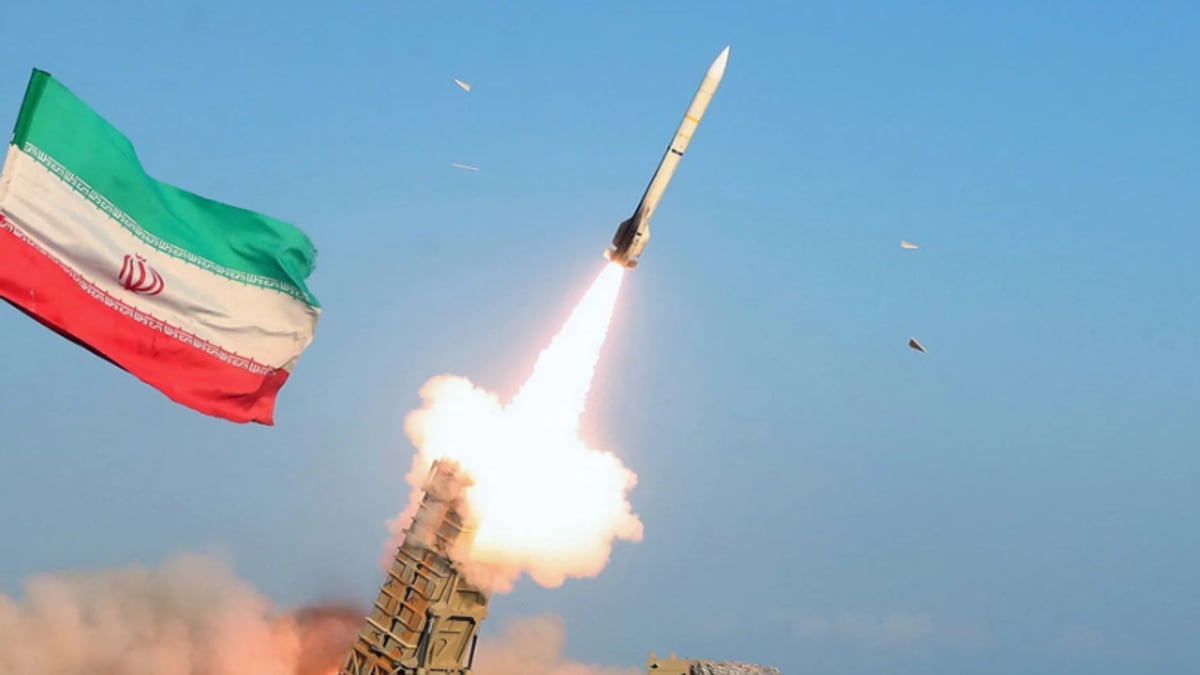
Since the start of the US-Israeli war with Iran on February 28, 2026, Kuwait and Bahrain have been subjected to a series of missile and drone attacks, whether launched directly from Iran or in some cases from Iraqi territory.
These two countries were not alone in those attacks, as the first rounds of escalation included Qatar, UAE, Jordan, and Saudi Arabia. However, the latest strikes after the ceasefire and until July 8 and 9 were mainly focused on Kuwait and Bahrain, as well as Qatar and Jordan to a lesser extent. The question relates to the factors that make Kuwait and Bahrain repeated targets of Iranian attacks.
Iran claims that its strikes target American military installations and bases in response to US operations inside its territory, while Kuwait and Bahrain, along with the GCC countries, consider these attacks an assault on their sovereignty and a direct threat to the safety of civilians and civilian facilities.
Iranian military statements repeatedly mention, in more than one round, Ali Al Salem Air Base and the US naval facility in Bahrain as targets of attacks, while reports also indicate damage from attacks on civilian targets in Kuwait and Bahrain.
On June 3, Kuwait International Airport was subjected to an Iranian attack that, according to Kuwaiti authorities, killed one person and injured 63 others, in addition to damage to airport buildings and civilian and diplomatic facilities.
Limited Area and Narrow Strategic Depth
The factor of area and geographical depth always stands out regarding many GCC countries.
Kuwait's area is about 17,800 square kilometers, while Bahrain's land area is about 786.8 square kilometers.
This means that important military, civilian, and population facilities are concentrated within limited geographical ranges, reducing options for distributing vital facilities or moving them away from danger zones.
However, small area does not automatically mean a weak ability to intercept missiles and drones, as the effectiveness of air defenses also depends on the launch site, type of weapon, its trajectory, number of projectiles used in a single attack, and the level of early warning.
Faisal Abu Sulaib, professor of political science at Kuwait University, believes that the Iranian leadership may view the smaller GCC states as the 'weakest link' through which it can achieve a 'structural weakening' of the Gulf system.
Abu Sulaib told Al-Sharq that small area and lack of geographical depth may lead Tehran to believe that repeated attacks can cause 'fatigue in the defensive structures' of targeted states.
Southern Iraq Axis
Geography gains additional importance in the case of Kuwait, located at the head of the Arabian Gulf and adjacent to southern Iraq, where armed groups and networks linked to Iran or the Revolutionary Guard are active.
Abu Sulaib says, 'The geographical factor for Kuwait, and its proximity to southern Iraq, where pro-Iranian Iraqi militias are concentrated, adds another path of threat,' noting that a number of drone attacks targeting Kuwait were launched from Iraqi territory.
Reuters reported, citing eight Iraqi sources, that the Revolutionary Guard has established small cells inside Iraq to carry out drone attacks on Gulf states hosting US forces.
The agency said that these cells launched at least seven drones from areas near Basra and Samawa towards targets in Kuwait, Saudi Arabia, and the UAE between April and May.
This path gives Tehran the ability to pressure Kuwait from more than one direction, and also reduces the warning time available for some types of drones launched from southern Iraq, compared to attacks starting from Iranian territory.
Demographic Dimension
Abu Sulaib adds another factor related to attempts to exploit political divisions and the sectarian dimension, especially in Bahrain. He says Tehran may bet on generating internal tensions in parallel with external military pressure, taking advantage of the effects of divisions that emerged during the 2011 protests and thereafter.
Bahraini political advisor Ahmed Al Khuzai agrees that focusing on Kuwait and Bahrain 'cannot be understood only from a geographical angle,' pointing to security and social dimensions that intersect with military calculations.
However, sectarian composition or family and cultural ties do not, in themselves, constitute evidence of security or political affiliation with Iran. Therefore, a distinction must be made between the components of Kuwaiti and Bahraini societies and specific individuals or organizations that authorities have documented charges against.
In this context, on May 9, Bahrain announced the arrest of 41 people it said belonged to an organization linked to Iran's Revolutionary Guard, noting that legal proceedings against them were ongoing.
The nature of the existing procedures means that the case should be presented as official charges under consideration, not final judicial rulings.
In Kuwait, authorities announced the arrest of four infiltrators who they said confessed to belonging to the Revolutionary Guard and entering Bubiyan Island to carry out hostile acts.
There is also a hypothesis indicating that the size of networks linked to Iran in Kuwait and Bahrain exceeds their total in the rest of the Gulf.
Messages to Washington and Gulf States
Al Khuzai believes that targeting Kuwait and Bahrain achieves multiple goals for Tehran at the same time: sending a direct message to Washington by attacking sites hosting US forces, raising the political and security cost borne by the host countries, and testing the ability of air defense systems to deal with repeated attacks.
According to Al Khuzai, the attacks can also exert internal pressure on governments by combining the risk of external strikes with the need to protect civilian and vital facilities and deal with any potential internal security threats.
Original source: Asharq News



Comments (0)
Be the first to comment.