How did Saudi Arabia's 'buffers' succeed in protecting its economy from the fires of war?
Fitch's affirmation of Saudi Arabia at 'A+' with a 'stable' outlook raises a fundamental question: How did the Saudi economy maintain its financial strength?
At a time when the war between the United States and Iran pushed the region into one of the most intense waves of tensions in years, re-closed the Strait of Hormuz, and raised oil, shipping, and insurance prices, Fitch's affirmation of the Kingdom's credit rating at 'A+' with a 'stable' outlook raises a fundamental question: How did the Saudi economy maintain its financial strength at the heart of the crisis?
The answer is not linked to rising oil prices alone, but to an integrated system of reforms accumulated over years, including building financial and logistical buffers, diversifying funding sources, developing energy infrastructure, and strengthening the role of the private sector, making the economy more capable of absorbing external shocks.
As the international financial and business community awaits the issuance of the comprehensive and detailed report of the IMF Executive Board on the 2026 Article IV Consultation with the Kingdom this month, data from the IMF mission, the Saudi Central Bank, and the balance of payments reveal how the Saudi economy passed one of the toughest geopolitical tests in recent years.
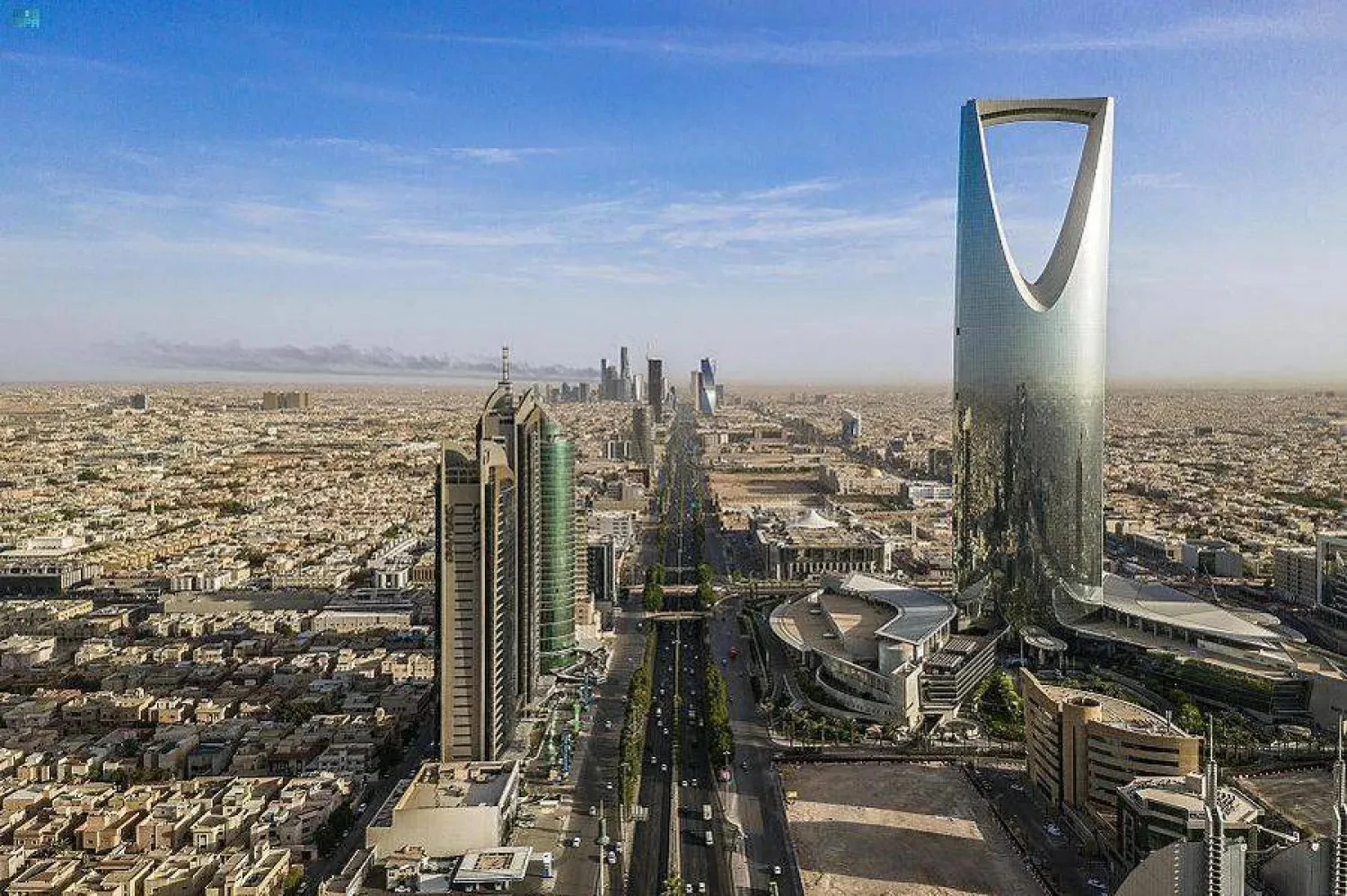
Aerial view of the Saudi capital (Reuters)
Alternative Arteries
When Tehran announced the closure of the Strait of Hormuz, through which about a fifth of global oil trade passes, many believed that Gulf oil exports would face widespread paralysis. However, Saudi Arabia had been preparing for this scenario for decades, by building an integrated system to secure its exports away from the strait.
This strategy included developing the East-West Pipeline, which transports oil to Yanbu ports on the Red Sea, expanding its capacity, establishing strategic storage centers in key markets around the world, and maintaining the world's largest spare production capacity.
When the crisis erupted, this system enabled Saudi Aramco to continue fulfilling its export commitments; it supported supplies via the pipeline, benefited from external inventories, and its ability to operate part of its spare production capacity, which limited the decline in shipments and mitigated the impact of the strait's closure on Saudi oil flows.
Why Did Inflation Remain Low?
Although the war pushed oil, shipping, and marine insurance prices higher globally, the transmission of this shock to the domestic economy remained limited compared to many other economies.
This is due to the efficiency of supply chains, the stability of the riyal's exchange rate pegged to the dollar, high strategic inventories of basic commodities, along with fiscal and monetary policies that maintained market stability.
Therefore, the IMF expects average inflation in 2026 to be only about 2.3 percent, a level that remains low compared to most advanced and emerging economies.
Current Account Surplus
At first glance, it might seem that the war should have harmed the Kingdom's external accounts, but first-quarter data showed the opposite. The current account recorded a surplus of $4.1 billion, the first surplus recorded after nearly two years of deficit, compared to a deficit of $8.2 billion in the last quarter of 2025.
This shift resulted from a dual equation: while exported oil quantities declined due to disruptions, higher prices compensated for a large part of this decline, while imports slowed due to shipping disruptions, and the travel balance improved with higher visitor spending within the Kingdom.
Tools That Enhanced Stability
The current account surplus alone did not strengthen the economy's resilience; it was also supported by a number of financial tools with which the Kingdom entered the crisis. Data showed that the Kingdom entered the crisis with strong financial tools and factors that helped it maintain stability, represented by the following factors:
Repatriation of Foreign Assets: Investment operations by government entities and the Saudi sovereign wealth fund recorded a record jump in liquidating foreign assets during the first quarter of 2026, with the value of assets sold and transferred reaching about $22.6 billion, compared to only $4 billion in the last quarter of 2025 (a growth of 460 percent). This sharp growth reflects an accelerating pace of redirecting external liquidity inward.
Reserve Asset Stability: In contrast to the jump in liquidation of foreign assets by government entities, reserve assets at the Saudi Central Bank maintained strong and balanced stability levels, reaching 1.862 trillion riyals (equivalent to $496.5 billion) at the end of the first quarter, recording an annual increase of 9.32 percent. This scene illustrates the efficiency of distribution of financing roles; government entities preferred to rely on rotating their investment portfolios and liquidating part of their foreign assets to finance local projects, rather than resorting to direct withdrawals from the Kingdom's official monetary reserves, which strengthened the Kingdom's financial security buffers and creditworthiness globally.
Creditworthiness: These indicators achieved in the balance of payments and the size of reserve assets were directly reflected in the Kingdom's sovereign creditworthiness; the major global credit rating agencies confirmed in their 2026 reviews the structural strength of the Saudi economy's position and its high resistance to regional geopolitical shocks. Fitch and S&P affirmed their ratings of the Kingdom at 'A+' with a 'stable' outlook, while Moody's maintained its high rating at 'Aa3'. According to issued reports, this credit affirmation is essentially based on the enormity of sovereign net foreign assets and financial reserves that cover external payments for long periods exceeding the average of similarly rated countries, along with the proactive flexibility of non-oil activities and the ability to provide alternative financing channels to implement Vision 2030 projects without compromising the state's basic monetary and reserve cover.
Proactive Financing: The government exploited the strength of its credit position and low levels of public debt (34.4 percent of GDP) to secure external financing worth $13 billion during the first quarter, according to the announcement by the National Center for Debt Management last January, before the crisis escalated. An additional approximately $14 billion was secured through issuing international sukuk, commercial loans, and bonds by major Saudi banks and companies, benefiting in turn from the state's high credit ceiling, thus raising total borrowing by residents from abroad to $27 billion.
Original source: Asharq Al-Awsat




Comments (0)
Be the first to comment.