In Oil Chess: America the "Queen", Russia the "Rook", Saudi Arabia the "King"

In Oil Chess: America the "Queen", Russia the "Rook", Saudi Arabia the "King"
Abdulrahman Abed
Monday, July 20, 2026 15:09 | 4 minutes read
Former US National Security Advisor Zbigniew Brzezinski described global oil wars as 'chess battles' that require patience and how to move pieces according to a calculated plan ending with a fatal blow to the opponent. As the American thinker who coined this term in his 1997 book 'The Grand Chessboard' said, energy reserves are strategic pieces moved by reducing or increasing at highly sensitive times to encircle competitors or force them to retreat under organized rules that ensure market share protection and secure sea lanes. And like chess, there are players who emerged during the last century, most notably the United States representing the 'Queen', Russia representing the 'Rook', while China is described as the 'Bishop'. As for the 'King' according to Brzezinski, it is Riyadh as the world's largest surplus production capacity. Out of 5.5 million barrels per day surplus, the Kingdom alone has 3.1 million barrels according to OPEC.
Zbigniew's theory repeats itself today in a multi-party chess match that pushed the Saudi 'King of Energy' to preempt the move by Aramco announcing the award of massive billion-dollar contracts to US company Halliburton to develop the Jafurah field, one of the largest unconventional gas fields in the world. Under these contracts, the first intelligent hydraulic fracturing platform in the region will be introduced, making it not just commercial deals resulting in freeing one million barrels of oil per day, but localization of high-tech weaponry ensuring long-term sovereignty for the Kingdom, especially since the new surplus will be directed to Asian markets to keep Aramco the strongest pole.
Mon, 20 2026
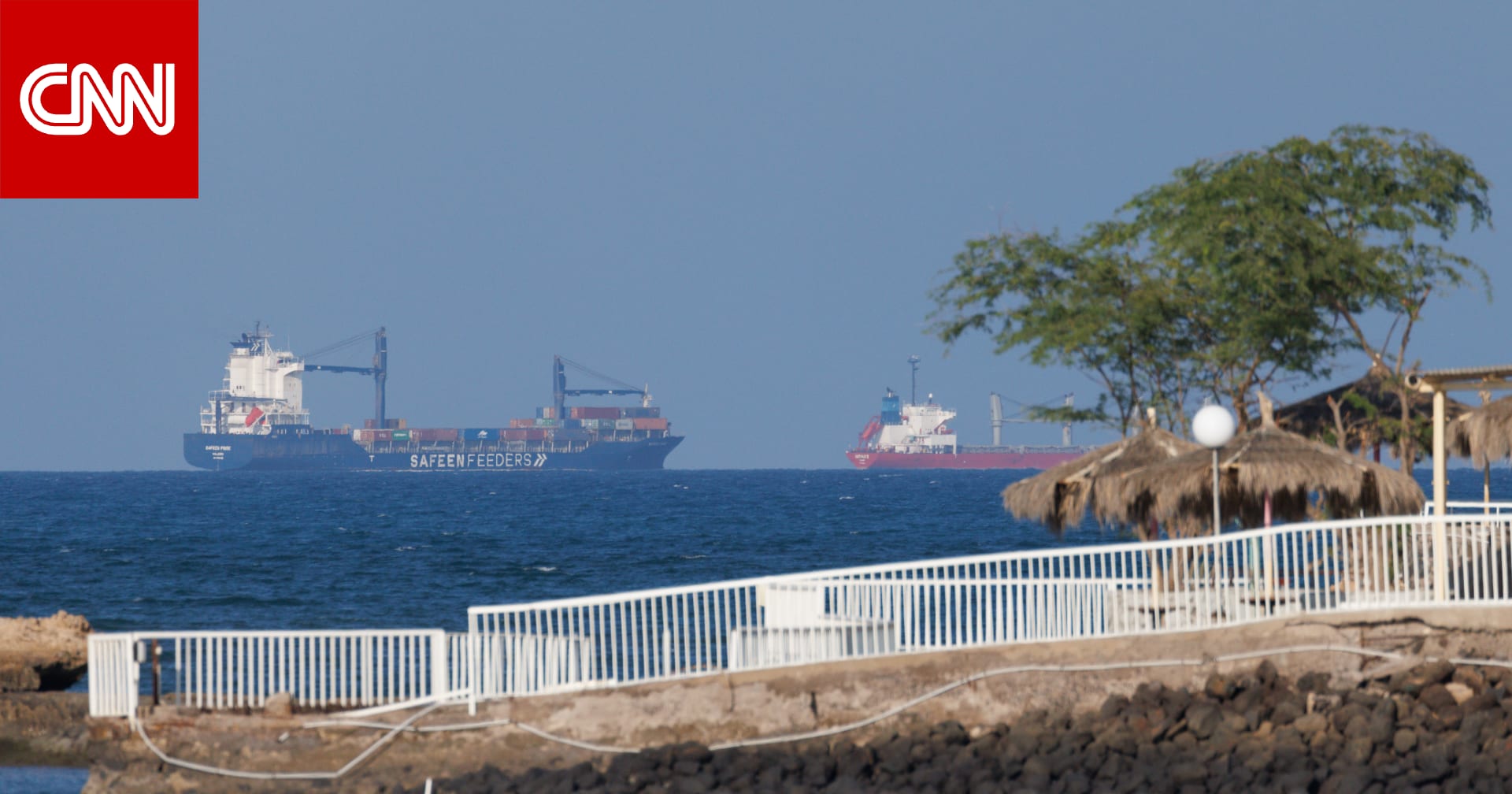
Before this offensive move on the global chessboard, Saudi Arabia secured its defenses by Aramco announcing a historic cut in the price of its Arab Light crude directed to Asia by $11 per barrel for August shipments, according to Bloomberg. This is the largest reduction in 26 years for the yellow continent, which imports 80% of total Saudi oil exports. As for the reasons for the decision, it is to ensure that Asian refineries do not rebel against Saudi Arabia in light of moves by countries that exploited the gradual easing in the Strait of Hormuz to increase their production, such as Tehran, which announced pumping 50 million barrels after the calm, and Russia, which resorted to discounts to win India and China, and other offers from Kuwait, Iraq, and the UAE that prompted Saudi Arabia via 'OPEC+' to increase production by 188,000 barrels per day in a step described by Reuters as 'ensuring the rotation of the Kingdom's tanker fleet in Asian markets'.
Saudi Arabia entered chess battles in 1973 amid tense Arab and international atmospheres. At that time, the late King Faisal bin Abdulaziz made his historic decision to reduce production by 5% monthly followed by a complete oil embargo on the United States and other countries, causing markets to ignite and the Western economy to become paralyzed. With another move from Riyadh, oil prices rose by 400% according to the World Bank, reaching $12 per barrel after being no more than $3. Those results were not just an economic victory for Saudi Arabia nor a consolidation of its position as the strongest oil power in the Middle East, as described by the late US National Security Advisor Henry Kissinger, but also proved that the new player in chess battles is capable of ending rounds in the fastest ways.
Sat, 18 2026
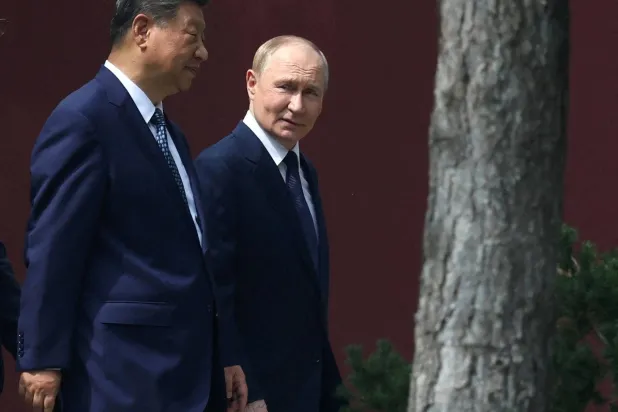
Victory in chess sometimes only requires hinting at the next move, and this happened in 2018 when Russia tried to avoid OPEC's commitment to reduce production and wanted to pump additional quantities into the market for its benefit. The Kingdom only followed the policy of patience and sufficed with hinting at Aramco's ability to open the production taps to maximum capacity exceeding 11 million barrels per day and flooding the market. With this announcement, black gold prices fell to a level that Moscow could not bear, which retreated, and Crown Prince Mohammed bin Salman and Russian President Putin appeared on the sidelines of the G20 summit in Argentina 2018 and shook hands in a famous way that news agencies carried as an announcement of the Saudi 'King's' victory and the end of the silent price war. Economically, this resulted in Brent crude prices returning to hover around the $80 barrier, saving the budgets of producing countries.
If the 'Russian rook' retreated, the American 'queen' also lost its round that began in 2022 with the outbreak of the Russian-Ukrainian war and the increase in inflation in the United States. At that time, Joe Biden exerted political and media pressure on Riyadh to demand an increase in oil production to save his position in the midterm congressional elections. However, the Saudi 'King' refused and affirmed that the decision is made based on market fundamentals, not Washington's agendas. Saudi Minister of Energy, Industry, and Mineral Resources Prince Abdulaziz bin Salman stated at the time that 'decisions are based on supply and demand balance.' The Saudi Foreign Ministry also affirmed its rejection of any policies not based on economic realities of energy markets.
Mon, 20 2026
Faced with this move, Biden was forced to come himself to the Jeddah summit in July 2022 and tried to convince the Saudi side to increase supply, a step that was met with refusal. Then after 3 months, the 'OPEC+' alliance announced a production cut of 2 million barrels per day, a step described by the White House as 'disappointing'. But in the face of this strategic firmness, global energy markets regained their balance, and Aramco recorded unprecedented profits of $161 billion at that time.
Saudi Arabia's skill in choosing the timing to increase production to lower prices or vice versa, and its ability to impose its decision in coordination with producing countries and through 'OPEC' and 'OPEC+' institutions, has not only served the Kingdom, but primarily served the interest of peoples whom Riyadh protected from the random energy price hurricane or the desire of some countries to monopolize that commodity which controls the prices of 90% of other commodities. From this standpoint, Saudi Arabia is fighting its new round today in the Asian market and increasing its production to maintain the energy market at a time when the global economy suffers from successive crises and conflicts. The question now remains: when will Riyadh say to those around it: checkmate.
Definitions
Original source: Aleqtisadiah


Comments (0)
Be the first to comment.