Burnham: UK Labour Party mishandled Gaza war
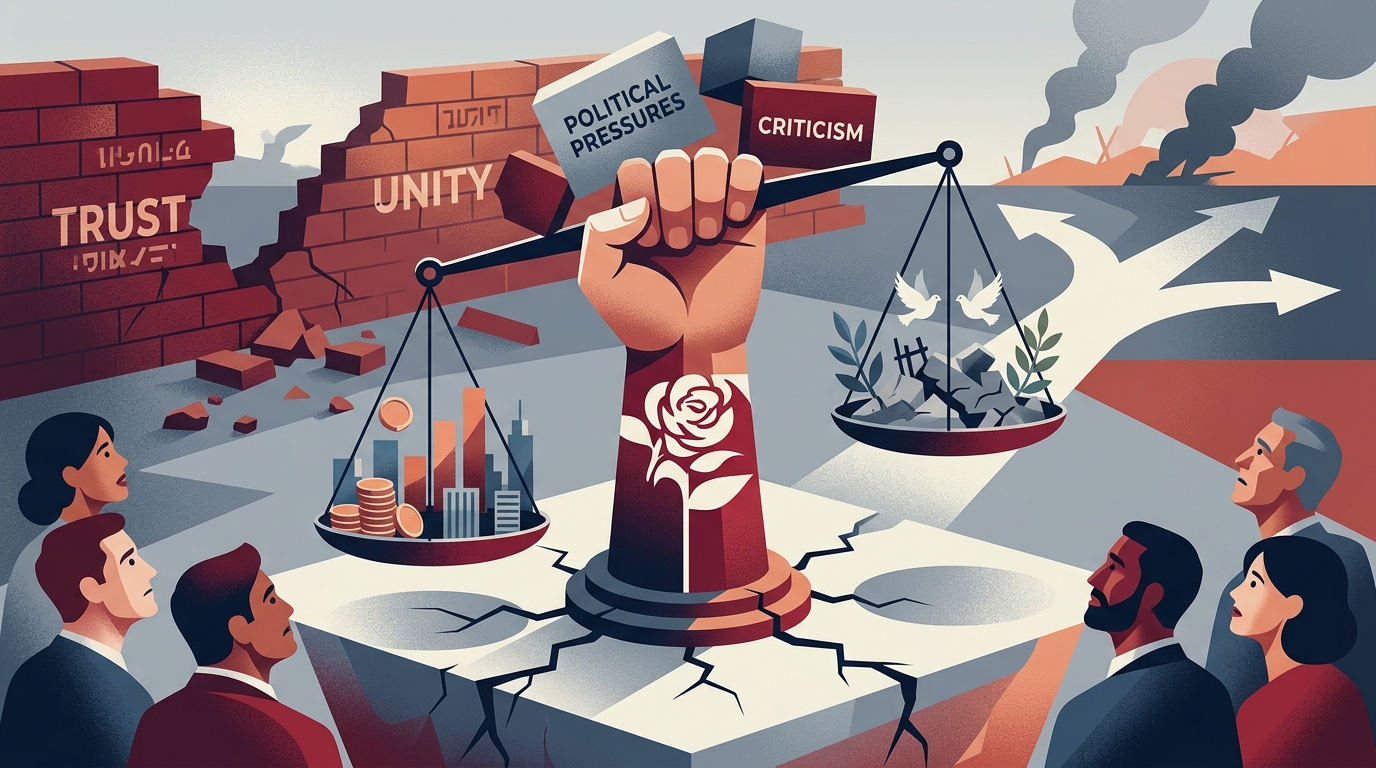
Andy Burnham, the frontrunner to succeed Keir Starmer as leader of the Labour Party and Prime Minister of the UK, apologised for the party's initial stance on Israel's war on the Gaza Strip.
Burnham pledged to adopt a tougher policy towards the Israeli government, in what was described as a notable shift in the party's approach to the Middle East.
In an interview with the British newspaper The Guardian, Burnham said he would increase pressure on the Israeli government by imposing additional sanctions on individuals and entities, and studying a ban on trade in goods from illegal Israeli settlements.
He added: 'I know many feel that my party did not act correctly at the start of the Israeli military operations in Gaza, and I apologise for that. Our response was often inadequate, and we must do better.'
Burnham stressed that Britain is required to exert more effort to pressure Israel, saying: 'Yes, we have taken some important steps, but let's be honest, the UK was very late in calling for a ceasefire, and we must now strengthen our approach.'
But he refrained from describing what is happening in Gaza as 'genocide', a demand adopted by figures on the left wing, saying there is 'mounting evidence' of possible war crimes, but that it is for international courts, not politicians, to decide.
He added: 'I was deeply shocked by what I have seen and read about the destruction in Gaza. There is mounting evidence that war crimes may have been committed. There must be accountability for the scale of suffering endured by the people of Gaza, but ultimately it is up to the international courts.'
In response, Green Party deputy leader Mothin Ali accused Burnham of hiding behind international courts, saying that acknowledging that the British government knows of war crimes would entail a legal obligation to immediately stop arms sales to Israel.
Criticism of Starmer's stance
The Guardian noted that Burnham's apology could embarrass Labour leader Keir Starmer, whose comments to LBC radio after October 7, 2023 sparked widespread controversy after he said Israel 'has the right' to cut off electricity and water to Gaza.
It took Starmer about ten days to clarify his remarks, which angered many Muslim and progressive voters. In 2025, he faced months of pressure, including from ministers in his government, before officially recognising the state of Palestine.
Burnham pointed out that the government later took important steps, including official recognition of the state of Palestine, imposing sanctions on Israeli ministers and settlers involved in violence, and restricting arms export licences to prevent the use of British bombs or ammunition by the Israeli military in Palestinian territories.
However, many Labour leaders believe that Starmer's early mistakes and delay in adjusting his position have cost the government the ability to convey its message on Gaza, limiting the impact of the measures it later took.
A poll conducted by Opinium for the Palestine Solidarity Campaign in June showed that two-thirds of Labour voters who later switched to the Green Party said the party's stance on Gaza was one of the reasons for their change in voting preference.
Balancing Gaza and anti-Semitism
Burnham sought to reassure the Jewish community in the UK, stressing that his tougher stance on the Israeli government does not conflict with his firm stance against anti-Semitism, and he reiterated his condemnation of the Hamas attack on October 7.
He said: 'There is no contradiction between pursuing a zero-tolerance policy on anti-Semitism and holding Benjamin Netanyahu's government accountable. I will continue to take a fair and balanced approach and defend what is right.'
He described the suffering of Gaza's residents as 'a stain on our collective conscience', noting the continued killing of Palestinian civilians, insufficient humanitarian aid, and the Israeli military's ongoing expansion of its areas of control.
He also criticised the sharp rise in settler violence in the West Bank and East Jerusalem, and the continued expansion of illegal settlements that lead to the displacement of Palestinian communities.
He said Prime Minister Netanyahu's government is working to make the two-state solution impossible, adding: 'That is why we must do more, including studying the imposition of additional sanctions on those involved in acts of violence in Gaza, as well as exploring measures to ban trade in goods from illegal settlements.'
The newspaper noted that British Foreign Office officials are already studying mechanisms to prevent the entry of goods and services from settlements into the UK, while avoiding harm to legitimate trade with Israel.
Original source: Asharq News


Comments (0)
Be the first to comment.