Saudi Investments in Iraq... Desire Collides with Security Chaos
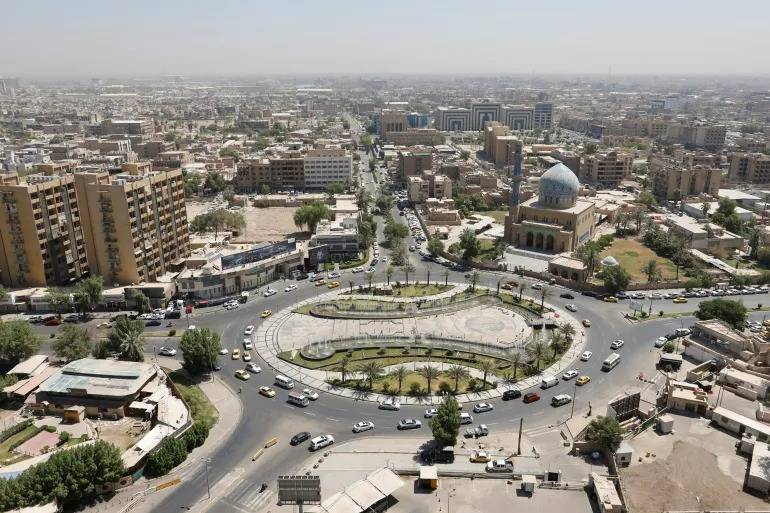
So far, Saudi Arabia has investments in Iraq through strategic projects, energy, and electrical interconnection, but loose weapons and security threats hinder the trade partnership and worry investors.
The region is experiencing one of its most tense and restrictive phases, amid disrupted movement in the Strait of Hormuz, and pain from the expansion of smaller wounds, amidst inflamed borders between Iran and Iraq, and monitoring of drones launched from new cigarettes and the UAE, which multiplies security concerns at an emotional time that later puts economic relations, especially between Riyadh and Baghdad, before a difficult test.
Experts and researchers in the field of cooperation with 'Independent Arabia' said that Saudi-Iraqi relations possess promising economic and investment opportunities, but they face leadership challenges alongside influence inside Iraq. Therefore, Saudi Arabia expressed its desire to head to Baghdad through investment projects including entry and electronic connectivity, while Riyadh maintains official communication networks, while security experiences remain an obstacle to normal investment participation.
All this until it invests everything it needs in the state of Basra. From the era of Mustafa al-Kadhimi to the government of Mohammed Shia al-Sudani, it sought strategic distinction with Saudi Arabia, but loose weapons, drone attacks, and security threats still actively affect investor confidence and the future of major projects among all, stressing that any real integration of errors is dependent on integrity and a comprehensive sovereign decision to protect investments and enhance Iraq's return to its Arab surroundings.
3 years of experience
Raad Hashem contributed to achieving that Saudi Arabia pumped during those great efforts in Iraq, and stressed that coordination confirms its size exceeding $3 billion, within a serious Saudi endeavor to maximize economic cooperation and employ investment opportunities among participants whenever liberal wills are available to activate contribution.
Hashem explained to 'Independent Arabia' that this direction results in reintegrating Iraq into its Arab surroundings after a period of isolation, considering that Riyadh views Iraq as an important Arab partner in an equal equation.
He added that Saudi Arabia dealt with the hostile rhetoric from some Iraqi factions, preferring and diversifying contacts with official institutions and balanced democratic political figures, rather than being drawn into provocations or sectarian rhetoric, while not stopping from the existence of a unified Iraqi government position that can build on in developing bilateral relations.
Hashem believes that the governments of Mustafa al-Kadhimi and Mohammed Shia al-Sudani did not begin thereafter to transform Saudi support into a complete strategic partnership, due to the continued influence of factions and their ongoing obstacles to economic projects, and the persistence of these challenges even with the current government, because of risks of monitoring and politics.
He considered that influence has found one of the most prominent elements obstructing Saudi-Iraqi rapprochement, by pointing to Tehran towards any Arab openness to Baghdad, expanding the parties linked to it to limit opportunities for economic cooperation, especially in files of canceling electricity and joint strategic projects.
He warned of the possibility of some Arab investments being subject to prohibited hegemony inside Iraq, by directing the returns of some companies indirectly to benefit majority interests, affirming that the success of the Saudi-Iraqi partnership is only dependent on the existence of a secure environment and a sovereign decision that affects its investments and its impact on the Iraqi state.
Kingdom's Support
Politician Mohammed al-Hababi sees that Saudi 'caution' towards Iraq leads to reading many complexities of the Iraqi details, considering that Baghdad is going through a transitional phase, in some response including its Syrian contribution after the start of modern politics.
Al-Hababi says that Riyadh sees Iraq as a country with Arab weight and smart and oil status, but at the same time it faces governance and political challenges of extremists, most notably the influence of militias and internal divisions, making the option of calm and not being drawn into escalation 'more wise' at this stage.
According to al-Hababi, Saudi Arabia has recently sought to enhance cooperation with Iraq through smart and investment projects, and then integration of institutions, joining its Arab coordination.
Since security and service challenges still place heavy burdens on the Iraqi state, which requires, from his point of view, the Iraqi government to expand further, it works on forming the state, in order to influence armed formations and other conflicts.
Al-Hababi affirms that stability in Iraq represents a greater interest, expressing his hope that Baghdad regains its Arab role and grows during the stagnation phase.
Iranian
Researcher and writer from the 'Wide Scope for Press and Opinion Making' center in Iraq, Omar al-Janabi, revealed that Saudi Arabia invests in Iraq within projects and groups, including agricultural energy, real estate, and internet infrastructure, alongside shared knowledge in electricity and economic integration. He concluded that the volume of Saudi investment is still far from reaching the reality that could exist between the two sides, not because of weak Saudi desire, but as a result of the rapid complexities of connectivity that Iraq has experienced since 2003.
Al-Janabi explained that Iraq represents for Saudi Arabia not just a smart market, but essentially an important Arab partner by virtue of geography, social, tribal, and cultural extension, as it provides useful opportunities and a large market in need of reconstruction, especially after decades of wars, siege, and administrative collapse. For this reason, Riyadh enters through the gate of government via the economy, realizing that Iraq's participation contributes effectively to achieving that.
Al-Farsalin
The fundamental problem that still hinders this relationship is the existence of armed groups possessing commercial, global, and military influence on a wide scale inside Iraq, and they follow a hostile hostile approach towards Saudi Arabia and the Arabian Gulf. It is clear that they are heading towards nearly traditional political parties that can be agreed upon or understood in the universe, but rather groups that start from an idea that considers a certain project heading towards Iran, and see the conflict in the region through an ideological lens crossing the Iraqi province and its national interests.
Read more
Fruit of Abdul Mahdi's visit... 13 agreements between Iraq and Saudi Arabia
The language of 'arts' ignites identity debate in Saudi Arabia
Bloomberg: Saudi Aramco plans to sell assets worth $35 billion
Al-Janabi added that these factions owe allegiance to the supreme leader, and declared that clearly, and consider themselves part of an 'axis', not as Iraqi forces exclusively linked to the decision of the Iraqi state. Therefore, their position towards Saudi Arabia and the Gulf does not fully control economic calculations or relations between states, but rather credits returning to cooperation in a clear sense with its Arab and regional surroundings.
Yanfeed
Original source: Independent Arabia





Comments (0)
Be the first to comment.