Pakistan seeks $10 billion US support to bolster foreign exchange reserves
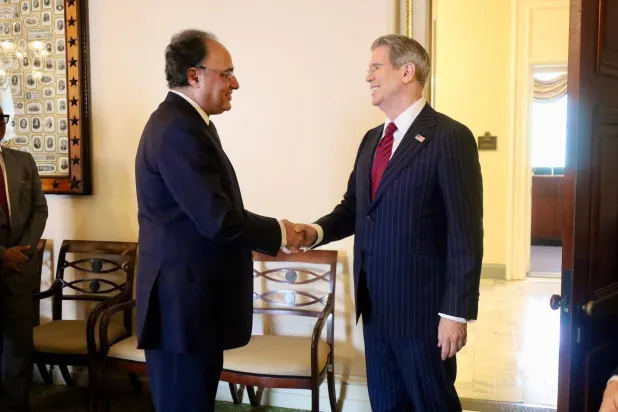
Pakistan has asked the United States to establish a $10 billion exchange market stability facility, according to a source familiar with the matter, in a step that could prove a lifeline for the South Asian country's economy if approved.
The request, revealed for the first time, comes after Islamabad played a role in mediating talks on the war with Iran, which boosted its diplomatic presence and raised hopes of economic gains from Washington and other partners, according to Reuters.
According to the source, the Pakistani government, in a letter to US Treasury Secretary Scott Bessent, requested the establishment of a 'bilateral exchange rate stability facility' between the United States and Pakistan worth $10 billion, for a period of up to 5 years.
If approved, the facility would boost Pakistan's foreign exchange reserves, ease pressure on the rupee, and reduce the country's reliance on multilateral financing, as it continues to implement tighter fiscal and monetary policies under its program with the International Monetary Fund.
Pakistani Finance Minister Muhammad Aurangzeb met Bessent in Washington on Tuesday, and the Pakistani Finance Ministry said in a statement that the minister discussed the fragility of Pakistan's economy amid regional geopolitical developments, without mentioning the request for the financial facility.
The statement added that Aurangzeb called for 'greater US support for Pakistan's market-oriented path, through improved access to international capital markets, increased foreign exchange reserves, and enhanced sovereign credit rating,' reaffirming that both sides renewed their commitment to deepening bilateral economic cooperation, encouraging more US investments, and advancing strategic projects.
Pakistan remains under a $7 billion IMF financing program, which imposed reform measures including tax increases, spending controls, and economic reforms.
Exchange rate stability facilities offered by the US Treasury are rare, and are usually implemented through the 'Exchange Stabilization Fund,' providing dollars, swap agreements, or guarantees to support reserves and currency stability.
These facilities differ from permanent dollar swap lines provided by the Federal Reserve to some major central banks, which aim to provide dollar liquidity to maintain financial stability.
The 2025 package for Argentina was the first new operation of this kind since the facility granted to Uruguay in 2002, except for the permanent swap line with Mexico, which dates back to the 1940s and is currently worth $9 billion.
Pakistan narrowly avoided a debt default in 2023 thanks to a $3 billion emergency financing agreement with the IMF, before later obtaining a $7 billion extended fund facility, in addition to a separate $1.3 billion loan to boost its capacity to cope with climate change and natural disasters.
Its reserves still depend on official financing, loan rollovers, and deposits from Saudi Arabia and China. Pakistan repaid about $3.5 billion to the UAE, equivalent to roughly one-fifth of its reserves, while Saudi Arabia provided new support worth $3 billion.
The Pakistani central bank had forecast in January that reserves would rise to about $20 billion by the end of 2026.
Reshaping relations with Washington
Obtaining a US exchange rate stability facility would carry both financial and political significance for Pakistan, as it would provide liquidity support and ease pressure on reserves and the rupee, while also reducing Islamabad's reliance on IMF disbursements and emergency bailout packages.
Fitch Ratings said in April that Pakistan's commitment to the IMF program strengthened its ability to secure financing, and that rebuilding foreign exchange reserves provided a buffer against economic shocks from the Middle East conflict. However, the agency warned that rising energy prices and potential supply disruptions could rapidly deplete the country's foreign exchange reserves.
Foreign investment in Pakistan remains limited due to recurrent external crises, policy ambiguity, security risks, previous restrictions on profit repatriation, a weak export base, and the country's credit rating remaining in the high-risk category, which raises borrowing costs and limits access to financial markets.
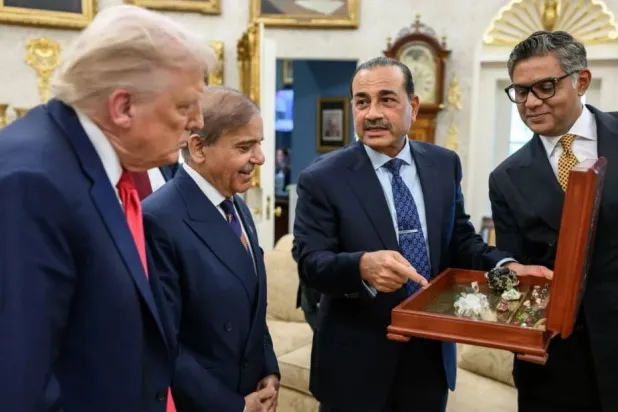
Pakistan has sought to leverage its relations with the administration of US President Donald Trump to boost economic cooperation, which so far has covered cryptocurrencies, real estate, and mining.
In this context, Islamabad signed an agreement to use stablecoins for cross-border payments with a subsidiary of World Liberty Financial, the main cryptocurrency arm of the Trump family, and is working on a memorandum of understanding to redevelop the Roosevelt Hotel owned by Pakistan International Airlines in New York, alongside attracting US investments in the mining sector, including the Reko Diq project, for which the US Export-Import Bank announced providing $1.25 billion in financing.
Original source: Asharq Al-Awsat

Comments (0)
Be the first to comment.