Step Toward Turning It Into a Medicine: Oyster Meat May Reduce Intestinal Cell Inflammation
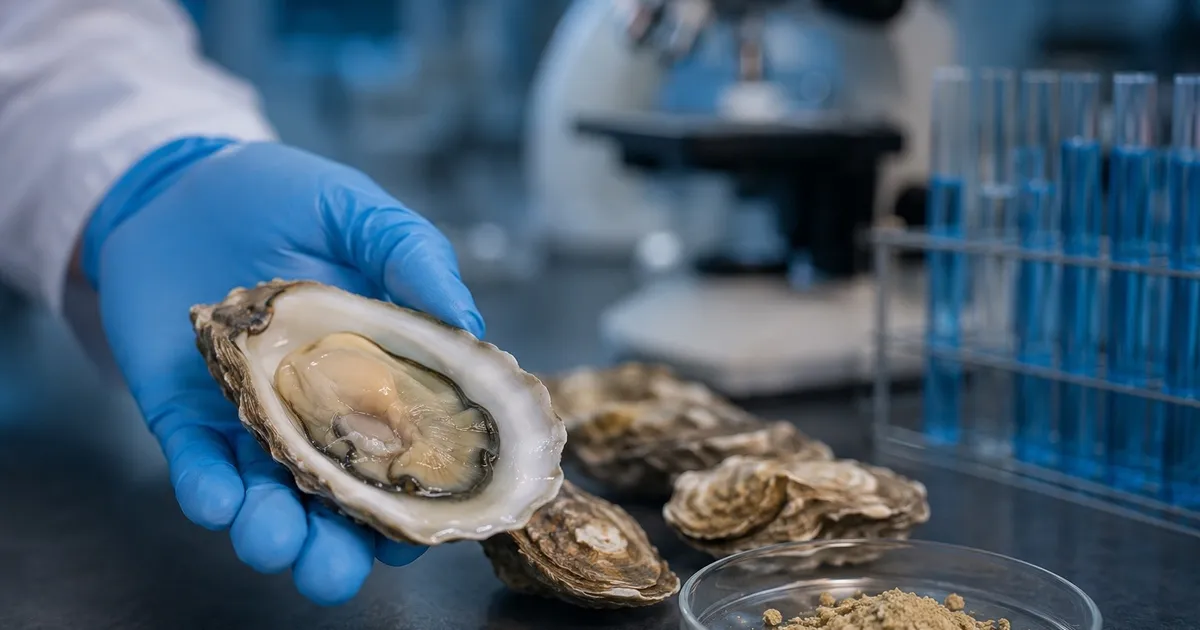
Oyster extract shows anti-inflammatory effects on intestinal cells, offering potential for a natural health ingredient from seafood waste.
Researchers say a simple extract from oyster meat may soothe inflammation in human intestinal cells, a preliminary result that raises the possibility of turning a common seafood—and even part of its production waste—into a sustainable food and health ingredient.
The findings, presented at the Experimental Biology conference in Florence, Italy, do not mean that eating oysters treats intestinal inflammation or offers a substitute for medication, but they add new evidence to a growing field seeking natural substances that can reduce inflammation, especially in the digestive tract, where food plays an important role in protecting the intestinal barrier.
The research focused on Pacific oysters, scientifically known as Crassostrea gigas, one of the most widely farmed oyster species globally, known for its high nutritional value and bioactive compounds previously linked to antimicrobial and antioxidant effects, and possibly some anti-inflammatory properties.
Oyster Meat and Intestinal Inflammation
The study's lead researcher, Giulia Trinchera, a PhD student at the University of Ferrara in Italy, said that identifying natural substances with anti-inflammatory properties represents a promising avenue for prevention or assistance in managing chronic inflammatory diseases and their complications.
She added that the researchers tested whether oyster meat extract could have a noticeable effect on human intestinal lining cells when exposed to a strong inflammatory trigger.
Chronic inflammation is not just a local problem; it is linked to a wide range of diseases, including heart disease, type 2 diabetes, some cancers, and inflammatory bowel diseases.
In the digestive tract specifically, a weakened intestinal barrier can lead to what is commonly known as 'leaky gut,' a condition that allows bacteria or toxins to pass from the intestines into the bloodstream, potentially exacerbating the inflammatory response in the body.
Therefore, the researchers were interested in whether oyster extract could protect the intestinal lining cells, the layer that acts as a guard between the intestinal contents and the rest of the body.
Initially, the researchers conducted a comprehensive nutritional analysis of the oyster's soft tissues, including proteins, fats, minerals, polyphenols, and carotenoids. They then dried the oyster meat and prepared an extract to test on human intestinal cells in the lab.
In the experiment, the researchers exposed the cells to an inflammatory substance known as TNF-alpha, an important molecule in activating inflammation, and then measured the effect of the oyster extract using various methods that track genetic, immune, and physical changes within the cells.
The results showed that the oyster extract interfered with an important inflammatory pathway known as NF-kB, one of the pathways that control the activation of inflammation genes inside cells. When the activity of this pathway decreases, the inflammation signals that put the cell on alert also drop. The extract also reduced the expression of COX-2, an enzyme with a well-known role in the inflammatory response.
Reducing Inflammation Markers
The researchers explained that the effect was not limited to reducing inflammation markers but extended to protecting the integrity of the intestinal barrier itself; the extract helped restore cell permeability to levels closer to normal even in the presence of inflammatory triggers. They confirmed this observation using electron microscopy, which showed that the structure of the barrier between cells remained more intact when the extract was used.
Trinchera said that this is the first time, to their knowledge, that oyster tissue has been shown to produce anti-inflammatory effects in intestinal cells.
She clarified that the main finding is that oyster extract, at non-toxic concentrations, was able to significantly reduce intestinal inflammation induced by TNF-alpha.
The appeal of the idea lies in its simplicity: oysters are already a food consumed in many parts of the world, and the extract used in the study was taken from the whole oyster tissue without the need for complex purification steps.
This could make it, if subsequent studies prove its efficacy and safety, a lower-cost, easier-to-produce candidate as a functional food ingredient or supportive supplement, rather than a standalone drug.
Economic Dimensions and Required Steps
The study carries environmental and economic dimensions; the oysters used in the experiments came from the 'Sacca di Goro' area in the Po River Delta, one of the most productive aquaculture areas in Italy.
Trinchera said that between 30% and 40% of oyster production in that area is discarded annually as unsuitable for marketing or surplus, prompting researchers to ask whether this 'waste' could be converted into a substance with potential health value.
The researchers need to conduct additional experiments to identify the compounds responsible for the anti-inflammatory effect, determine safe doses, and assess whether the extract retains its activity after digestion. Studies on animals and then human clinical trials are also needed before any widespread medical or dietary use can be discussed.
Original source: Asharq News




Comments (0)
Be the first to comment.