BSF Capital to Argaam: Expected improvement in offerings in H2
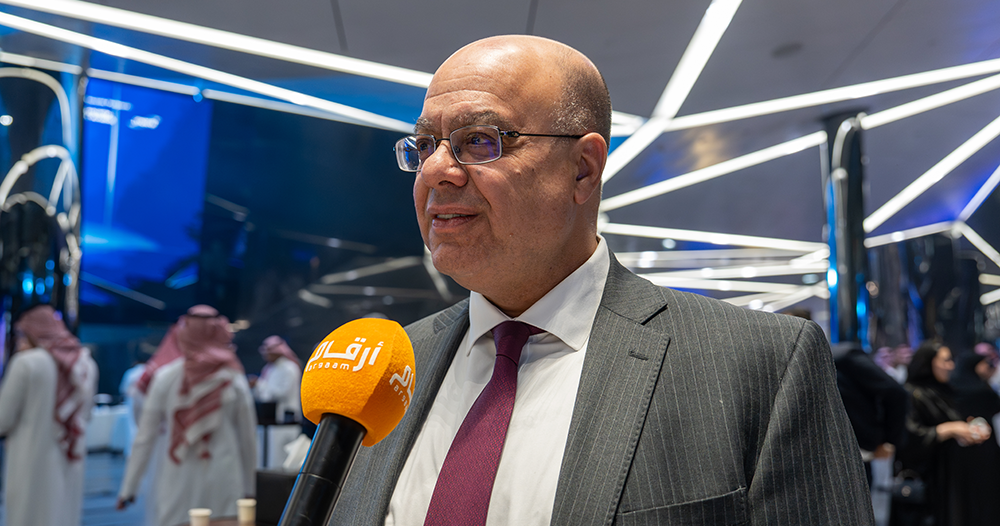
BSF Capital to Argaam: Expected improvement in offerings in H2, and the market has become more mature and selective
Amir Riyad, Head of Investment Banking at BSF Capital
Amir Riyad, Head of Investment Banking at BSF Capital, expects an improvement in offering activity in the Saudi market during the second half of 2026, given the readiness of several companies for listing and improved market conditions. Riyad added, in an interview with Argaam, that the sukuk and debt instruments market is likely to continue its activity, along with expectations of accelerated M&A deals, supported by sustained investment activity. He explained that investor appetite for offerings remains strong, but the market has become more mature and selective compared to previous years. He stated that investors no longer measure the success of an offering solely based on the coverage ratio, but rather look at the company's quality, the strength of its investment story, fairness of valuation, and its ability to achieve sustainable performance after listing. He mentioned that subscription applications for the Flynas offering, managed by BSF Capital during 2025, exceeded SAR 409 billion, with a coverage ratio of nearly 100 times, and participation from more than 2,050 investors. He noted that other offerings managed by the company recorded high demand levels, including the Miahona offering with coverage of 170 times, Al Majed for Oud at about 157 times, and Al-Musaa Health at about 103 times, considering that these levels reflect the continued availability of liquidity when company quality meets appropriate pricing. Regarding valuations of companies seeking listing, Riyad said that a gap between owners' aspirations and investor expectations is natural, pointing out that the financial advisor's role is to reach a valuation that reflects the true value of the company and takes into account its sustainability after listing. He added that there is a difference between a company's valuation and the offering price, explaining that valuation is the starting point, while pricing results from an integrated process including financial valuation preparation, building the investment story, communicating with investors, measuring demand levels during market interaction phases, to determine the appropriate price. He emphasized that the goal is to reach the most suitable price for the offering, not the highest, stating that the company's success after listing is the actual criterion for the success of the IPO process. He indicated that disciplined pricing has positively reflected on the performance of some companies' shares after listing, and encouraged strategic investors to increase their investments in the secondary market. He explained that after-listing stock performance has become one of the most prominent criteria investors rely on to evaluate the success of offerings, along with stock stability and the quality of the shareholder base in the long term, not just the IPO coverage ratio. He added that BSF Capital, when managing offerings, focuses on attracting institutional and long-term investors, rather than focusing solely on the volume of orders, due to their role in forming a more stable shareholder base after listing. He mentioned that as a result, the share of Resan rose by more than 224%, Miahona's share rose by more than 158%, Al Majed for Oud by about 55%, and Tamkeen by about 28% within a few months after listing, according to his statement. Regarding the impact of expanding foreign investor participation in the Saudi market, Riyad said this step would deepen the investor base, improve pricing mechanisms, raise the quality of the subscription register, and enhance liquidity in the secondary market. He added that companies' benefit from the market's opening to foreign investors depends on their readiness in terms of governance, disclosure, and the quality of the investment story, not just on the availability of investment. Riyad explained that the parallel market - Nomu, has proven over the past years its success as a platform for promising companies, and has become a stage preceding the transfer of some companies to the main market, but it still faces challenges related to liquidity levels and limited research coverage. He noted a gradual improvement in the parallel market with the development of disclosure levels, indicating that BSF Capital managed the offering of Armah Sports Company, and is currently working with the company on the transfer to the main market after meeting regulatory requirements. Regarding the listing of Special Purpose Acquisition Companies (SPACs) on the parallel market, Riyad said they could represent an additional financing channel for companies, especially technology companies and those undergoing rapid growth. He added that the success of this tool depends on the quality of the sponsor, the level of governance, the clarity of the deal structure, and investor protection mechanisms. He pointed out that the development of the financial market is not limited to SPACs, but also includes regulatory initiatives related to allowing direct listing of subsidiaries of companies listed on the main market under specific controls, which expands the financing options available to companies, enhances market competitiveness, and supports the diversity of investment products. Regarding M&A activity, Riyad expected an acceleration in the pace of deals in the Kingdom during 2026 and 2027, driven by Saudi Vision 2030 targets, portfolio restructuring, and increased interest from local and international strategic investors in the Saudi market. He predicted that the logistics, technology, food, healthcare, financial services, and educational platform sectors would be among the most active in M&A deals in the coming period. He added that BSF Capital has observed this momentum through its participation in executing various deals covering different stages of the investment cycle, including M&A deals and strategic investments. Regarding the impact of interest rates, Riyad said that their rise has led to increased discipline in company valuations and timing of offerings and long-term issuances, but it has not changed the main fundamentals of the Saudi market, which still enjoys strong liquidity and an active investor base. He added that companies with strong financial foundations and a clear investment story are still able to attract high demand, regardless of the interest rate cycle.
To Argaam
Various interviews
{{displayname}}
{{profession}}
{{followercount}}
{{aboutme}}
Original source: Argaam

Comments (0)
Be the first to comment.