Despite $81 Billion Refund, Trump Administration Prepares for New Round of Global Trade Tariffs
Follow Okaz channel on WhatsApp
The US government was forced to return about $81 billion to importing companies after the Supreme Court ruled that a large portion of the tariffs imposed by President Donald Trump were illegal, in one of the largest refund operations related to trade policies in US history.
US budget data showed that the amount refunded during the current fiscal year, which began in October 2025, reached $81 billion, compared to only about $5 billion during the same period last year.
A US Treasury Department official explained that the sharp increase in refund amounts came almost entirely as a result of the Supreme Court ruling in February, noting that most repayments occurred during May and June.
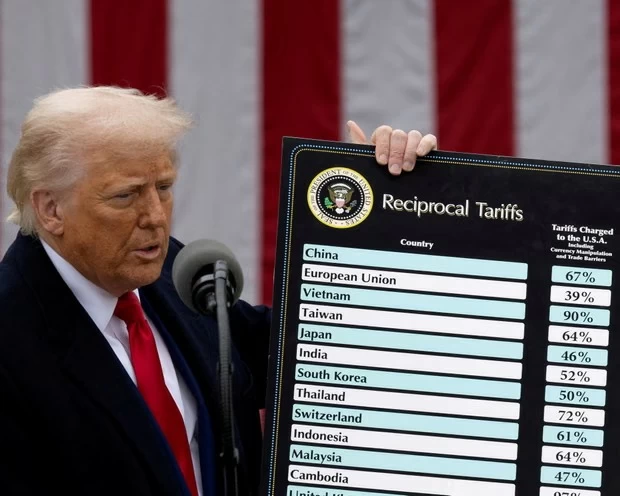
The tariffs, imposed on imported goods, were one of the key pillars of President Donald Trump's economic policy since his return to the White House last year. He promoted them as a means to bring factories back to the United States, improve trade agreement terms, and reduce the federal budget deficit.
However, the court ruling halted a large portion of those tariffs, forcing the government to refund the money paid by importing companies and affecting the revenues that the US Treasury had relied on.
According to budget data, the federal deficit rose to $1.367 trillion in the first nine months of the current fiscal year, an increase of 2% compared to the same period last year, after having seen a slight decline supported by tariff revenues.
The cost of servicing US public debt also rose, with interest payments exceeding $1 trillion, an increase of 14%, while military spending rose 5% amid military developments in the Middle East.
New tariffs being prepared
Despite the judicial setback, the Trump administration is preparing to impose a new round of tariffs, as the temporary 10% tariff on global imports is set to expire on July 24.
The US administration plans to impose new tariffs based on what it describes as weak enforcement of anti-forced labor laws, in addition to what it considers excess industrial capacity in some countries.
New measures are expected to include major trading partners, including the United Kingdom, Japan, India, Taiwan, and China, with speculation that the new tariffs will range between 10% and 12.5%, allowing the US administration to circumvent some of the restrictions imposed by courts on its trade policies.
Washington has also threatened to impose additional tariffs of 25% on imports from Brazil.
Threats to Europe over digital taxes
In a new escalation, the US President threatened last month to impose tariffs of up to 100% on goods from European countries, including the United Kingdom, if they proceed with imposing taxes on major US technology companies.
The UK imposes a 2% digital services tax on major technology companies such as Apple, Google, and Amazon, and this tax has generated revenues exceeding £800 million in the 2024-2025 fiscal year, according to UK Treasury data.
France, Spain, and Italy also apply a similar 3% tax on major digital companies, while other European countries are considering adopting similar measures.
Trump confirmed in a post on Truth Social that any country imposing a tax on US companies will face 100% tariffs on all its exports to the United States, stressing that these tariffs will take precedence over any existing or future trade agreements and will be applied as soon as those taxes take effect.
Original source: Okaz


Comments (0)
Be the first to comment.