Energy in a Week: Ukrainian Attacks on Russian Refineries Cause Unprecedented Fuel Crisis in Central Asia

Energy in a Week: Ukrainian Attacks on Russian Refineries Cause Unprecedented Fuel Crisis in Central Asia
Russia and Ukraine
Despite improvement in the Middle East, global energy markets continue to face repercussions of geopolitical turmoil. Ukrainian attacks on Russian refineries have caused a fuel crisis in Central Asia, while Europe still faces risks of jet fuel shortages despite falling prices, due to low inventories and strong demand during the summer travel season. Meanwhile, sulfur shortages from the Gulf and Russia's extension of its export ban continue to pressure the global fertilizer trade. Chinese refineries have stopped buying Iranian and Russian oil, reverting to other sources. These developments underscore that supply chain disruptions persist, driving countries to accelerate efforts to diversify supply sources, reshaping the global energy flow map, with the Middle East emerging as one of the most affected regions as major consumers seek to reduce reliance on the region and look for more diverse and stable supply sources.
Ukrainian Attacks on Russian Refineries Cause Unprecedented Fuel Crisis in Central Asia
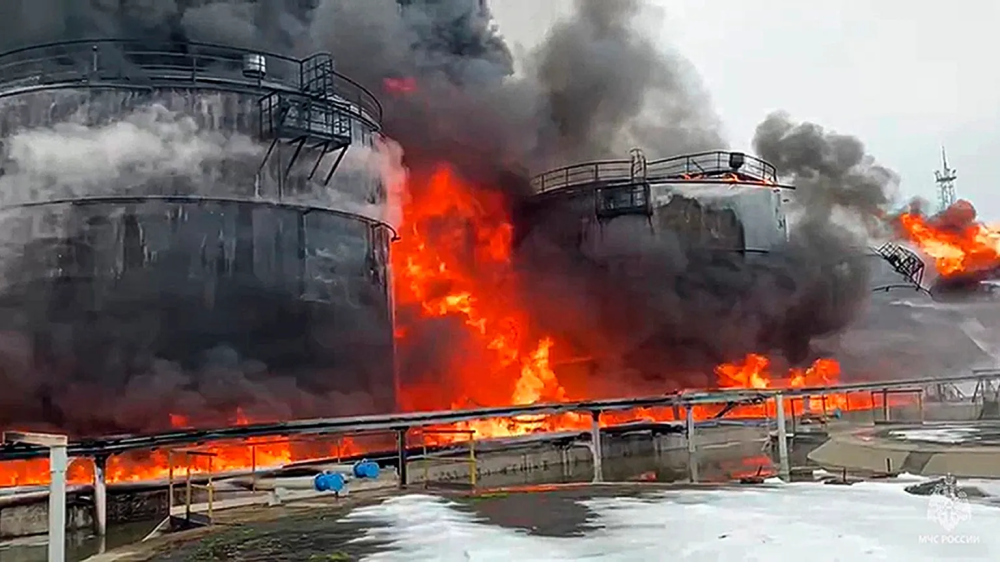
Repeated Ukrainian drone attacks on Russian oil refineries, fuel depots, and energy facilities have disrupted some refining capacity and thrown fuel supply chains into disarray in Central Asian countries, leading to rising fuel prices and increased pressure on nations heavily reliant on Russian imports, prompting regional governments to intensify efforts to diversify supply sources and reduce dependence on Russia.
Tajikistan is the most exposed, having imported 84% of its petroleum product needs from Russia during 2025, while Kyrgyzstan and Uzbekistan also rely heavily on Russian fuel. This has been reflected in higher gasoline and diesel prices, with complaints of declining incomes for taxi drivers and rising transport costs. Uzbekistan was also forced to cancel several flights to Russia due to a shortage of jet fuel.
In Kyrgyzstan, with a population of 7.4 million, authorities said current fuel reserves are sufficient for more than six weeks, despite the shutdown of some Russian refineries due to drone attacks. In Tajikistan, population 11 million, the price of a liter of diesel rose from 9.6 somoni to 13.5 somoni, an increase of nearly 41%, while the government imposed new environmental fees of 30 euros per ton on gasoline and diesel imports, adding to market pressures.
In contrast, Kazakhstan managed to avoid a severe fuel shortage thanks to its domestic refineries and reserves, but imposed restrictions on petroleum product exports to protect the domestic market, amid reports of a Russian request for supplies of AI92 gasoline to compensate for local supply shortfalls.
Despite having a stronger production base, Kazakhstan remains exposed to risks due to its dependence on Russian infrastructure. The country produces about 30 billion cubic meters of commercial gas annually, but about 9 billion cubic meters, roughly a third of processed output, passes through the Russian Orenburg facility owned by Gazprom, making any disruptions at these facilities a direct threat to Kazakh energy supplies.
The crisis reflects a growing trend in Central Asia toward diversifying energy sources via Kazakhstan, Azerbaijan, Iran, and China in an attempt to reduce reliance on Russia, but the deep interconnection of the region's energy infrastructure makes decoupling a complex and long-term process.
Sharp Decline in Jet Fuel Prices in Europe Amid Concerns of Summer Supply Shortages
Jet fuel prices in Europe have fallen by about 50% since the US and Iran announced a preliminary peace agreement, but low inventories and continued strong demand during the summer travel season are raising concerns about possible supply shortages in the coming months.
The price of jet fuel cargoes to Northwest Europe fell to $912 per ton on June 26, compared to a peak of $1,842.5 per ton on April 2, but remains above the pre-war level of $831.25 per ton recorded on February 27.
European demand for jet fuel reached about 1.5 million barrels per day in 2025, with about 67% met by domestic production, while 13% came from Middle East imports via the Strait of Hormuz before the war, which changed due to supply disruptions.
Despite the price decline, analysts warn of continued market tightness. James Simpson, head of aviation research at Sera, a division of S&P Global Energy, said European airlines still express concern about fuel availability in August, although most report no current disruptions.
Jet fuel and kerosene inventories at the Amsterdam-Rotterdam-Antwerp hub fell to 554,000 metric tons as of June 19, a level about 34% lower than pre-war and 35% below the 5-year average, despite a slight weekly increase of 1%.
To compensate for the loss of Middle East supplies, Europe increased its imports of US jet fuel to 6 million barrels in April, compared to just 700,000 barrels in the same month last year, before falling to 4.5 million barrels in May, then declining further in June, with an additional drop expected in July to only about 300,000 barrels according to preliminary data.
Analysts believe that higher gasoline production margins in the US during the summer driving season may push refineries to increase gasoline output at the expense of jet fuel, reducing volumes available for export to Europe.
Conversely, the recovery of air travel in the Middle East amid improving security conditions could boost global jet fuel demand faster than the recovery of damaged refinery output, potentially reapplying pressure on the European market during the summer, despite the sharp price decline.
Sulfur Supply Shortage from the Gulf and Extension of Russian Ban Pressure Global Fertilizer Trade
Global seaborne fertilizer shipments fell 19% year-on-year in May 2026, due to a drop in loading operations from the Arabian Gulf after the effective closure of the Strait of Hormuz, disrupting global supplies, according to a report from S&P Global Commodities at Sea.
The report noted that bulk fertilizer trade is expected to contract by about 20% in the second quarter, due to a decline in sulfur shipments from the Arabian Gulf, which are forecast to fall 47%, the largest decline among key fertilizer raw materials. Nitrogen fertilizer shipments are also expected to fall 24% and phosphate 20%, while potash remains relatively stable with slight growth due to its limited reliance on Middle East supplies.
Original source: Argaam




Comments (0)
Be the first to comment.