Eni Warns of Return of Rising Oil Prices if Iran War Continues
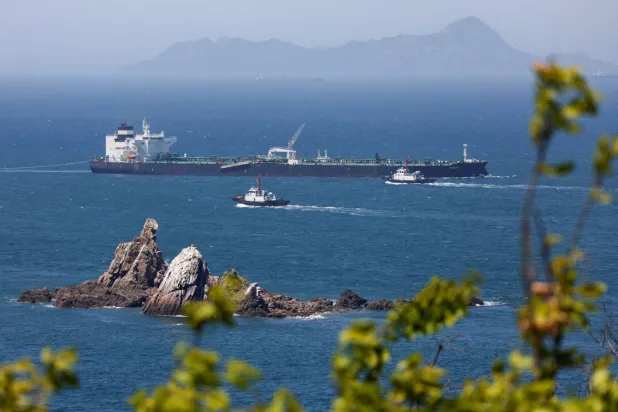
The CEO of the Italian group Eni said that the global oil market will exit its range of approximately $80 to $100 by the first quarter of 2027.
Russia's decision last week to ban diesel exports disrupted global energy markets, as it exacerbates the shortage of supplies of this industrial fuel and drives prices sharply higher, even in countries that no longer import diesel from Moscow.
Diesel accounts for the largest share of global oil consumption, and its price increase impacts the global economy due to its wide range of uses, from industrial equipment and agricultural machinery to heavy transport and electricity generation.
Supplies have been under pressure for years, due to strong demand after the coronavirus pandemic and production cuts that accompanied the closure of several refineries in Western countries. The Iran war has intensified market pressures. Russia is the world's second-largest diesel exporter after the United States, so any disruption in its refineries can significantly affect global fuel supplies.
Russian exports had already begun to decline before the ban due to domestic supply shortages caused by Ukrainian drone attacks.
Data from Kepler showed that average shipments of diesel and gas oil from Russia totaled 234,000 barrels per day from July 1 to July 10, compared to 400,000 barrels per day in June, and an average of about 817,000 barrels per day during 2025.
Pressure on diesel supplies increased after a new wave of US attacks on Iran, which came just hours after Russia announced the export ban on Wednesday, renewing concerns about ship movements through the Strait of Hormuz and the impact of tensions there on Middle East exports.
US government data on Wednesday showed diesel inventories fell by more than 4.5 million barrels the previous week to 97.8 million barrels by July 3, a level about 6 percent below the five-year average.
Tom Kloza, an advisor to Gulf Oil, said in a note to clients on Thursday, according to Reuters: 'The developments in the Gulf, along with the halt in Russian exports and the striking report from the US Energy Information Administration, have prompted product sellers to hold back on offers.'
The United States and Europe no longer import fuel from Russia due to the Ukraine war, but Moscow's export ban still led to higher diesel prices in both regions, reflecting the globally interconnected nature of oil markets.
Tightening sanctions on Russian oil
On a parallel track, four senior US senators from both the Republican and Democratic parties announced on Friday that they reached an agreement with President Donald Trump's administration on legislation aimed at tightening sanctions on Russia, a step described as an escalation in Washington's efforts to pressure Moscow, according to Bloomberg.
Senators Richard Blumenthal and Lindsey Graham, along with Jeanne Shaheen and Roger Wicker, wrote in a joint statement on the social media platform X: 'We announce an agreement with the Trump administration to move forward with new sanctions legislation against Russia.'
The statement added: 'The legislative and executive branches must work together to impose harsh sanctions on buyers of Russian oil and gas, who fuel the Russian war machine.' Senator Graham said Trump gave the green light to pass the Russian sanctions bill.
Oil prices
Oil prices fell during Friday's trading session at settlement, after the latest round of clashes between the United States and Iran, amid trader optimism over the resumption of navigation in the Strait of Hormuz, but prices posted sharp weekly gains by the end of the session.
Brent crude futures fell 29 cents, or 0.38 percent, to $76.01 per barrel at settlement, while US West Texas Intermediate crude lost 67 cents, or 0.93 percent, to $71.41.
Over the week, Brent rose about 5.50 percent, and West Texas Intermediate rose about 4 percent. With the end of mutual airstrikes and the promise to resume talks between the United States and Iran next week, traders are looking forward to the reopening of the Strait of Hormuz.
The International Energy Agency said on Friday that the latest escalation in clashes between the United States and Iran could undermine its forecasts of a large surplus in the oil market next year. The renewed fighting delayed the full reopening of the Strait of Hormuz, through which about 20 percent of the world's daily oil and gas supplies passed before the war began on February 28.
Original source: Asharq Al-Awsat


Comments (0)
Be the first to comment.