Four Oil and Gas Tankers Turn Back from Hormuz Amid Renewed Attacks
Saudi tanker 'Wadiyan' safe, crew and cargo unharmed.
Four Oil and Gas Tankers Turn Back from Hormuz Amid Renewed Attacks
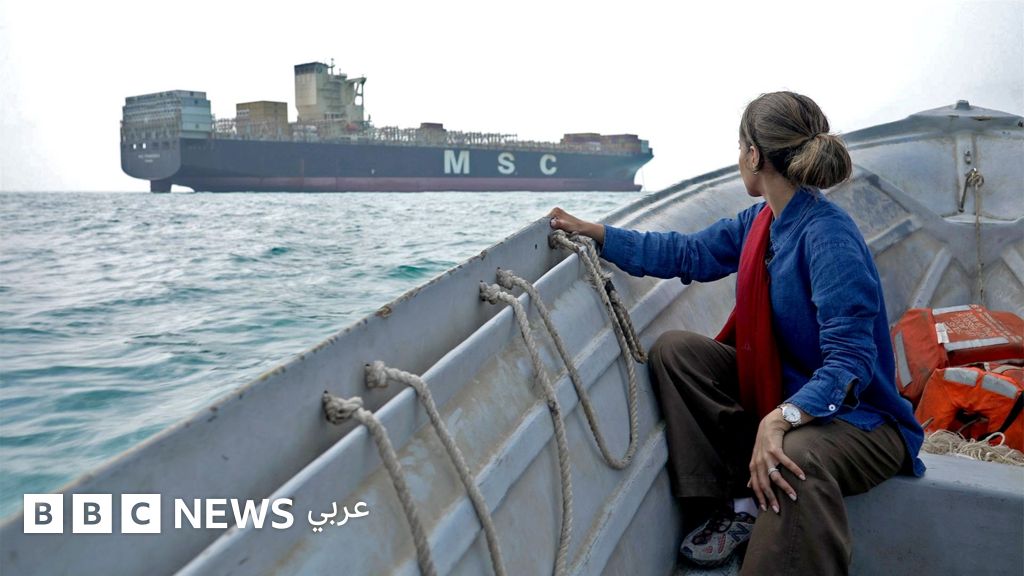
Ship tracking data showed that at least four oil and gas tankers turned back from attempts to cross the Strait of Hormuz amid renewed attacks on vessels in this vital waterway, raising security and safety concerns. This diversion comes after a Qatari LNG tanker and a Saudi-flagged crude oil tanker were damaged near the strait on Tuesday, following reports that Iran launched missiles at ships in the waterway, prompting maritime authorities to raise the threat level for transiting vessels to 'severe'. The Saudi National Shipping Company 'Bahri' announced that the very large crude carrier (VLCC) 'Wadiyan' was involved in an incident while crossing the Strait of Hormuz on July 7, 2026. The company confirmed that all crew members and workers on board the tanker are safe and unharmed, with no injuries reported, and stated that the oil cargo is secure and the vessel remains seaworthy. It added that it notified the relevant authorities immediately after the incident and continues to coordinate with all involved parties, closely monitoring developments, stressing that personnel safety, marine environment protection, and safe vessel management are its priorities.
'Wadiyan', a Saudi oil tanker, is one of the most important VLCCs in the Bahri fleet, with a capacity of about 2.2 million barrels of crude oil, making it a strategic vessel for transporting Saudi oil exports to global markets. 'Wadiyan' is part of the Bahri Oil fleet, which is the world's largest fleet of double-hulled VLCCs, comprising dozens of modern ships.
The three LNG tankers – Al Gharrafa, Al Duhail, and Al Ruwais – were slowly advancing westward toward the Strait of Hormuz before changing course and turning back late Tuesday evening, according to data from analytics firms Kepler and LSEG. All three tankers, controlled by QatarEnergy, were empty and heading to Qatar's Ras Laffan export facility to load cargoes. Meanwhile, data from the London Stock Exchange Group and Kepler showed that an Indian-flagged oil tanker carrying 2 million barrels of Kuwaiti crude oil, loaded late last week, turned back off the coast of Oman in the Strait of Hormuz on Wednesday.
Since the conflict began in late February, at least 16 LNG cargoes have left the strait from Ras Laffan, and 10 cargoes from ADNOC's Das Island terminal in the UAE, but this quantity remains small compared to about 7 million metric tons shipped monthly from these two export hubs.
David Chao, global Asia Pacific market strategist at Invesco in Singapore, said: 'Just when we thought we had turned the page on geopolitical risk premiums, we are certainly reminded that this peace agreement is still in its formative stages.' He added: 'I believe the current Brent crude price is still trading at levels that, in my opinion, do not reflect some of the ongoing escalations from the Middle East.' Data this week showed that U.S. Strategic Petroleum Reserve crude oil stocks have fallen to their lowest level since 1983, making markets more vulnerable to future supply shocks. Oil prices rose sharply after the new strikes, recovering from their yearly lows, raising renewed concerns about energy-driven inflation in the coming months. U.S. inflation data since March has shown a steady increase in price pressures, further rattling markets due to the Federal Reserve's hawkish policy. With renewed Iranian attacks on tankers in the Strait of Hormuz, the United States reimposed sanctions on Iranian oil sales, which had received a 60-day waiver under the peace agreement, as two VLCCs sailed into the strait to load Iranian oil, and another tanker left the strait carrying 2 million barrels of oil via the Omani side of the strait, according to an analysis by Kepler.
Original source: Al-Riyadh
Comments (0)
Be the first to comment.