German Bond Yields Head for Biggest Weekly Gain in Over a Month
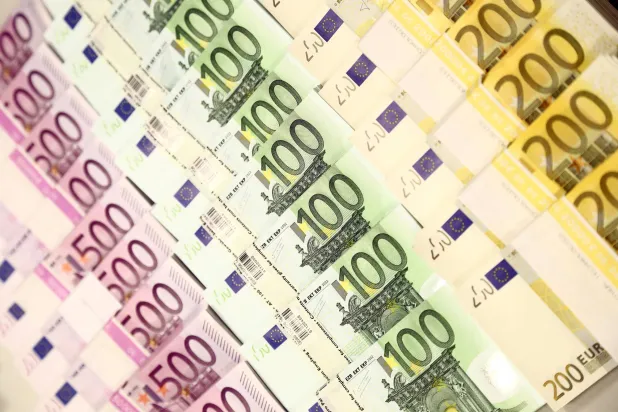
Euro zone bond yields fell in tandem with lower oil prices on Friday, but German yields remained on track for their biggest weekly gain in over a month, after a rise in tensions related to the war with Iran this week.
The yield on the two-year German bond, the most sensitive to European Central Bank interest rate expectations, rose by about 10 basis points over the week, posting its biggest weekly gain in five weeks. The yield on the 10-year bond, the benchmark for euro zone bond markets, also rose by the same amount, its biggest weekly gain since early May.
The renewed exchanges of strikes between the United States and Iran boosted traders' bets on the possibility that the European Central Bank will raise interest rates twice this year instead of just once, after cutting rates in June, pushing bond yields higher.
However, euro zone bond yields fell on Friday for the second consecutive session, as investors bet that the latest escalation would not develop into a full-scale military confrontation. Brent crude also fell to around $75 a barrel, after exceeding $80 earlier in the week.
A US official said that Washington remains committed to reaching a solution with Iran, noting that 'technical talks are ongoing'.
The yield on the 10-year German bond fell by one basis point to 3.04 percent, after hitting a more than one-month high of 3.09 percent on Thursday. The two-year bond yield also fell by one basis point to 2.64 percent.
Traders currently expect the European Central Bank to raise interest rates by about 32 basis points by the end of the year, reflecting expectations of an additional increase, with a roughly 30 percent probability of a second hike. This compares with expectations of 36 basis points earlier in the week.
Analysts at Commerzbank noted that a rise in Japanese government bond prices overnight, following reports that Tokyo is considering ways to encourage pension funds to increase their investments in domestic assets, also helped support European bonds during Friday's trading.
At the same time, analysts warned that these developments could pose a long-term risk if Japanese investors begin repatriating some of their funds invested abroad.
They added that Japan's holdings of foreign bonds 'have gradually declined in recent years, but they remain at significant levels.' In Europe, France is the most exposed to these flows, with Japanese investors still holding about 128 billion euros of French bonds at the end of last year.
Original source: Asharq Al-Awsat




Comments (0)
Be the first to comment.