Has China Broken the Monopoly on the World’s Most Dangerous Machine?
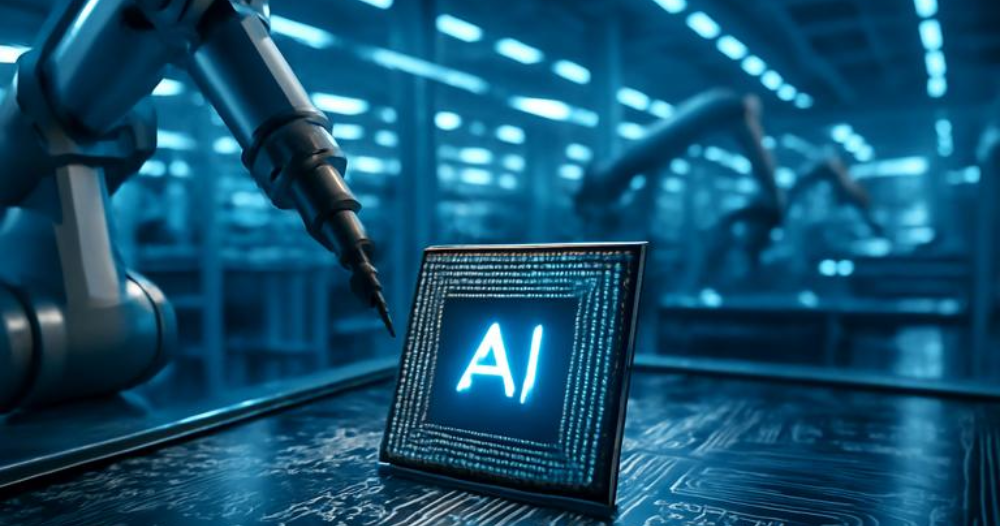
Has China broken the monopoly on the world’s most dangerous machine?
In the world of artificial intelligence, battles are no longer fought solely by algorithms or supercomputers, but by a single machine described as the "crown jewel of the chip industry."
This machine, manufactured by only one Dutch company, has become a primary line of defense for Western technological superiority and a centerpiece of geopolitical tension between the US and China.
Washington seeks to keep this technology out of Beijing's reach; new American allegations regarding the potential arrival of one of these machines in China are sparking a widespread debate, not only about the veracity of the claims but also about the future of global competition in AI and semiconductor manufacturing.
A Dutch Machine
The Dutch company ASML holds a unique position in the global economy, as the sole producer of Extreme Ultraviolet (EUV) lithography machines—the essential technology used to manufacture the world’s most advanced chips, upon which modern AI processors, supercomputers, and advanced smartphones depend.
The United States considers denying China this technology one of its most important tools to slow Beijing's progress in the AI race. Consequently, since 2019, it has imposed restrictions on exporting EUV equipment to China in cooperation with the Dutch government.
However, the crisis escalated in recent weeks after US Secretary of Commerce Howard Lutnick informed ASML officials of concerns within the US administration regarding the possibility that one EUV machine had reached China, fueling a storm of questions about the effectiveness of the control system for the world’s most sensitive technologies.
The Dutch company was quick to categorically deny these allegations, asserting that it knows the precise location of all 340 EUV machines it has manufactured to date, including the 26 machines that have been decommissioned.
It clarified that none of these devices are inside China and that their transport or installation can only be performed by the company's own engineers due to their technical sensitivity and extreme complexity.
The company added that it has not exported any EUV machine or components specifically designed for these systems to China, and that it has yet to receive any evidence supporting the American allegations, despite its repeated requests for such proof.
Export Controls
For its part, the Dutch government approached the allegations with caution, confirming that it takes them seriously while simultaneously clarifying that it is not currently conducting any official investigation due to a lack of evidence warranting one.
The Dutch Minister of Trade noted that his country implements a strict export control regime and that it would act immediately if credible information appeared indicating any violation.
While the dispute ostensibly appears to relate to a single machine, its background is far deeper, reflecting a growing divergence between the United States and its European allies over how to handle China’s technological rise.
In Washington, many officials believe Europe is not being stringent enough in enforcing restrictions on China, while European governments fear that American policies could harm their industrial interests, even as the US seeks to bolster its domestic industry and attract more investment.
American Pressure
Some European executives also believe that American pressure on ASML is not merely linked to security considerations, but also aims to push the company and its partners to move a larger portion of their industrial activities to the United States in support of Washington’s strategy to rebuild the chip industry on its own soil.
A significant part of the debate centers on the possibility of EUV-related components reaching China via suppliers or third parties, rather than the complete machine itself—a possibility some experts view as more realistic than the scenario of smuggling an entire system, given its massive size and the complexity of its installation and operation.
Other analysts believe the real concern might be linked to older lithography machines known as DUV, most of which ASML continues to export to China because they are not fully subject to current export restrictions.
Sales of DUV equipment to the Chinese market account for about one-third of the company’s revenue, making it an economically indispensable market while simultaneously a growing source of concern for American policymakers.
The most critical question currently is how far China has progressed in developing a domestically produced EUV machine, which would reduce its reliance on Western technology.
Developing a Prototype
According to media reports, a team including former ASML engineers working in China managed to develop a prototype of an EUV machine during 2025, and this model is undergoing testing at a high-security facility in Shenzhen.
ASML confirmed it cannot prevent its former employees from working for other companies, but explained that they are bound by strict non-disclosure agreements, and that the company has previously taken legal action in cases where the leakage of proprietary technologies or information was proven.
Although the Chinese model has not yet succeeded in producing electronic chips that function efficiently, the Chinese government aims to reach actual production by 2028, according to media reports.
However, the majority of chip industry experts believe this goal is highly ambitious and expect that China will need nearly a full decade before it possesses an EUV machine that rivals its Western counterparts, even if they acknowledge that the pace of Chinese progress has become faster than expected years ago.
Multi-Patterning
Meanwhile, Chinese companies have made notable progress by innovatively leveraging the capabilities of traditional DUV technology through a method known as "multi-patterning," which allows for the production of chips smaller than seven nanometers—a precision that until recently was the exclusive domain of EUV machines.
Although this method increases production costs and error rates compared to EUV technology, it gives China an opportunity to manufacture millions of the advanced chips needed to develop AI applications, which is causing growing concern within the United States.
Conversely, European countries believe that any further tightening of ASML exports must balance security considerations with maintaining the company’s competitiveness, in addition to avoiding retaliatory measures from China that could harm European economic interests.
As part of its efforts to unify the positions of its allies, the United States is leading a new initiative known as Pax Silica, launched at the end of 2025, which aims to build an alliance between countries involved in Western AI supply chains, including cooperation in energy, rare earth minerals, advanced manufacturing, electronic chips, and artificial intelligence.
So far, 24 entities have joined the initiative, including the European Union and the Netherlands, in a move Washington believes will facilitate the exchange of advanced technology and coordinate export controls for sensitive equipment.
However, the most controversial initiative is a new US bill called the MATCH Act, which enjoys bipartisan support within Congress.
Maintenance Service Ban
Original source: Argaam


Comments (0)
Be the first to comment.