Will oil continue to rise after the current jump?
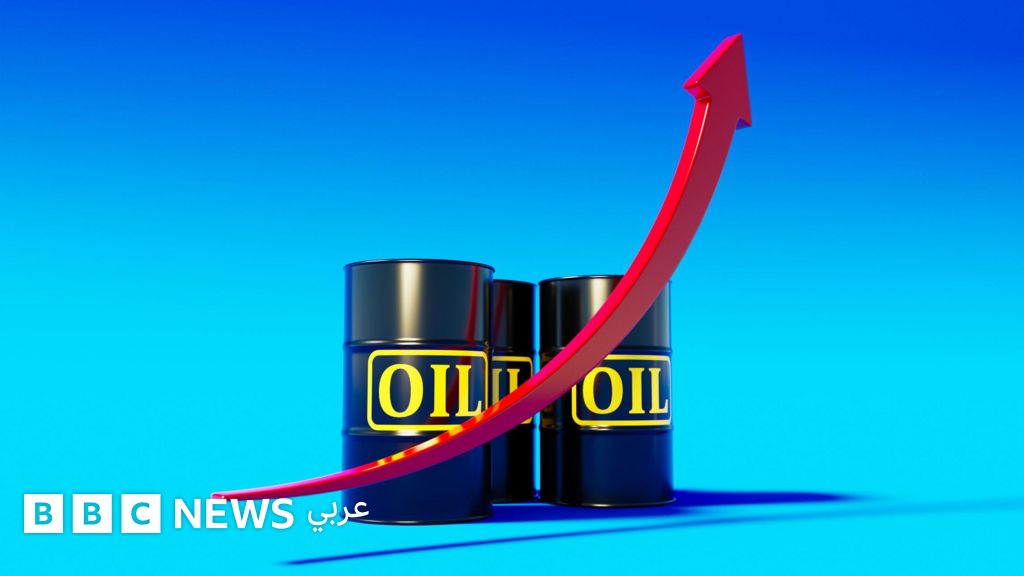
What might stop the sharp rise in high oil prices?
Will oil continue to rise after the current jump?
Image caption, The conflict in the Middle East represents one of the most prominent sources of fear and concern about the shortage of global oil supply
Article Information
Author, Atef Abdel Hamid Role, BBC News Arabic
Published 11 minutes ago
Reading time: 6 minutes
Oil achieved a jump of about 3.00 percent in the first trading session this week after global prices reached historically high levels due to the US-Israeli war with Iran, then declined to lower levels following the signing of a ceasefire agreement between Washington and Tehran.
It is widely believed that this rise came after the renewed conflict and the US President's announcement of "the end of the ceasefire" amid the exchange of military strikes between the two sides.
The collapse of the truce, which was supposed to last for at least two months, led to the re-closure of the Strait of Hormuz, through which 20 percent of the world's oil supply passes, raising fears about the possibility of a global oil supply shortage in the coming period.
The return of unrest to the region raised expectations that oil could continue to rise in the short term, which is strongly linked to the continuation of military escalation.
US West Texas Intermediate crude rose to $74.76 per barrel compared to the close recorded at the end of last week at $71.50 per barrel, indicating gains of about 5.20 percent.
Brent also added about 6.00 percent to the value of the previous day's close, settling in an area very close to $80 per barrel compared to $75.22 per barrel last Friday.
News of explosions near the Strait of Hormuz, and Iran announces casualties and continued consultations with mediators
Investigation reveals the 'dirty' secrets of the oil industry
Risk premium
Image caption, A US official confirmed to Axios that about 20 commercial ships crossed the Strait of Hormuz within 24 hours in coordination with the US military, in addition to several other ships that crossed the strait without coordination with the United States
Rania Wajdi, a global financial markets expert, indicated in her interview with BBC News Arabic that "the recent rise in oil prices came primarily as a result of the return of the geopolitical risk premium to the market after the renewed confrontation between the United States and Iran."
She added that the matter became clearer regarding the renewed conflict after the recent statements by US President Donald Trump during the NATO summit in Ankara, in which he announced "the end of the ceasefire agreement with Iran, which was the spark for this rise and brought these risks back to the forefront."
Skip most read and continue reading
The United States intends to impose a naval blockade on Iran, and Tehran warns 'the fire will devour everyone'
A Riyadh-led coalition announces it thwarted Houthi ballistic missiles that were directed towards southern Saudi Arabia after Sanaa airport was bombed
Why do mosquitoes bite some people more than others?
Departure of Sam Neill... the star of 'Jurassic Park' who chose a life away from Hollywood
Skip podcast and continue reading
Worth paying attention
In-depth explanation of the most prominent events and topics, to help you understand the most important changes around you and their impact on your life
Episodes
Podcast end
The risk premium is an additional value added to the prices of commodities (such as oil) or currencies, to reflect market fears of conflicts or supply disruptions, and it is the increase that often applies to assets whose trading involves a high degree of risk.
The US military announced on the seventh of July that it launched new strikes against Iran aimed at undermining its ability to disrupt navigation through the Strait of Hormuz, according to the US Central Command (CENTCOM), after which explosions were heard in Bahrain.
CENTCOM said via X that US forces "began executing additional strikes against Iran aimed at undermining its ability to threaten freedom of navigation in the Strait of Hormuz."
It added that Washington "holds Iran responsible for the unjustified aggression against commercial ships."
Military strikes are still ongoing, as Iranian official media reported on Monday hearing explosions near the Strait of Hormuz and around Bandar Abbas and Qeshm Island, and the deaths of two people and injuries to others due to US strikes in southwestern Iran.
Tasnim and Fars news agencies reported on Monday, quoting an official in Khuzestan province, which is rich in oil and close to the border with Iraq and Kuwait, "So far, we have counted two dead and three wounded," speaking of strikes in "three locations" near the city of Abadan.
Trump: We will control the Strait of Hormuz 'for a fee,' and Iran warns regional leaders 'the fire will devour everyone'
United States and Iran: What are the options for Gulf states amid continued Iranian attacks?
A wave of rise that may reverse
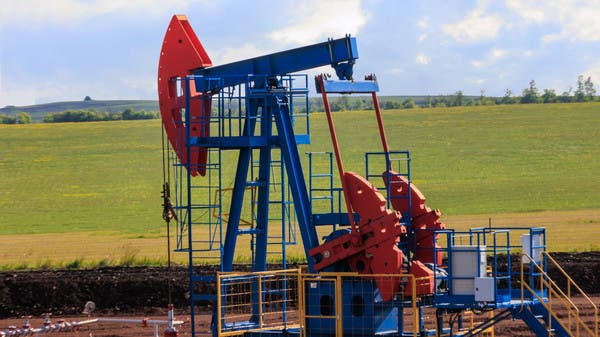
Image caption, OPEC decided to increase its oil production, which is one of the negative factors for the current oil situation
Oil had suffered significant losses after the signing of the ceasefire agreement between Washington and Tehran due to the availability of several factors that combined to pressure crude oil, including the ceasefire, the reopening of the Strait of Hormuz, the increase in OPEC production, and the decline in US inventories.
These factors combined would lead to an increase in supply and avoid any shortage in supplies, which naturally leads to a decline in prices.
Rania Wajdi commented that "the decline occurred because markets reassessed risks amid renewed US-Iranian military operations in the region, and did not come as a result of a natural improvement in the global demand rate."
She pointed out that there is a possibility that oil could reverse the current upward trend if certain factors on the ground are met, the most prominent of which is the return to negotiations between Washington and Tehran.
Wajdi added: 'The fastest impacting factor will be any decline in the intensity of escalation or a return to the diplomatic track, as we have seen in the past period that the risk premium can decline quickly once serious indications of de-escalation appear, even before reaching a full political agreement,' stressing that what is happening could be 'a wave of rise that may reverse.'
Sol Cavonic, head of research at MST Marquee, says that "oil prices will continue their gradual rise as long as the current wave of attacks continues to escalate."
He adds: 'The rise may worsen if the disruption of transport through the Strait of Hormuz continues, and the transit rate does not exceed 30 percent compared to what it was before the war.'
He is supported by Andy Lipow, president of Lipow Oil Associates, who said in an interview with CNBC that "if the strait is closed for a long time, it could lead to a drop in commercial inventories to the minimum necessary for continued operations, which would push global oil prices to rise further."
Several projectiles fall on Iran's Qeshm Island, and the United States says navigation in the Strait of Hormuz is 'normal'
How long do oil tankers need to reach their final destinations?
The OPEC+ group, the largest oil alliance comprising the world's largest exporters, announced an increase in its production by 188,000 barrels per day, starting from August 2026; this was during a meeting held via video to review the conditions of the oil market and its future prospects.
Original source: BBC Arabic



Comments (0)
Be the first to comment.