How Chips Made Football Smarter?
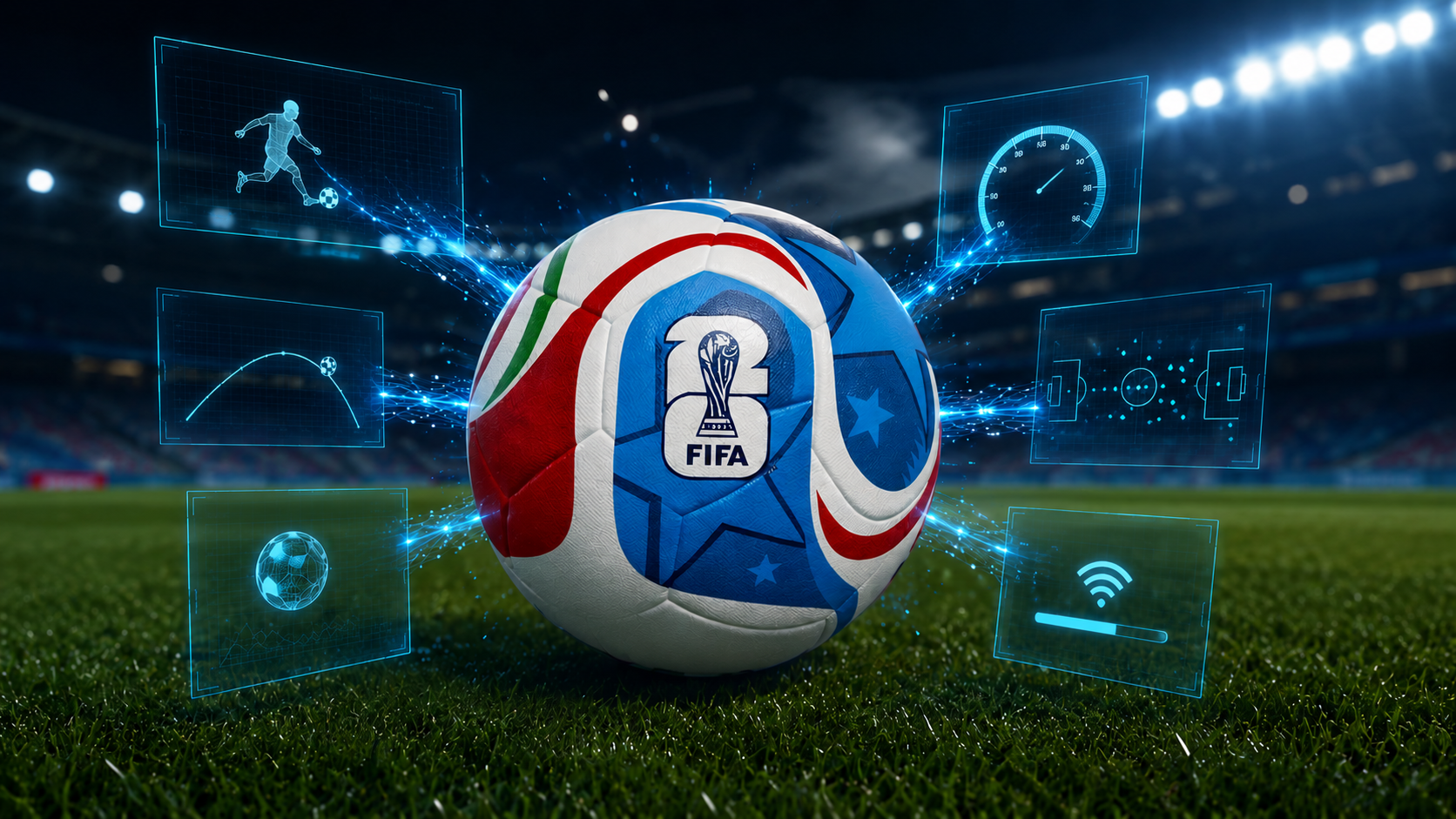
How Chips Made Football Smarter?
In the 103rd minute, Croatia thought they had snatched a dramatic equalizer against Portugal in the round of 32 of the 2026 World Cup, after Josko Gvardiol slotted the ball into the net amid loud celebrations in the stadium. But seconds later, the video referee intervened to disallow the goal. Why?
Why was the goal disallowed?
- The goal was disallowed after the video referee spotted a slight touch by Croatian Igor Matanovic before it reached his teammate Mario Pasalic, who set up the goal for Gvardiol, even though Matanovic's touch was barely visible to the naked eye.
Who disallowed the goal?
- The video referee relied on real-time data sent by the ball to the VAR room, after the electronic sensor inside it detected Matanovic's touch, which put Pasalic in an offside position, thus sending Portugal to the round of 16, before they were eliminated by Spain.
Smart Sensor
- The 2026 World Cup ball "Trienda" (developed by Adidas) contains an electronic sensor of type IMU that measures its movement and acceleration in three dimensions, and sends data to the video room at a rate of 500 times per second to detect every touch with extreme precision.
Decisive Touches
- The sensor can determine the exact moment any player touches the ball, even if the touch is invisible to the naked eye, helping referees decide offside cases, handballs, and controversial decisions.
Integrated Monitoring
- The sensor (which is lightweight and rechargeable) does not work alone; it integrates with 16 cameras inside the stadium that track the ball and players, collecting up to 29 data points per player 50 times per second to provide an accurate picture of every play.
Is the technology new?
- This technology is not entirely new; it first appeared in the 2022 World Cup, but the 2026 version saw improvements to the sensor and its location inside the ball, enhancing the accuracy of touch detection and the speed of data transmission to the video technology room.
Ball Design
- The "Trienda" ball is the first in World Cup history to be made of only four pieces fused thermally without stitching, to enhance its stability in the air and improve the accuracy of its trajectory during flight, while the 2022 World Cup ball was made of 20 pieces.
Does the ball have an effect?
- Some (like former Denmark goalkeeper Kasper Schmeichel) believe the ball's design reduces air resistance and makes shots faster and harder to save, while scientific tests indicate it is more stable than the "Jabulani" ball from the 2010 World Cup, which sparked widespread criticism due to its unpredictable trajectory.
What other technologies?
- Through a partnership between Lenovo and FIFA, a technology was developed to create a 3D model of each player using artificial intelligence, via a digital scan that takes about a second, enhancing the accuracy of offside technology and making the display of video technology decisions clearer.
New Era
- Football decisions no longer rely solely on referees' eyes and cameras; data has become an essential part of the game. With the development of the ball and artificial intelligence, a touch invisible to the naked eye may decide the fate of a match or an entire tournament.
Sources: Arqam – FIFA – BBC Sport – The Athletic – Yahoo Sports – Associated Press – Wired
Important Information
Sports
{{displayname}}
{{profession}}
{{followercount}}
{{aboutme}}
Original source: Argaam



Comments (0)
Be the first to comment.