How Gulf Economies Showed Resilience Despite Iran War
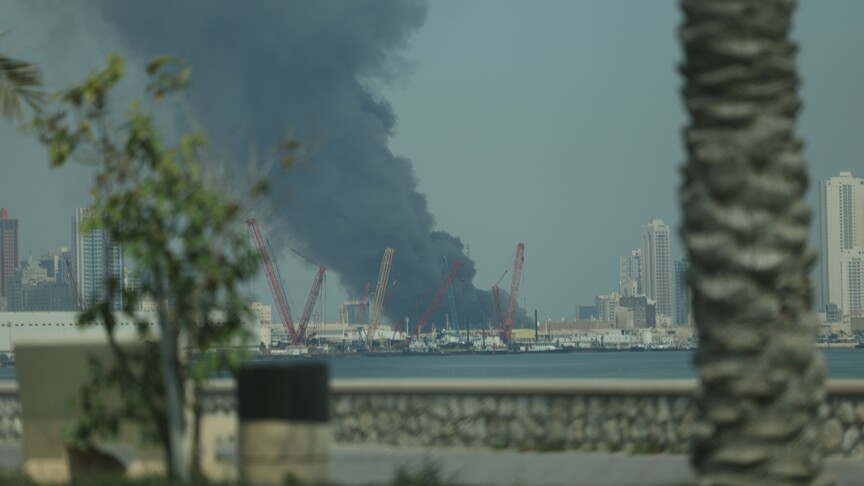
Despite being close to the US-Israeli war theater on Iran, and several energy facilities being attacked, Gulf economies maintained a degree of stability.
Rabat / Khaled Al-Majdoub / Anadolu
Economic expert Mohamed Ramadan to Anadolu:
- Qatar, UAE, and Kuwait enjoy strong financial positions and large reserves, enabling them to overcome this crisis
- Oman was not greatly affected, as it has coasts and sea outlets outside the Strait of Hormuz
- Saudi Arabia is experiencing continuous growth and has the capacity to export oil through other ports on the Red Sea; Bahrain is the most affected
- The current crisis in the region is temporary, not permanent, and overcoming it requires reducing reliance on the Strait of Hormuz and finding alternative routes
Despite attacks on energy facilities and navigation disruptions in the Strait of Hormuz, Gulf economies have shown varying capacity to contain the war's repercussions, benefiting from years of economic reforms, diversification of income sources, and development of alternative oil export routes.
In this context, the ability of regional countries to contain the repercussions of the US-Israeli war on Iran varied, given their differing financial and geographical conditions, which gave each country a different level of resilience and confrontation.
Improved business climate, along with economic reforms adopted by Gulf countries in recent years, helped maintain their investment attractiveness.
Moreover, the announced credit ratings of some Gulf countries have not seen significant changes, despite supply chain disruptions and concerns related to trade and energy movements in the region.
Economic indicators show the varying impact of the war on Gulf economies, with the IMF forecasting Oman to grow by 3.5% in 2026, Saudi Arabia and the UAE by 3.1% each, while Kuwait and Bahrain are expected to contract by 0.6% and 0.5% respectively.
In Saudi Arabia, for example, the General Authority for Statistics announced a 3% year-on-year GDP growth in the first quarter of this year.
In another indicator of Saudi economic stability, data from the General Authority for Statistics on Wednesday showed the annual inflation rate stable at 1.8% in June, continuing to record low levels compared to many advanced and emerging economies.
** Uneven impact
Saudi economic expert Mohamed Ramadan attributes the varying ability of Gulf countries to face the war's repercussions to their differing financial and economic conditions, and the alternatives each country has to overcome the crisis.
Speaking to Anadolu, he said Gulf economies are different, each with its own circumstances.
He considered that some countries can overcome this crisis given their excellent financial position.
In this regard, he added: "There are countries with excellent, even exceptional, financial positions, such as Qatar, the UAE, and Kuwait. They enjoy strong financial conditions and large financial reserves, enabling them to overcome this crisis without any significant problems."
He also considered that the Saudi economy is experiencing continuous growth, and at the same time, Riyadh has the ability to export oil and receive goods through other ports on the Red Sea.
Ramadan believes that Saudi Arabia was not greatly harmed by the closure of the strait; on the contrary, it benefited from higher oil prices and continued exporting oil via its Red Sea outlet, in addition to continued movement of goods, etc.
He explained that "the damage from the crisis was limited; one could say it benefited from higher oil prices."
As for Oman, the economic expert explained that it was not significantly affected because it has coasts and sea outlets outside the Strait of Hormuz.
He continued: "It also has the ability to export its products outside this strait, in addition to its political relations with Iran being the best among the six GCC states."
In contrast, Ramadan believes Bahrain is the most affected country due to current circumstances.
He added that the repeated security threats to Bahrain "significantly affect security and stability on a daily and continuous basis, creating many problems."
Furthermore, Ramadan believes that "Bahrain's financial position is among the weakest in the GCC, which has increased the impact of this crisis on it."
This disparity, according to the economic expert, indicates that the Gulf countries' ability to face the war's repercussions is linked to the size of their financial reserves, diversification of trade outlets, and their level of reliance on the Strait of Hormuz.
Since the outbreak of the war, Gulf countries have worked to export part of their oil via alternative routes without passing through the Strait of Hormuz, such as Saudi Arabia using the East-West pipeline to the port of Yanbu on the Red Sea.
Saudi Arabia built the East-West pipeline in the early 1980s, but its importance increased with the outbreak of the war and the resulting disruption of shipping through the Strait of Hormuz.
** Temporary crisis
Economic expert Mohamed Ramadan believes that the current crisis in the region is temporary, not permanent, and may last months, not years.
He considered that overcoming it requires reducing dependence on the Strait of Hormuz and finding alternative routes, as Saudi Arabia has done.
He explained that "countries like Kuwait, Bahrain, and Qatar need to benefit from available alternative corridors through Saudi Arabia."
He added: "There must be infrastructure that facilitates the transport of goods, oil, gas, etc., via pipelines, roads, and logistics networks that pass through the Arabian Sea or the Red Sea."
He called for reducing reliance on the Strait of Hormuz so that its closure does not pose a major threat, and thus loses its use as a pressure card.
He stressed the need for all GCC states to work on reducing their dependence on the Strait of Hormuz by using alternative routes.
He said Gulf countries have infrastructure projects and plans for this purpose, which may take several years to complete.
The US-Israeli aggression on Iran began on February 28, leaving more than three thousand dead, according to Tehran, which responded with attacks that killed Americans and Israelis.
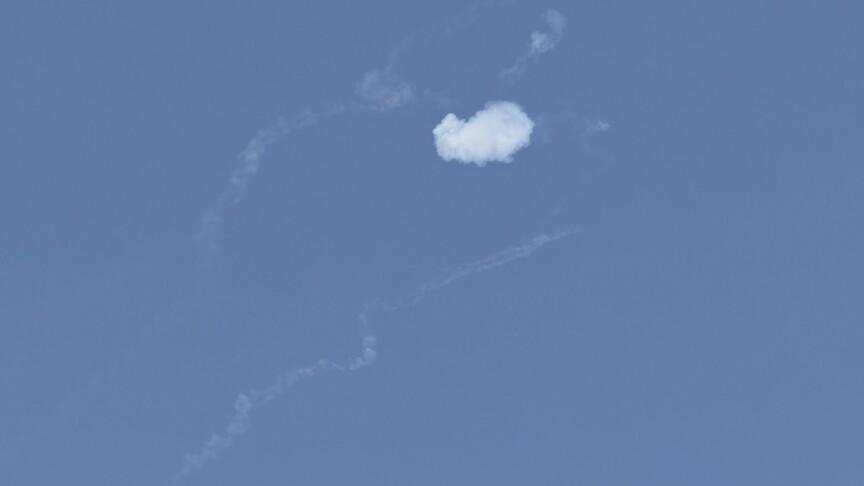
Iran also launched attacks on what it said were US bases and interests in Arab countries, including GCC states, some of which resulted in civilian casualties and damage to civilian facilities.
The Gulf Cooperation Council (GCC) includes six countries: Saudi Arabia, the UAE, Qatar, Bahrain, Kuwait, and Oman.
Iran insists on the need for coordination with it before any ship passes through the Strait of Hormuz, which is strategic for global energy supplies.
Original source: Anadolu Agency




Comments (0)
Be the first to comment.