How Is a Nation's Wealth Measured?
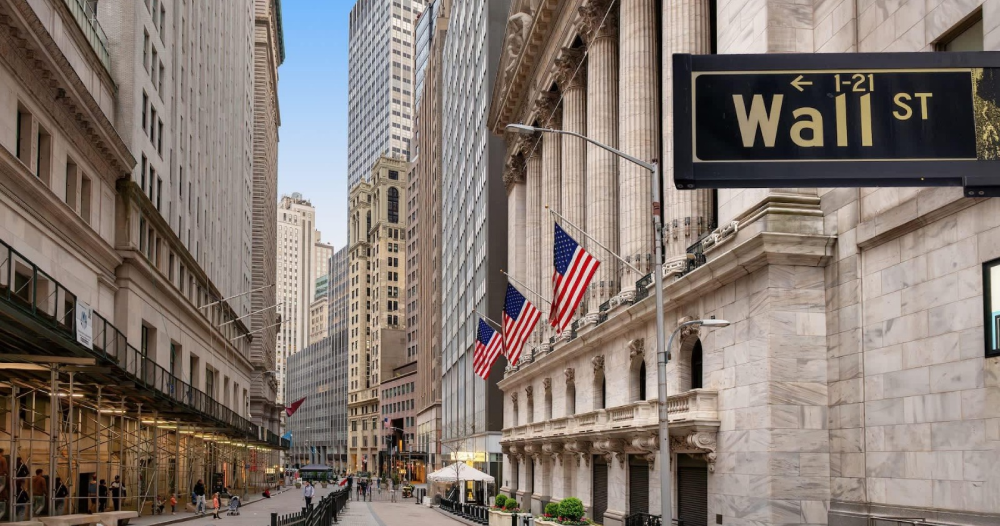
How Is a Nation's Wealth Measured?
The global wealth map may seem clear when looking at the big numbers, but behind each number is a different story. The country that tops the lists of GDP or average wealth may not necessarily be the place where citizens feel the most prosperous.
While billions accumulate in the accounts of some individuals and companies, the more complex question remains: Is economic strength measured by the wealth of the rich, or by what the average citizen experiences in their daily life?
Global Wealth
The Global Wealth Report from UBS reveals that global wealth continued to rise during 2025, as for every $10 the world owned at the start of the year, more than $1 was added by its end. The average wealth also exceeded half a million dollars in seven countries around the world.
However, experts warn that the average can present a misleading picture, as it is heavily influenced by the wealth of higher-income groups, which may raise the overall figure even though the majority of the population does not necessarily share in these gains.
For this reason, the median wealth indicator (to express the wealth of individuals in the middle of the economic pyramid) is more representative of society's reality, because it measures the financial status of the individual at the midpoint of the wealth distribution, not just the average of everyone.
According to the report, the United States ranked second globally in average wealth, but dropped to 28th place when measuring median wealth.
In contrast, Belgium moved from 11th place in average wealth to second place in median wealth, while Italy went from 23rd to 11th place.
Major Economies
These findings come at a time of increasing debate over comparisons between major economies, especially after discussions about whether Europe has become 'poorer' compared to the United States, based on GDP per capita, which is also an average that may not reflect the living reality of all residents.
Although the US economy, with a history spanning more than 250 years, has achieved enormous successes and reached the stage of the first trillionaire billionaire, the question remains: Does the average American citizen feel this prosperity compared to residents of other countries?
Finland, for example, is consistently ranked among the happiest countries in the world, even though its per capita wealth is about 60% lower than that of the United States. As for Spain, where this figure is more than 130% lower than America's, about two-thirds of its residents consider their personal economic situation 'good or very good,' according to recent surveys.
The Concept of Wealth
These comparisons show that the concept of wealth is not based solely on the amount of money, but is also linked to the cost of living, the quality of public services, and citizens' ability to meet their daily needs.
China is another example of the differing concept of economic well-being, as some living costs such as fuel may be higher than in the United States, but public transport, restaurants, entertainment, and university education are much cheaper.
While Chinese authorities are calling on citizens to increase spending to support the economy, individuals remain the ultimate decision-makers in how to manage their money and their level of consumption.
At the same time, the rise of artificial intelligence raises new questions about the future of wealth and work. Modern technologies have created huge investment opportunities, but also raised concerns about job loss and a widening gap between beneficiaries and those affected.
Job Cuts
In this context, experts believe that the potential wave of job cuts due to artificial intelligence could lead to social and political tensions if the economy fails to distribute the gains of this technology more broadly.
The repercussions of artificial intelligence are not limited to the labor market, but extend to the environment as well. Major technology companies have seen a rise in emissions due to the massive expansion of data centers needed to run AI systems. Reports indicate that one company emitted the equivalent of about 19 million gasoline-powered cars.
Analysts believe that the biggest challenge is not only developing artificial intelligence, but ensuring its benefits reach broader segments of society, especially since some of those most benefiting from this technological revolution are the same people facing criticism for their concentration of wealth.
Trade Wars
On another front, trade wars continue to reshape the global economy, amid debates over whether protectionist trade policies truly yield long-term gains.
Economic analyses indicate that China has managed to strengthen its position in some trade confrontations, while Europe faces increasing pressure to take sharper steps to protect its industries, especially amid rising Chinese competition.
This issue gets more complicated with climate change, as Europe increasingly needs Chinese products such as air conditioners to cope with rising heatwaves, which partially contradicts its efforts to reduce reliance on Chinese imports.
This debate recalls Japan's experience in the 1980s, when trade tensions with the United States led to agreements that left deep economic impacts on the Japanese economy. Observers believe that China does not seem ready to repeat the same experience.
Economic Transformations
In other parts of the world, economic developments reflect notable transformations. Guyana has become the world's fastest-growing economy thanks to the oil boom, attracting waves of immigrants seeking new opportunities, especially from Cuba, which is facing an economic crisis.
Some investors continue to bet against the artificial intelligence wave, considering current company valuations may be overblown. In another sector, the growing popularity of sports betting has generated huge tax revenues for some US states, but also posed challenges related to addiction prevention programs.
Worker Protection
Amid rising global temperatures, Europe is also seeking solutions to protect workers from recurrent heatwaves, benefiting from the experiences of other regions accustomed to dealing with harsh climatic conditions.
In the end, these developments confirm that wealth is not a single number that can be easily measured. A strong economy does not necessarily mean more satisfied citizens, and rapid growth does not guarantee fair distribution of gains. As technology, trade, and climate reshape the global economy, the biggest challenge remains building a model that makes prosperity more inclusive, not just record numbers in wealth reports.
Source: World Economic Forum
Important Information
{{displayname}}
{{profession}}
{{followercount}}
{{aboutme}}
Original source: Argaam




Comments (0)
Be the first to comment.