How much should we pay for our food?
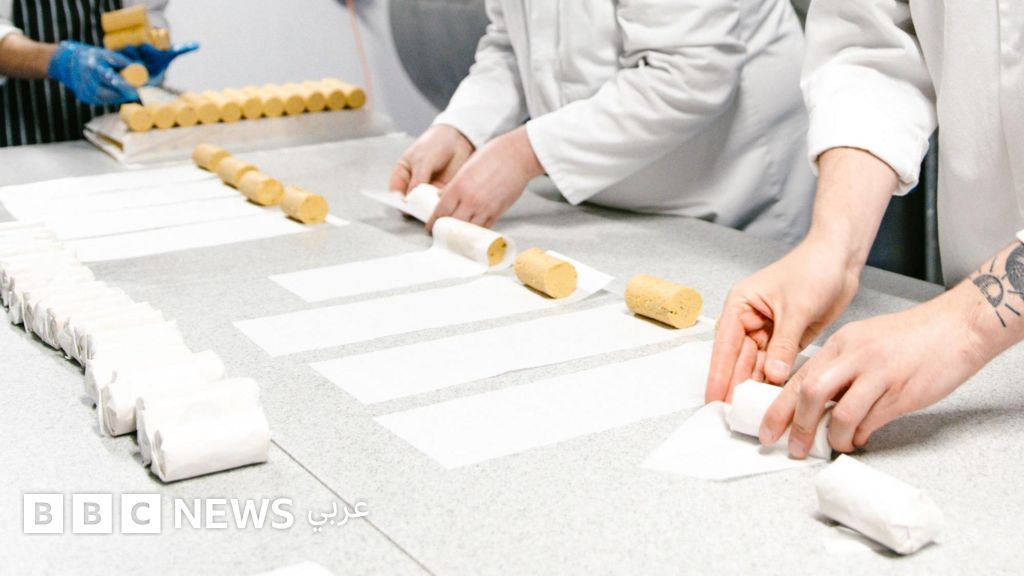
Many voices in Scotland argue that instead of capping prices of nutritious foods, consumers should consider spending more on the types of food they get.
How much should we pay for our food?
Image caption, Butter is handmade and supplied to upscale restaurants across Scotland.
Article Information
Author, Kevin KeaneRole, Environment, Energy and Rural Affairs Correspondent in Scotland
Published 29 June 2026
Reading time: 7 minutes
Jules Ball says he has noticed a change in Scots' attitude towards their relationship with food, and believes people are more willing to pay extra for it.
The 34-year-old French citizen, who is co-owner of a small craft butter production company in Glasgow (which relies on skilled labour and traditional methods rather than large automated production lines), joins a group of people who are concerned about the trend towards cheaper food as a solution to the cost of living crisis.
And Jules says the focus in his hometown is much more on quality, and people pay great attention to the product's source and taste.
This discussion seems to contradict more recent calls to make the prices of some food items affordable. The Scottish National Party, in its last Holyrood election manifesto, pledged to cap the prices of a 'basket of basic food items', including bread, milk and eggs.
Those pledges faced criticism from farmers and food producers, but the Scottish government stated it has a 'public health responsibility' to provide a healthy, nutritious and affordable diet.
Black pepper and olive oil: A magic key to boosting your meals' nutritional value
What is ultra-processed food and is it harmful to your health?
Image caption, Jules Ball (right in photo) founded 'We Knob of Butter' five years ago with his business partner, Kieran Woods.
Jules was born in La Rochelle, France, on the Bay of Biscay coast, and moved to Scotland at age 14.
He was trained by his father, who worked as a chef in upscale restaurants, so he 'grew up in the kitchen'.
Jules founded 'We Knob of Butter' in 2021 with his friend Kieran Woods, and the company started selling their product once a month at a market.
Skip most read and continue reading
Do you really need to avoid gluten?
Ukraine strikes major oil depot in Russian city of St Petersburg
'A meal I had on holiday ended up with 38 parasites in my brain'
Hossam Abu Safiya: Warnings of life-threatening danger after repeated assaults in Israeli prison
The butter is now supplied to a range of prestigious Scottish restaurants and sold via mail order. Not only that, but it is also served on the luxurious 'Royal Scotsman' train.
Jules says: 'In France, we like to take our time eating. We also like to have a strong connection to our food, so quality is not necessarily a luxury; it's simply something we expect as a family.'
He adds: 'But Scotland is seeing a remarkable rise; people are really caring about where their food comes from, and they are spending more time shopping at local markets to ensure they get high-quality products.'
Can green-coloured supplements give us good health?
Buying packaged goods
The proportion of household income spent on food has changed significantly over the years.
According to a survey called 'Living Costs and Food' conducted by the UK government, the proportion of total spending on food halved over the 60 years to 2016, from 33% to just 16%.
Experts believe part of this is due to the industrialization of farming, which reduces production costs, as well as food retailers leveraging their purchasing power to keep prices low.
But food expert Peter Gilchrist says many of us do not know how food is produced.
Image caption, Food historian Peter Gilchrist believes many of us have lost our connection to food production.
Peter Gilchrist says: 'Ultimately, you buy packaged goods. You don't go to the greengrocer and ask: "What's fresh? What's in season? What's your best product?" In reality, you only have one option: you go into the store with a shopping cart, and you shop.'
Gilchrist believes that during crises, governments must intervene to ensure food is available at affordable prices, as they have done in the past. But he notes that this intervention should go beyond simply capping prices.
He adds: 'We can work to reform our food systems and ensure there are home economics teachers in schools, so every young person learns how to cook with those price-capped goods, and we get better education about locally grown crops and high-quality Scottish products.'
Image caption, First Minister John Swinney says capping food prices falls under public health responsibilities.
Although average spending on food is around 16% of total household budgets, low-income households may spend a much larger proportion on food.
This worries Professor Alex Johnstone, a nutrition scientist at the Rowett Institute, University of Aberdeen, who notes that prices have already risen by 40% over the past five years.
According to her calculations, some people would need to spend about half of their disposable income on food, and this would rise to around 85% for households with children.
Johnstone added: 'That means these households suffer from "food insecurity"; they live in food poverty and lack the financial means or access to a healthy diet.'
She also explained that if a cost cap is imposed, it should include a variety of healthy, environmentally sustainable, and culturally acceptable foods, including healthy ready meals, considering low-income households often also lack sufficient time.
Farmers' concerns
Skip podcast and continue reading
Worth attention
In-depth explanation of key events and topics to help you understand the most important changes around you and their impact on your life
Episodes
End of podcast
Farmers have long been concerned about the pressures on their profit margins due to demands for cheaper food, strict animal welfare standards, and promoting responsible environmental practices.
The pig farming sector in particular is suffering from an outbreak of African swine fever in Spain, which has severely affected the country's exports and led to a huge surplus of pork in European markets.
This means Scottish pig farmers are losing up to £1,000 ($1,300) per sow, according to the National Farmers' Union Scotland.
Former president of NFU Scotland, Martin Kennedy, has long called for higher food prices to make farming more profitable.
Kennedy says: 'If we keep putting pressure on primary producers, they will simply say we can't continue, and we'll become increasingly dependent on imports.'
Original source: BBC Arabic


Comments (0)
Be the first to comment.