IMF cuts 2026 world growth forecast, citing Iran war fallout

Global economy to grow 3 percent in 2026, as AI demand partly offsets energy shock from Iran war, IMF says.


By John Power
Published On 9 Jul 20269 Jul 2026
The International Monetary Fund (IMF) has cut its 2026 global growth forecast for the second time this year, citing the “lingering effects” of the energy shock caused by the US-Israel war on Iran.
The global economy is expected to grow 3 percent in 2026, down from April’s forecast of 3.1 percent, a “modest slowdown” partly offset by AI-driven demand, the IMF said in its latest outlook, released on Wednesday.
Recommended Stories
list of 4 items
- list 1 of 4Justin Bieber joins Madonna, Shakira, BTS in World Cup final halftime show
- list 2 of 4Indonesia’s free meals programme plagued by alleged corruption and waste
- list 3 of 4US expands military strikes on Iran after Trump says he’ll ‘hit them hard’
- list 4 of 4Wildcard Fery faces Zverev in Wimbledon semis, as Kostyuk meets Noskova
end of list
Growth is forecast to rebound to 3.4 percent in 2027, just below the 2024-25 growth average of 3.5 percent, the IMF said.
Global inflation is expected to reach 4.7 percent this year, up from 4.1 percent in 2025, before easing to 3.9 percent in 2027, according to the Washington, DC-based financial institution.
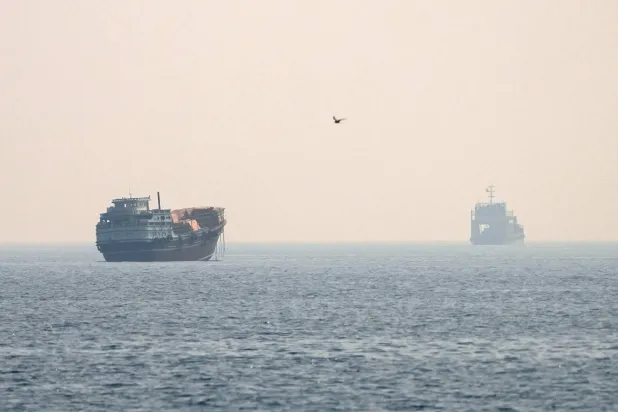
The IMF’s latest downgrade came after the United States on Tuesday renewed strikes on Iran following attacks on three commercial ships in the Strait of Hormuz, but before US forces launched a second round of bombing raids on Iranian targets on Wednesday.
“The global outlook is being shaped by two powerful forces pulling in opposite directions: the lingering effects of the energy shock from the war in the Middle East and a technology-driven investment boom,” Petya Koeva Brooks, deputy director of the IMF’s research department, said in a news conference about the outlook.
“Developments overnight illustrate the uncertainty and risks that surround the outlook,” Brooks said.
The IMF forecast assumes that the Strait of Hormuz begins reopening in mid-July, with conditions returning to a “pre-war state” by March.
Shipping in the strait, which facilitated about one-fifth of the global trade in oil and liquefied natural gas before the war, remains heavily constrained amid the ongoing threat of Iranian attacks.
There were 41 verified transits in the strait on Tuesday, according to maritime intelligence platform Kpler, compared with roughly 130 daily crossings before the war.
After easing to pre-war levels last week, oil prices have surged since the US resumed strikes on Iran.
US President Donald Trump on Wednesday said he believed the US-Iran ceasefire was “over”, hours before the Pentagon struck Iranian targets for a second consecutive day.
Brent crude, the main international benchmark, rose as much as 7 percent following Trump’s remarks and the latest round of strikes, at one point topping $79 a barrel.
Brent futures for September delivery stood at $78.76 a barrel as of 02:30 GMT, up nearly $8 from the same time last week.
“Oil’s return to near pre-war levels suggested markets were leaning on a best-case outcome for the US-Iran arrangement, despite it resting on little more than a high-level MOU,” Fabien Yip, a market analyst at IG in Sydney, Australia, said in a note to clients.
“This week’s re-escalation is a reminder of how fragile that assumption was, and how quickly sentiment can turn when it’s tested. Near-term, the risk premium from renewed tensions likely keeps oil prices supported, though a full repeat of the earlier spike looks less likely for now.”
In its latest outlook on Wednesday, the IMF forecast the US to record the fastest growth among major advanced economies this year.
US gross domestic product (GDP) is expected to grow 2.3 percent, compared with 0.9 percent for the Eurozone, 1 percent for the United Kingdom, 1.1 percent for Canada, and 0.6 percent for Japan.
China, which is classed as an emerging economy, is forecast to grow 4.6 percent.
Original source: Al Jazeera

Comments (0)
Be the first to comment.