Integration of Industry and Energy - Dr. Mansour Al-Malik
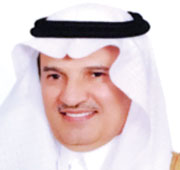
The issuance of a royal order assigning His Royal Highness Prince Abdulaziz bin Salman to assume responsibility for the Ministry of Industry and Mineral Resources, while retaining the portfolio of the Ministry of Energy, represents a strategic step that reflects a trend toward integrating industrial and energy policies under a single leadership. This integration grants the Kingdom a greater opportunity to accelerate the construction of an economic system based on maximizing the added value of natural resources, rather than merely exporting them in their raw form.
This development comes at a time when global energy markets are experiencing rapid changes driven by geopolitical shifts, increasing energy demand, the expansion of low-emission technologies, and the reshaping of global supply chains. The most competitive nations are those that can combine energy production, manufacturing, advanced technologies, and logistics services within a single system.
From this perspective, merging the Ministries of Energy and Industry allows their minister to align investment plans more integrally, starting from the exploitation of natural resources, through providing energy for industries, to producing high value-added products targeting global markets. This approach enhances decision-making efficiency, shortens the time required for implementing major projects, and raises the competitiveness of the national economy.
The Kingdom possesses assets that place it in a unique position to achieve this transformation. It combines vast oil and gas reserves, significant potential in solar and wind energy, advanced infrastructure, modern ports, and a geographical location linking Asia, Europe, and Africa, in addition to a stable investment environment that supports long-term projects.
The economic value of energy is no longer measured solely by the volume of oil exports, but by what can be produced based on this energy. Advanced petrochemical industries, sustainable aviation fuel, modern fertilizers, hydrogen and ammonia have become the new generation of industries that major economies compete for.
With the energy and industry sectors under the umbrella of a single leadership, opportunities are enhanced for building integrated value chains that begin with resource extraction, then conversion into industrial products, and finally export to global markets. This integration increases the economic return for every barrel of oil, cubic meter of gas, or megawatt of electricity produced.
The Kingdom also has an opportunity to become a global hub for producing electrical energy, hydrogen, and its derivatives, benefiting from low production costs, developed logistics infrastructure, and increasing global demand for low-emission energy sources. Many international studies indicate that hydrogen and clean fuel markets will be among the fastest-growing sectors in the coming decades, opening broad horizons for industrial investments within the Kingdom.
The impact of this integration is not limited to the energy sector but extends to the digital economy as well. The expansion of data centers, artificial intelligence, and cloud computing requires large quantities of stable and competitive electricity, which gives the Kingdom an additional advantage to attract massive technological and industrial investments, turning energy into a magnet for future industries.
If the current pace of investment continues, optimistic economic scenarios indicate the possibility of renewable energy production capacity reaching over 200 gigawatts in the next two decades, with significant growth in hydrogen and derivative production, and expansion of energy-related industries. Annual revenues from the energy system and associated industries could exceed 2.5 trillion riyals by 2040, with potential for increase if global demand growth and investment acceleration continue.
In contrast, this transformation may have a broader impact on the national economy. Optimistic economic scenarios suggest that the size of the Saudi economy could reach between 15 and 20 trillion riyals by 2040 if the pace of economic diversification continues, manufacturing expands, and the Kingdom continues to attract high-quality investments.
Arabs and Peoples of the Middle East
The significance of the recent decision lies not only in combining two ministerial portfolios, but in the integration that can result between policies, decisions, and investments. The world is moving towards economic models that integrate energy, industry, and technology, and the Kingdom has the assets that qualify it to be at the forefront of this transformation.
Original source: Al-Jazirah


Comments (0)
Be the first to comment.