Iran Promotes Fake Victory Amid Economic Collapse

The Iranian regime is trying to promote an illusory victory over the United States by relying on its missiles and Hormuz operations, ignoring the food crisis and the disappearance of the new Supreme Leader from view. The comparison with the collapse of the Soviet Union presents itself as economic pressures worsen.
Abdulrahman al-Turairi
Mojtaba Gorbachev
Published on July 23, 2026 at 00:01 | Last updated on July 23, 2026 at 00:01
These statements come at a time when Iran is suffering from increasing economic pressures due to the sanctions and blockade imposed on the Iranian people.
Follow Okaz channel on WhatsApp
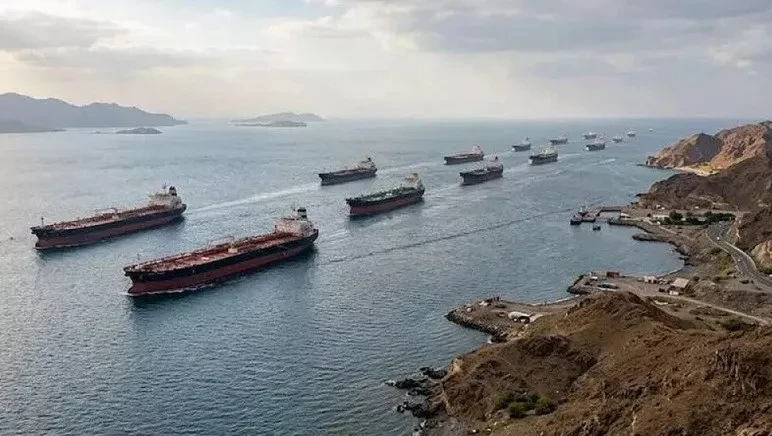
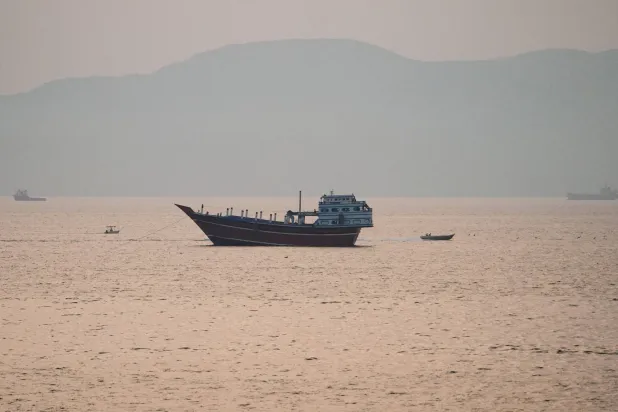
The Iranian regime seeks to portray itself as victorious over the United States, relying on its missile capabilities instead of providing bread to the people, and the ability of its elements hiding in the mountains to target oil tankers in Hormuz, while food and grain ships are blocked due to the siege.
The meanings of non-victory are first evident through the leader appointed as the absent Supreme Leader, as neither his voice nor image has appeared, and he did not even attend his father's funeral. It is unknown whether he is injured being treated in a safe place near Tehran or was taken to Moscow for security reasons before medical ones.
And if we return to the Iranian project of exporting the revolution, which was led by Qasem Soleimani and was ended by directives from President Trump in his first term, in one of its corners it was inspired by the Soviet model that inherited the legacy of Tsarist Russia, turning the resistance arms into a smaller model of the Eastern republics.
Note that the Iranian regime sought to export the revolution throughout the Arab world, and we recall examples that Algeria and Morocco resisted in past years. Indeed, the ambition reached attempting to influence Islamic centers in Europe, such as Belgium, Britain, and Germany, and also in the United States.
Those who oppose this reading rely on differences, most notably that the Soviet identity was a party communist identity prone to disintegrate faster under increased economic pressures, while the Iranian identity is composed of religious ideology, nationalism, and Persian emotional heritage.
There is another precise aspect: the Soviets faced the West alone after Washington neutralized Beijing, but Iran, even if support from Russia and China is not clear, represents the wall that isolates the West, a buffer state from them.
If we look at the similarities between the two experiences, we find that attrition was common. The Russians were exhausted in Afghanistan and left, as did the Revolutionary Guard from Syria. Syria represented a dual target for Iran, as the Revolutionary Guard and Hezbollah were exhausted there, a result that also led to them being exposed before and after the 'Biyajer'.
One of the most important commonalities between Iran and the Soviet Union is the economic collapse and the sharp decline in the value of the currency. It is true that the fighters may carry passports to paradise, but Napoleon's saying 'Armies march on their stomachs' remains true.
Even apart from military attrition, the US political move in hosting the Iraqi Prime Minister and then the Lebanese President is a step to drain Iran's political status as a country that once controlled the decisions of both states. These secret ties, their continuation is attrition and their removal reveals exposure.
When you are on the brink of the abyss, you sometimes imagine that survival rates are exactly equal to the chances of collapse, and you see your opponent using this theory in the art of deals, so you try to copy his tactics because you know he has burned the ground and everything on it, and cut off electricity from the tricks of the bazaar.
But in the attempt to succeed in the art of negotiation to the tunes of Witkoff, JD Vance, and Kushner, you find that in reality you are repeating the Seventh Symphony 'Leningrad,' one of the most prominent works of the great Soviet composer Dmitri Shostakovich.
History does not repeat itself... but the lust for the regime's survival at the expense of the people refuses to be transferred with modification from the pages of history. It is certain that the saying of the late President Eisenhower that politicians rush to wars and generals fear them has not been seen by the commander of the Revolutionary Guard, Ahmad Vahidi; perhaps because he is busy writing statements for the absent Supreme Leader.
The article states that the Iranian regime is trying to export the revolution along the lines of the Soviet model, but it faces similar attrition in Syria and Afghanistan. Suspicion is increasing about the fate of the new Supreme Leader, who has not appeared since his appointment, raising questions about the stability of the regime. The comparison with the collapse of the Soviet Union signals the possibility of a similar collapse if economic pressures and international isolation continue. However, analysts believe that Iran's composite identity between religious and national may slow the collapse, but military and economic attrition appears ongoing.
Original source: Okaz
Comments (0)
Be the first to comment.