Lebanon and Israel Agree on Guidelines for Implementation of 'Two Pilot Zones'

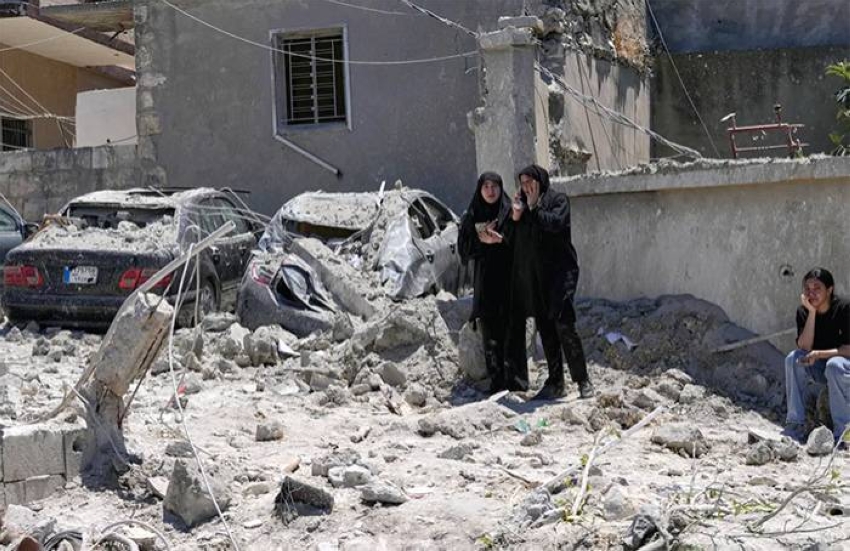
Lebanon and Israel concluded two days of US-mediated talks in Rome on Wednesday, reaching a 'structure and practical guidelines for the implementation of the pilot zones' in southern Lebanon, a step that could pave the way for a gradual Israeli withdrawal within days.
Sources told Al-Sharq that a military meeting via video conference between the two sides is likely next Friday to complete the procedures for the withdrawal of Israeli forces from the two pilot zones and the deployment of the Lebanese army in them.
The US Embassy in Beirut announced in a statement that the talks concluded after two days of 'productive and positive' discussions, noting agreement on a 'structure and practical guidelines' for the pilot zone mechanism, with 'final procedures' to be completed and implemented in the coming days.
A US State Department official told Al-Sharq that the parties will move to 'expanded technical talks focused on implementing all provisions of the tripartite framework, aimed at reaching a comprehensive agreement between Israel and Lebanon.'
Reuters reported, citing a US official, that 'the progress achieved in the talks could allow Israeli forces to begin withdrawing from some parts of southern Lebanon within days,' without announcing a binding timetable for that.
Expected procedures
The proposed procedures include the withdrawal of Israeli forces from the two zones, the entry and deployment of the Lebanese army in them, along with arrangements for monitoring the withdrawal and verifying the implementation of agreed commitments.
The Times of Israel reported that the Rome talks ended without providing a precise timetable for Israel to implement its commitments to withdraw from two small pilot zones in southern Lebanon.
The United States, Lebanon, and Israel signed the tripartite framework agreement last June, which stipulates a reciprocal and sequential process starting with two pilot zones, where the Lebanese army assumes security responsibility after verifying the disarmament of non-state armed groups and dismantling their infrastructure.
In return, Israel commits to reducing its forces and gradually redeploying them outside Lebanese territory, in a phased and conditional manner, in parallel with the deployment of the Lebanese army.
According to the Israeli site, Israeli army officials have expressed their readiness to carry out the withdrawal, but said they have not yet received instructions from the political leadership to begin.
The site added that Lebanese officials accused Israel of stalling the withdrawal and threatened not to participate in the Rome talks, before Washington convinced Beirut to proceed with the negotiations, promising to make progress on the withdrawal file.
In a related context, Axios reported on Tuesday, citing US and Israeli officials, that US President Donald Trump urged Israeli Prime Minister Benjamin Netanyahu during a phone call last Thursday to proceed with the previously agreed redeployment of Israeli forces in Lebanon.
Exclusion of UNIFIL and UNTSO
An Israeli official told Israeli media that the talks in Rome 'further strengthened the conviction that Lebanon and Israel agree on the need to dismantle Hezbollah and disarm it, and to proceed with implementing the tripartite framework agreement.'
The official added that 'the parties agreed on the two pilot zones,' explaining that 'any subsequent expansion of this model will remain conditional on the successful implementation of the pilot phase.'
According to Israeli media, the two zones will be used to test Lebanon's ability to effectively assert its sovereignty, through the Lebanese army implementing the agreed terms, verified by a third party.
The Israeli official did not specify the identity of the third party, but said that the United Nations Interim Force in Lebanon (UNIFIL) and the United Nations Truce Supervision Organization (UNTSO) were not under discussion and will not participate in any verification mechanism.
Regarding private property, the official stated that 'discussions are still ongoing to reach a solution that facilitates the removal of illegal weapons, while respecting Lebanese law.'
The Lebanese side has not confirmed the Israeli statements regarding the exclusion of UNIFIL and UNTSO from the verification mechanism.
Aoun: Work Underway to Stop the War
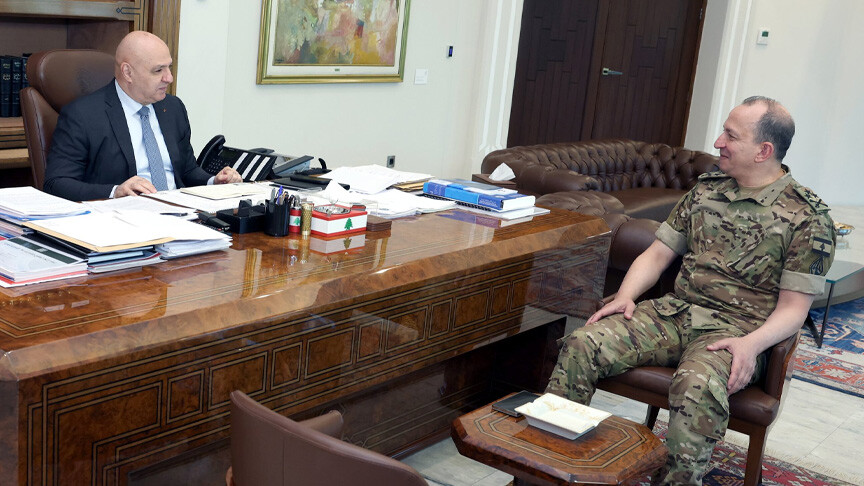
Concurrently with the conclusion of the Rome talks, Lebanese President Joseph Aoun affirmed that work continues to stop the war on Lebanon, withdraw Israeli forces, and deploy the Lebanese army along the southern border, enabling displaced residents of villages and towns to return.
Aoun's statement came during a phone call he received from Austrian Federal Chancellor Christian Stocker, who expressed his country's support for Lebanon in the 'current circumstances,' and its endorsement of the positions taken by the Lebanese president to protect the country's sovereignty and extend state authority over all its territory up to the borders, according to the National News Agency.
Aoun is scheduled to meet Trump next Tuesday, according to The Times of Israel, which reported that the White House had previously encouraged the Lebanese president to meet with Israeli Prime Minister Benjamin Netanyahu, who is expected to be in the United States next week.
The site added that Aoun had repeatedly rejected previous proposals for the meeting due to the continued presence of Israeli forces inside Lebanon, suggesting that the delay in implementing the withdrawal from the two pilot zones will not push him to change his position.
Original source: Asharq News



Comments (0)
Be the first to comment.