Strait of Hormuz: Are alternative routes sufficient for exporting Gulf oil and gas?
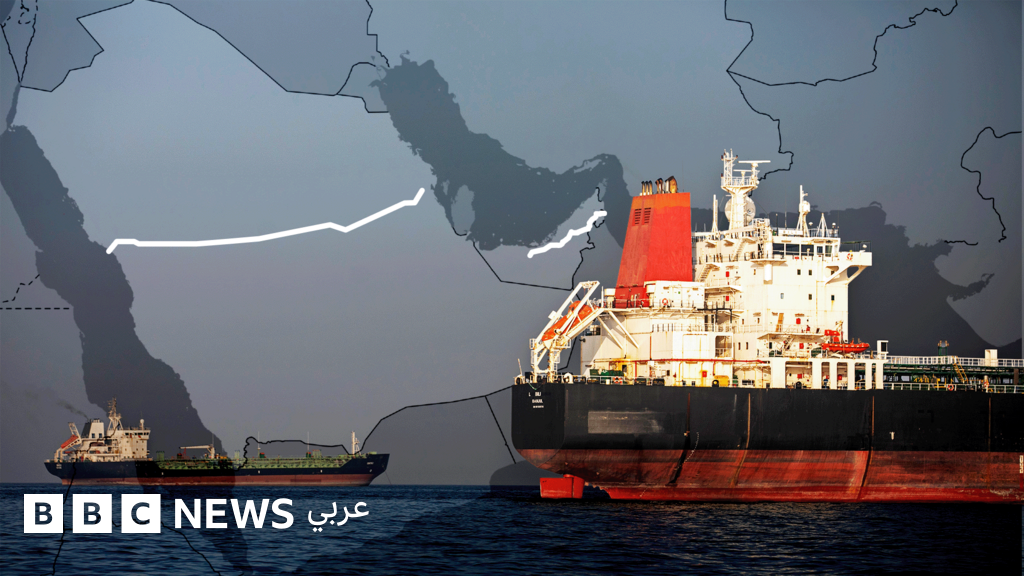
Despite alternative routes, experts say none can replace this strategic waterway, through which about a quarter of the world's seaborne oil trade passes.
Strait of Hormuz: Are alternative routes sufficient for exporting Gulf oil and gas?
Image caption, Despite alternative routes, experts say none can replace the Strait of Hormuz, through which about a quarter of global seaborne oil trade passes.
Article Information
Author, Luis Barucho, Role, BBC World Service
Published 2 hours ago
Reading time: 8 minutes
The Strait of Hormuz, one of the world's most important strategic maritime passages, has returned to the forefront of international attention after a new escalation between Iran and the United States.
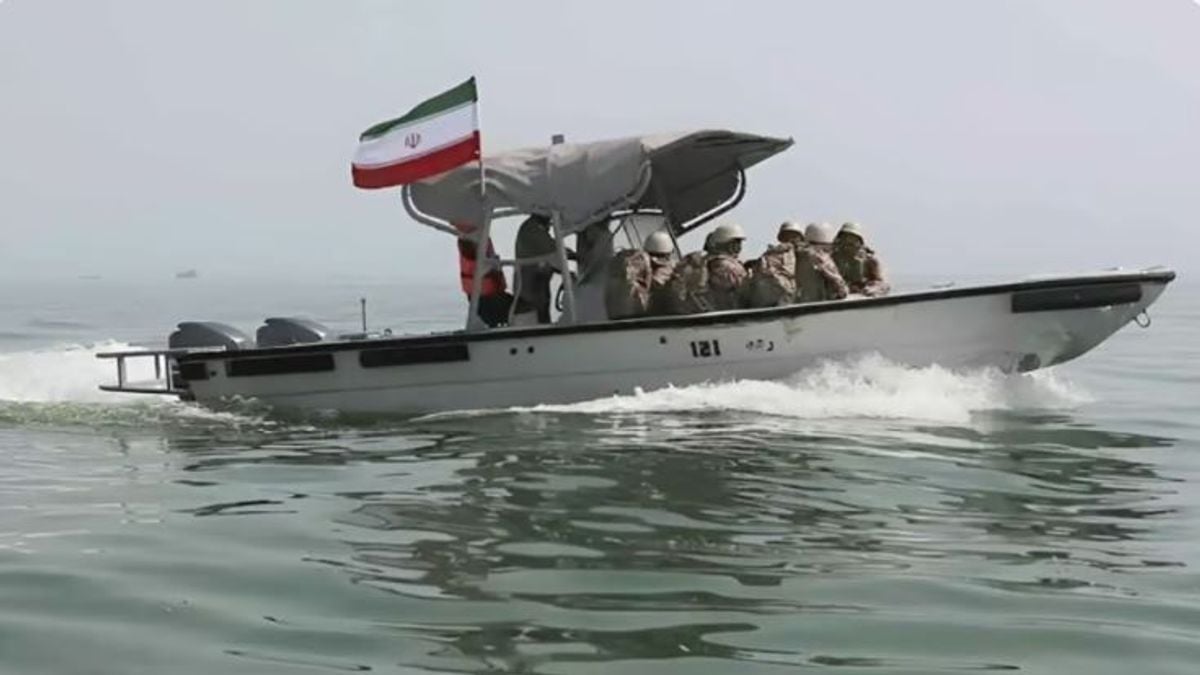
The two countries resumed exchanging attacks just one month after signing a temporary agreement that was supposed to pave the way for a permanent end to the conflict. The renewed tension led to a rise in oil prices.
If navigation through the Strait of Hormuz becomes extremely dangerous, do Gulf oil and gas exporters have alternative routes to get their exports to markets?
Experts say these alternatives exist, but they cannot currently fully compensate for this vital corridor.
Does the resumption of military confrontations between Washington and Tehran herald a full-scale war?
Is the Gulf the biggest loser after the US-Israeli war with Iran?
Why is the Strait of Hormuz important?
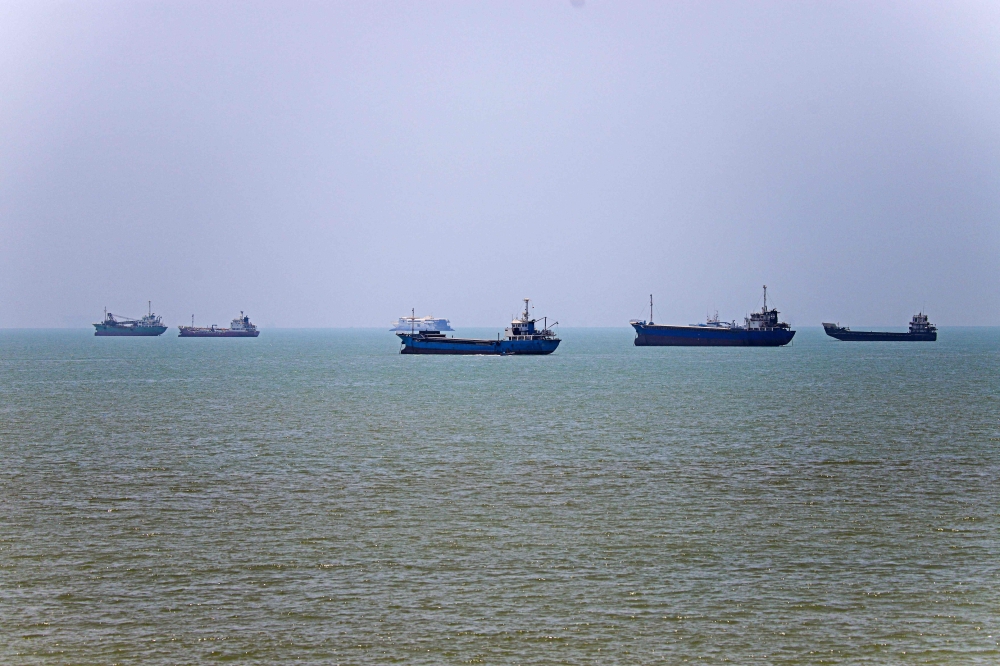
Image caption, Iranian attacks on ships passing through the Strait of Hormuz led to a rise in oil prices.
The Strait of Hormuz, located between Iran and Oman, remains the main route for exporting a large part of the Gulf's oil and gas production, due to its ability to transport huge quantities with flexibility and lower cost.
Oil tankers can ship larger quantities at a lower cost than pipeline networks, which require large investments in construction and maintenance.
Skip the most read and continue reading
Protests in Ukraine against Zelensky's dismissal of Defense Minister
Indications of coordination between Houthis and al-Shabaab to control Bab el-Mandeb Strait – in The Telegraph
Tehran 'asked Houthis to close Bab el-Mandeb Strait' if Washington attacks Iranian power grid
Lionel Messi: 'This is why he is the king'
According to the International Energy Agency, about 20 million barrels of oil and petroleum products pass through the strait daily, about a quarter of global seaborne oil trade. About 80 percent of these shipments go to Asia. About a fifth of the world's liquefied natural gas exports also pass through it.
Dependence on the strait for LNG trade is increasing. Qatar, one of the world's largest exporters, relies on it to reach international markets, and currently no alternative route is available that can transport its exports in such quantities.
Current alternative routes
Skip the podcast and continue reading
Worth paying attention
In-depth explanation of major events and topics, to help you understand the most important changes around you and their impact on your life
Episodes
Podcast end
Because the Strait of Hormuz gives Iran significant influence over global energy markets, Gulf oil-producing countries have for decades invested in building infrastructure that allows them to export oil without fully relying on this passage.
The Saudi East-West pipeline, known as 'Petroline', is the largest of these projects. The pipeline extends 1,200 kilometers, linking oil fields in the east of the kingdom to the export terminal in Yanbu on the Red Sea.
The pipeline was built in the 1980s, during the Iran-Iraq war, when the two countries targeted oil tankers and other commercial vessels in the Gulf. In 2019, its emergency maximum capacity was raised to seven million barrels per day.
The UAE developed an alternative route via the Abu Dhabi Crude Oil Pipeline, which extends 406 kilometers and connects the Habshan fields in Abu Dhabi to the port of Fujairah on the Gulf of Oman, allowing oil exports without crossing the Strait of Hormuz.
According to the Financial Times, quoting informed sources, DP World is in talks to develop a new multipurpose port in Fujairah, in addition to building a new terminal at the existing port. These projects aim to reduce reliance on Jebel Ali port, Dubai's most important shipping and logistics hub, and facilitate access to sea routes outside the strait.
But the capacity of these alternatives remains limited. According to IEA estimates, they can divert only between 3.5 and 5.5 million bpd, compared to about 20 million bpd that normally pass through the Strait of Hormuz.
David B. Roberts, associate professor of international security and Middle East studies at King's College London, wrote in a recent article: 'That is still far from being enough.'
Roberts believes that operational constraints reduce the feasibility of these routes, even when available. The loading facilities in Yanbu, for example, were not designed to handle 'this huge quantity of oil at that speed.'
The Saudi and Emirati routes have also been attacked. In March, the UAE accused Iran of targeting facilities in Fujairah, causing storage tanks to catch fire and suspending loading operations. In April, similar attacks took a pumping station on the Petroline out of service, halting supplies of about 700,000 bpd. But Saudi Aramco, the operator, restored it to full capacity within three days.
Iran, for its part, built a route to export oil without passing through the Strait of Hormuz, via a 1,000-km pipeline from the Goreh area at the head of the Gulf to the export terminal in Jask on the Gulf of Oman.
The pipeline was designed to carry up to 1 million bpd, allowing Iranian oil to reach international markets via the Gulf of Oman. But international sanctions and incomplete infrastructure at the export terminal have kept the volume of oil transported through it far below its designed capacity.
Future export routes
Image caption, A shot of smoke rising from a port near the Strait of Hormuz after a US strike targeted the Kuhistak area in Iran in early July.
Countries in the region are also studying new export routes to reduce their dependence on the Strait of Hormuz.
Among the options under consideration is the Kirkuk-Ceyhan pipeline, which extends 970 km and transports oil from the Kirkuk region in northern Iraq to the Turkish port of Ceyhan on the Mediterranean.
The line was restarted in September 2025 after a two-and-a-half-year halt. By March 2026, the amount of oil transported through it rose to about 250,000 bpd, providing Iraq with an alternative export route, although its capacity remains limited compared to the country's total exports.
Iraq exports about 3.4 million bpd of crude oil, about 95% of which leaves via the southern port of Basra and then passes through the Strait of Hormuz.
There is also a proposal to revive the Kirkuk-Baniyas pipeline, which would allow Iraqi oil to reach the Syrian coast on the Mediterranean without passing through the Gulf.
Construction of the pipeline, about 800 km long, was completed in 1952, but it stopped during the Iran-Iraq war. Recent media reports indicate that Iraq, Syria, and the US discussed rebuilding it, as part of broader efforts to diversify energy export routes in the region.
Among the most ambitious projects is what is known as the 'Four Seas Project', a proposed transport and energy network linking the Mediterranean, Black Sea, Caspian Sea, and the Arabian Gulf via Syria and Turkey.
Original source: BBC Arabic



Comments (0)
Be the first to comment.