Report: US Moved to Protect Qalibaf and Araghchi from Potential Israeli Targeting

Current and former US officials said Thursday that the administration of US President Donald Trump believed last spring that Israel was planning to target two senior Iranian officials involved in negotiations with the United States, raising fears of a collapse of the negotiation track and renewed fighting, and prompting Washington to warn Tehran through regional countries, according to The New York Times.
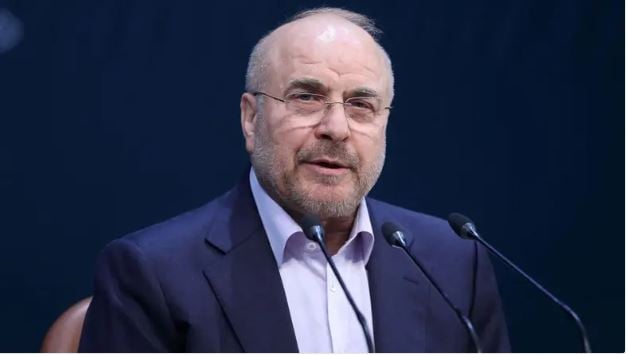
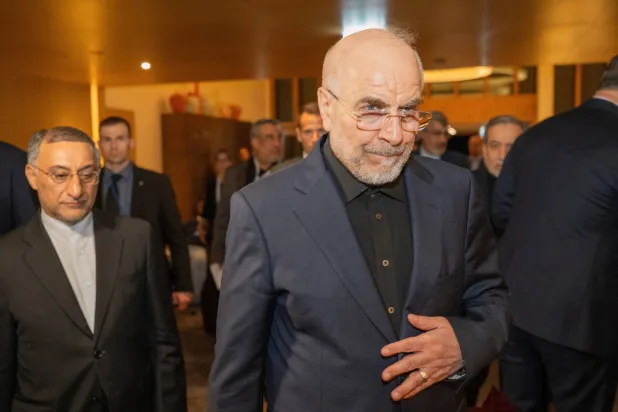
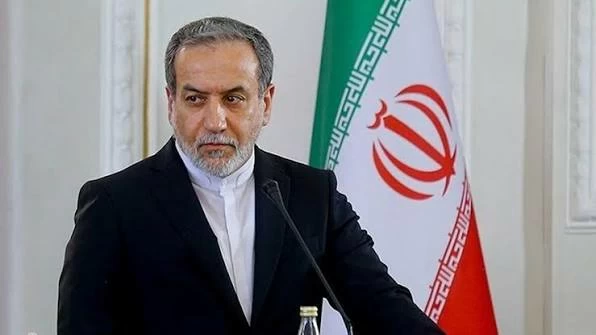
The newspaper reported that US concerns focused on Iranian Foreign Minister Abbas Araghchi and Parliament Speaker Mohammad Bagher Qalibaf, who played a key role in communications aimed at first reaching a ceasefire, then a broader peace agreement between the two sides.
According to the newspaper, US concerns escalated as ceasefire negotiations began in earnest last April, as Washington feared that the assassination of any of the Iranian officials would derail the talks and reignite the war.
It added, citing some officials, that the United States asked countries in the region to warn Iran that Araghchi and Qalibaf might face Israeli targeting attempts.
The newspaper explained that US officials acknowledged that the Iranian officials could have been considered legitimate military targets in the early stages of the war, but they believed that targeting them after the start of negotiations would have eliminated the chances of reaching an agreement.
Divergence between Washington and Tel Aviv's Goals The newspaper saw that these concerns reflect the widening gap between the goals of the United States and Israel during the war, after military operations began with converging objectives, before Washington's priorities shifted to pushing for a political settlement, while Israel remained skeptical about the usefulness of stopping the fighting.
It added that the war, which began on February 28 with an Israeli strike that assassinated Iranian Supreme Leader Ali Khamenei and a number of senior officials, saw Israel focus on targeting Iranian political and military leadership, while US strikes focused on the Iranian navy and missile forces.
It also pointed out that during the war, Israel targeted Iranian figures whom the Trump administration described as parties that could be negotiated with, including National Security Council Secretary Ali Larijani and former Foreign Minister Kamal Kharrazi, whom the newspaper said were participating in communications with the United States when they fell in Israeli strikes.
Inclusion of Officials on Target List The New York Times noted that the Trump administration learned last March that Qalibaf was on an Israeli target list, and asked Tel Aviv to refrain from targeting him.
The Wall Street Journal had reported that Israel included Araghchi and Qalibaf on its target list, before suspending any action against them with the start of US-Iranian talks.
The New York Times indicated that Araghchi and Qalibaf continued to lead diplomatic communications with regional countries, which led last June to a framework agreement between the United States and Iran that included the reopening of the Strait of Hormuz and a framework for subsequent negotiations on the Iranian nuclear program.
It added that Israeli officials and commentators considered the agreement insufficient to achieve the war's goals, because it did not lead to regime change in Iran, weaken Tehran-aligned groups, or significantly damage its missile program.
The newspaper also quoted Israeli officials expressing fear that the agreement would allow billions of dollars to flow into the Iranian economy, enabling Tehran to rebuild its capabilities without imposing substantial restrictions on its nuclear program.
Security Concerns During Islamabad Meetings The newspaper said Iran took strict security measures to protect its officials during negotiation rounds, noting that Qalibaf was scheduled to travel to Islamabad in April to meet US Vice President JD Vance, but Iranian security agencies feared that Israel would exploit the visit to carry out an assassination attempt targeting Qalibaf or Araghchi in order to derail the negotiations.
According to the newspaper, Tehran, through Pakistani and Qatari intermediaries, requested US guarantees that Israel would not carry out any operations targeting members of the Iranian delegation.
It added that Pakistani fighter jets escorted the plane carrying the Iranian delegation, which consisted of more than 70 people, from its entry into Pakistani airspace until its departure after the meetings ended.
Warning During Return Flight The newspaper reported, citing Iranian officials, that Iranian security agencies informed the plane carrying Qalibaf on its return to Tehran that they had detected intelligence indicating a possible Israeli attack, and that two Israeli fighter jets entered Iranian airspace from the west near the border with Iraq.
It added that Mehdi Mohammadi, a senior advisor to Qalibaf, confirmed this account on social media, stating that the plane made an emergency landing in the city of Mashhad, after which delegation members continued their journey by road to Tehran, which took about 8 hours.
Despite those security concerns, the newspaper said that Araghchi and Qalibaf continued to participate in the talks, traveling to Doha in late May, before taking part in a second round of direct meetings in Switzerland in June with Vice President JD Vance and the US delegation.
The newspaper quoted a US official as saying that talks between the United States and Iran are still ongoing, and that US envoys Steve Witkoff and Jared Kushner held 'productive' meetings in Qatar, adding that President Donald Trump wants 'the peace process to take its course.'
In response to the newspaper's report, the Israeli i24NEWS channel quoted a security official as saying that Israel 'if it wants to eliminate anyone, it does so.'
Original source: Asharq News


Comments (0)
Be the first to comment.