Study: Pregnancy Monitoring Charts May Fail to Detect Fetal Risk
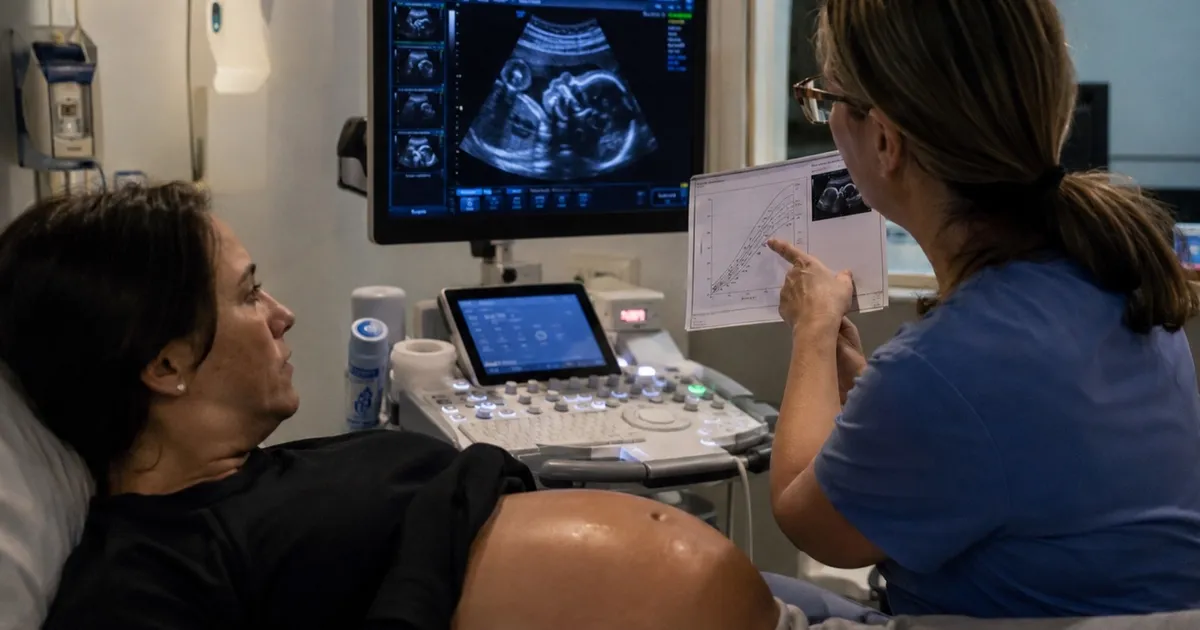
A large-scale study has shown that standardized fetal growth charts, used in NHS hospitals in England to monitor babies' growth before birth, may fail to detect some at-risk infants, or incorrectly classify others as small or large, potentially leading to missed cases of serious complications or unnecessary medical interventions.
According to the study, published in the BMJ and covering more than 3.2 million births in England between 2015 and 2025, relying on a single size to assess fetal growth does not always reflect natural differences among pregnant women, such as maternal weight and ethnic background, factors that can affect the expected size of the fetus in the womb.
Fetal growth charts are graphs used by doctors during pregnancy to compare the size and expected weight of the fetus via ultrasound with the normal size for its gestational age, so they can determine whether it is growing at the appropriate rate or is smaller or larger than expected. Their importance lies in early detection of fetal growth restriction, a condition that may be linked to problems with the placenta or blood flow and increases the risk of complications.
Standard charts
But the new study suggests that standard charts, which treat all pregnant women the same, may sometimes be wrong because they do not account for natural differences such as maternal weight, height, and ethnic background. Therefore, researchers believe that customised charts for each mother may help identify at-risk infants more accurately while avoiding unnecessary medical interventions.
Researchers from the Perinatal Institute in Birmingham said customised charts, which adjust estimates according to maternal characteristics, could provide a more accurate and consistent assessment and help midwives and doctors identify fetuses that require additional monitoring during pregnancy.
Fetal growth restriction, where the fetus grows inside the womb at a slower rate than expected, is a major risk factor associated with poor pregnancy outcomes, including stillbirth.
The study noted that failure to identify this problem during pregnancy remains one of the most common causes of preventable deaths before or after birth.
Different hospitals within the UK health system use several charts to estimate whether a fetus is small or large for gestational age, including Hadlock, Intergrowth-21, WHO, and Fetal Medicine Foundation charts, in addition to customised GROW charts that can be adjusted according to each mother's characteristics.
Gestational age
The researchers compared the performance of these charts using birth data covering 38 of 42 integrated care boards in England, which are regulatory areas overseeing healthcare delivery. They found that non-adjustable charts gave highly variable rates of children classified as small or large for gestational age.
For example, the proportion of babies born after 37 weeks of pregnancy classified as small for gestational age, i.e., below the 10th percentile, ranged from 4.8% using Intergrowth chart, to 17.2% using WHO and Fetal Medicine Foundation charts, compared with 12.3% using customised GROW charts.
The researchers believe this variability does not necessarily reflect a real difference in fetal health, but may be due to differences in how the charts themselves are constructed. Some international charts were based on data from different countries and populations, while the GROW standard was based on population data from within the UK, with the ability to adjust the estimate according to natural maternal differences.
The study reported that the problem is not limited to differences between charts, as wide variations also appeared when using the same chart in different areas, due to local population characteristics. However, this variability was less pronounced with customised charts because they account for these differences when calculating expected growth.
The importance of this finding lies in the fact that classifying a fetus as very small may lead to intensified tests or early delivery, while failing to detect real growth restriction may result in a lack of necessary follow-up at a time when intervention could reduce risks.
Additionally, classifying a fetus as large may increase the likelihood of interventions such as caesarean section or early induction of labour without clear need.
Urgent action
The researchers emphasised that the findings are based on an observational study, so alone they do not prove that the type of chart used directly leads to worse or better outcomes.
They also acknowledged that they used birth weight, rather than estimated fetal weight by ultrasound during pregnancy, to assess chart performance. But they said this approach allowed inclusion of all cases, including pregnant women who did not undergo additional growth scans during pregnancy.
They added that the size of the data gives the results significant strength, as the analysis relied on routine information covering about 90% of NHS areas in England, supporting their call for a nationally standardised method of assessing fetal growth.
The study calls for urgent action to standardise growth charts used in maternity services within the UK health system, arguing that the lack of a uniform standard may create disparities in quality of care between areas and make pregnancy safety dependent on where a woman receives her care.
The findings come amid a broader debate in the UK about the safety of maternity services and reducing perinatal deaths. Researchers noted that reliance on fragmented local protocols may mean some hospitals do not discover that their practices contribute to rare but catastrophic outcomes until it is too late.
The researchers proposed creating a coordinated programme at the NHS level, including near-real-time national monitoring of the quality of fetal growth assessment and associated safety practices, so that problems can be identified early and policies adjusted before harm recurs.
According to the researchers, the findings do not mean that every small fetus is necessarily at risk, or that every large fetus needs medical intervention, but they indicate that distinguishing between natural variation in fetal size and abnormal growth requires more precise tools than standardised charts that treat all pregnant women the same.
The researchers say the goal of customised charts is not to increase medical interventions, but to improve the ability to direct care to cases that truly need it, and to avoid anxiety or unnecessary procedures for cases where the fetal size falls within natural variation.
Original source: Asharq News




Comments (0)
Be the first to comment.