US Military Delegation to Beirut to Discuss Israeli Withdrawal from Two Pilot Areas

A US military delegation led by General Joseph Clerfield is set to arrive in Beirut to discuss Israel's withdrawal from two pilot areas in southern Lebanon, as part of the framework agreement signed in June. The talks come amid internal Lebanese disagreements and calls for pressure on Israel.
Sources told Asharq that a US military delegation, headed by Military Coordination Committee Chairman General Joseph Clerfield, will arrive in the capital Beirut on Friday evening and is scheduled to meet with Lebanese Army Commander Rudolph Heikal in the coming hours.
The sources added that the delegation will discuss the Israeli withdrawal from the two pilot areas, coordination with the Lebanese army on the mechanism for its entry and deployment there, as well as monitoring the withdrawal and overseeing its implementation.
For his part, Lebanese Prime Minister Nawaf Salam, during his meeting with Turkish President Recep Tayyip Erdogan in Ankara, affirmed that 'Lebanon adheres to its independent decision and to the full extension of state sovereignty over its territory, and continues to work, in cooperation with friendly and brotherly countries, to stop Israeli aggression and its complete withdrawal from Lebanese territory.'
Technical talks in Rome
In the same context, the Financial Times quoted two senior Lebanese officials as saying that a delegation from the US Central Command (CENTCOM) will arrive in Beirut ahead of the scheduled round of talks between Lebanon and Israel in Rome next week, where technical teams are expected to discuss details of the framework agreement.
The anticipated Israeli withdrawal from the two pilot areas in southern Lebanon comes in implementation of the framework agreement signed by Lebanon and Israel in Washington on June 26 last year.
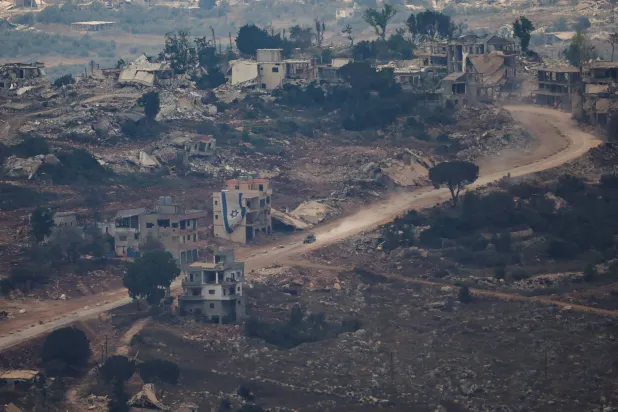
According to the terms of the agreement, this process is supposed to pave the way for the gradual redeployment of Israeli forces out of Lebanon, as they currently control an area that extends in some locations to a depth of up to 10 kilometers inside Lebanese territory.
A US official said on Thursday that the agreement has moved to the 'implementation phase' and that technical teams will discuss 'all issues' contained in it during the Rome meetings.
He added that work in the first of the two pilot areas will begin within days, while planning for additional areas is underway, noting that CENTCOM is coordinating with Lebanon and Israel to move forward with implementation.
The Financial Times quoted the two Lebanese officials as saying that the United States will oversee the implementation of the agreement.
However, Lebanese officials and people familiar with the matter said that basic details regarding the oversight mechanism and verification procedures have not yet been finalized.
Dispute over withdrawal
Two Lebanese officials and a Western diplomat noted that Beirut expects a 'move' from Israel in one of the two areas 'soon,' but they ruled out implementing the withdrawal before the Rome meetings, despite the Lebanese government's demand for this step as a 'goodwill gesture.'
The Financial Times reported a divergence among Lebanese officials regarding participation in the Rome meetings if Israeli forces do not withdraw from the two pilot areas, reflecting the divisions sparked by the agreement.
The unpublished security annex, which includes details of the Lebanese army's deployment and the withdrawal of Israeli forces, did not specify the names of the two pilot areas.
However, Israeli Prime Minister Benjamin Netanyahu displayed a map during a press conference showing two small groups of villages as the intended areas.
Lebanese officials confirmed to the British newspaper that these are the agreed-upon areas.
Aoun demands pressure on Israel
Lebanese President Joseph Aoun, during his meeting with US Ambassador to Lebanon Michel Isa on Thursday, stressed the need to 'pressure Israel' to adhere to the ceasefire.
Aoun is expected to visit Washington later this July, according to the Financial Times.
The newspaper noted that the framework agreement faces widespread domestic objections, despite Beirut's insistence on its success, as Hezbollah and its supporters described it as a 'grave mistake,' while other forces from different political spectra see it as 'biased in favor of Israel.'
The framework agreement outlines a path whereby the Lebanese army becomes the sole military authority in southern Lebanon, after 'verifying the disarmament' of non-state armed groups, in reference to Hezbollah, which refuses to give up its weapons.
In contrast, Israeli officials have insisted on keeping their forces inside what Israel calls the 'security zone' as long as Hezbollah retains its weapons.
Hezbollah did not participate in the talks that led to the framework agreement between Lebanon and Israel, which took place through several rounds of direct negotiations under US mediation.
The Lebanese-Israeli agreement came separately from the interim memorandum of understanding signed by the United States and Iran last June to reopen the Strait of Hormuz and extend the ceasefire between them for 60 days, although the memorandum also included ending the conflict between Israel and Hezbollah.
Original source: Asharq News

Comments (0)
Be the first to comment.