Wall Street stabilizes after better-than-expected inflation data
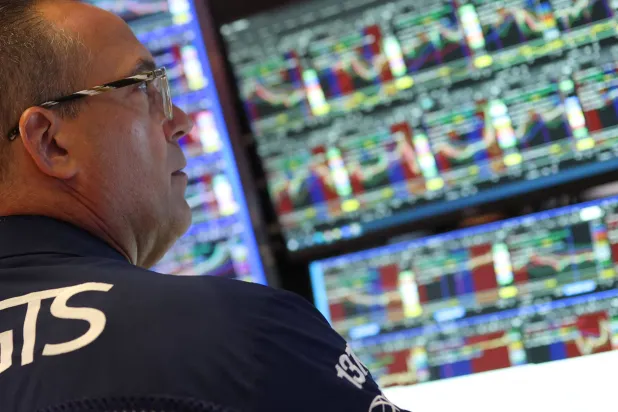
Stocks on Wall Street stabilized Tuesday amid relatively quiet trading after a report showed U.S. inflation was not as bad as economists had expected over the past month. This came despite ongoing oil price increases amid fears of possible escalating tensions between the United States and Iran, and a return to large-scale military confrontations.
The S&P 500 rose 0.1 percent, recovering some of its 0.8 percent loss in the previous session. The Dow Jones Industrial Average fell about 96 points, or 0.2 percent, as of 9:35 a.m. Eastern Time, while the Nasdaq composite rose 0.4 percent, according to the Associated Press.
Stocks were supported by a decline in U.S. Treasury yields after data showed that U.S. consumers paid 3.5 percent higher prices in June compared to a year earlier, for gasoline, food, and a wide range of goods and services.
Although this rate is still higher than what most consumers and policymakers prefer, it came in lower than the inflation rate recorded in May at 4.2 percent, and was below economists' expectations of 3.9 percent for June. Slowing inflation could ease pressure on the Federal Reserve, which is considering the path of interest rates in the coming period.
High interest rates help curb inflation, but they also slow economic activity and increase borrowing costs, affecting various asset classes and investments.
After the inflation data release, traders lowered their expectations of a Federal Reserve rate hike at its next meeting later this month to less than 17 percent, down from about 42 percent the previous day, according to data from the Chicago Mercantile Exchange Group.
The drop in bond yields also boosted housing stocks; lower yields could help reduce mortgage and other loan costs for households and businesses. Shares of Builders FirstSource, a building materials company specializing in countertops and windows, rose 1.9 percent, while homebuilder Lennar shares gained 1.5 percent.
The recovery of several major computer chip stocks helped stabilize the market, after experiencing sharp fluctuations in recent weeks due to concerns over high valuations driven by the wave of optimism related to artificial intelligence.
Micron Technology shares rose 4.4 percent, while Nvidia shares gained 0.6 percent, after both stocks were among those weighing most on the S&P 500 in the previous session, with declines of 4.4 percent and 3.5 percent respectively.
However, inflation risks remain, especially with ongoing tensions in the Middle East and the potential disruption of navigation through the Strait of Hormuz, the vital sea passage for oil tankers from the Arabian Gulf to global markets.
Brent crude, the global benchmark for oil, rose an additional 3.5 percent to $86.18 per barrel. This followed a nearly 10 percent jump on Monday, bringing prices back to levels seen before the temporary ceasefire agreement between the United States and Iran in mid-last month.
Investors are focused this week on the corporate earnings season, with major financial institutions announcing second-quarter profits, as companies face pressure to deliver strong growth to justify the significant stock price gains in recent months.
Bank of America, Citigroup, JPMorgan Chase, Goldman Sachs, and Wells Fargo reported quarterly results on Tuesday that beat analysts' expectations, supported by strong trading performance and continued resilience in U.S. consumer spending.
Shares of most of these banks rose after the results; Goldman Sachs rose 4.7 percent, while Wells Fargo fell 1.7 percent.
In contrast, IBM shares were among the biggest losers on Wall Street, weighing on the Dow Jones, after falling 24.2 percent following CEO Arvind Krishna's comments that the performance of its software and infrastructure segments fell short of expectations in the last quarter.
Krishna explained that in late June, customers redirected their spending toward servers, storage, and memory, anticipating price increases related to growing demand for AI technologies. In a letter to investors, he said current conditions require 'perfect execution,' adding that the company had not moved fast enough, and that delays in closing several large deals accounted for the bulk of the shortfall.
In the bond market, the yield on the 10-year U.S. Treasury note fell to 4.57 percent, from 4.62 percent at the end of Monday's trading, halting its rise from the 3.97 percent level recorded before the outbreak of war with Iran.
On global markets, European stocks had mixed performance after a strong session in Asia. Japan's Nikkei 225 rose 0.7 percent, supported by a 3.3 percent gain in SoftBank Group shares. SoftBank is a major investor in the AI sector; its chairman Masayoshi Son criticized the idea of a bubble in investments related to AI development during an event in Tokyo.
Stocks in Shanghai also rose 1.4 percent after the Chinese government announced that the country's exports rose 27 percent in June compared to last year, supported by strong demand related to AI technologies.
Original source: Asharq Al-Awsat






Comments (0)
Be the first to comment.