Cultural / When the Road Becomes a Gallery: Artworks Reshape the Commuting Experience in Riyadh
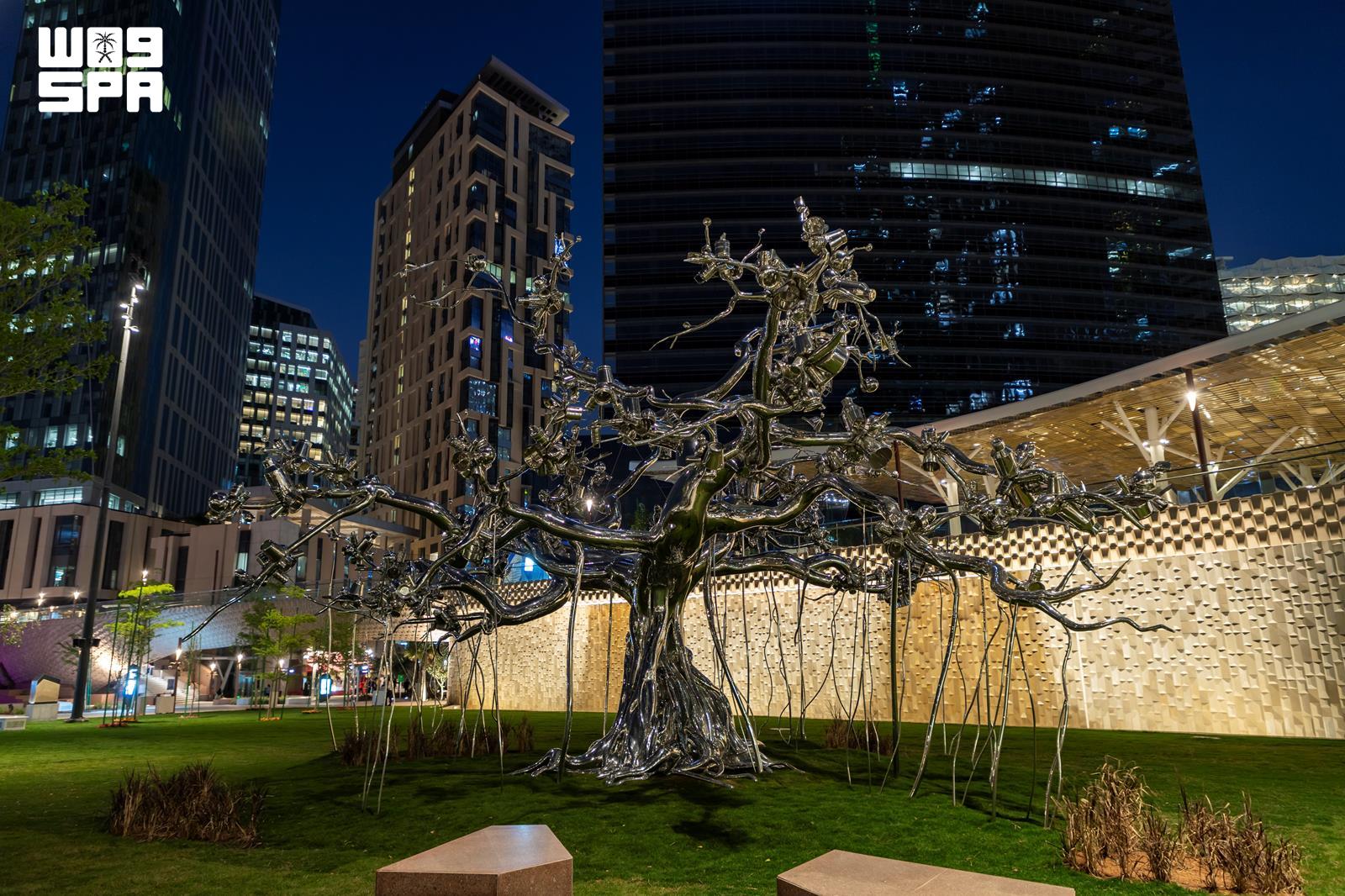
The Riyadh Art program integrates permanent artworks into the city's infrastructure, turning roads, bridges, and public spaces into galleries that enrich daily life and urban experience.
Cultural / When the Road Becomes a Gallery: Artworks Reshape the Commuting Experience in Riyadh
Riyadh, Muharram 23, 1448 AH, corresponding to July 8, 2026, SPA - In cities around the world, visiting an artwork is often a destination in itself; but in Riyadh, the experience takes a different direction. It is now possible to encounter an artwork while crossing a pedestrian bridge, on the way to a metro station, or while commuting between city neighborhoods—a trend that reflects the philosophy of the "Riyadh Art" program, which integrates art into daily life and makes it part of the urban landscape experienced by residents and visitors.
This is part of the objectives of the "Riyadh Art" program, one of Riyadh's mega-projects, which aims to enrich the urban landscape through permanent artworks distributed across the city, thereby enhancing the presence of art in public spaces and improving quality of life.
The works are spread across streets, squares, parks, and public transport stations, becoming part of the daily experience rather than a separate destination.
The artwork "Running to Beyond" by Italian artist Angelo Bonello clearly embodies this approach. It was chosen for a location on the pedestrian bridge extending over King Abdulaziz Road, transforming an ordinary crossing point into a space that interacts with the city's movement and rhythm. Pedestrians view it from various distances and angles, while drivers experience it as they pass underneath, making it more a part of the daily scene than an independent destination.
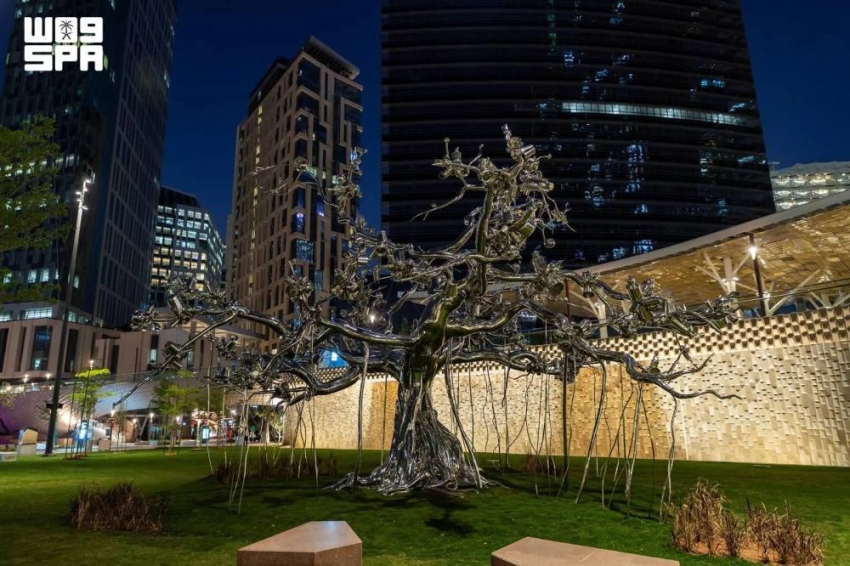
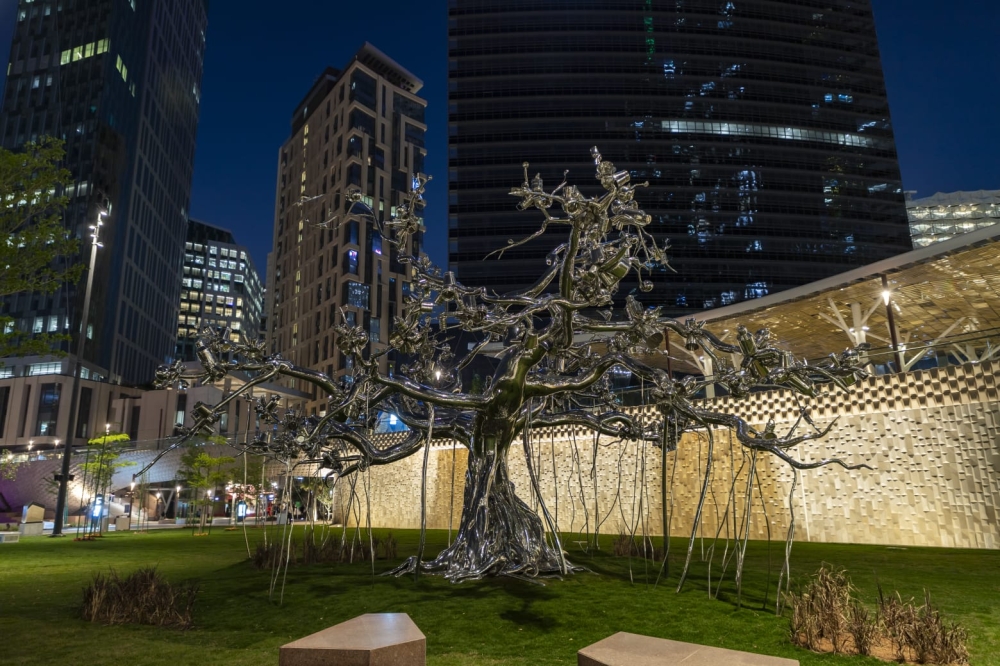
At the King Abdullah Financial District, the artwork "Family Tree" by Indian artist Subodh Gupta offers a different reading of the relationship between humans and the city, using household items made of stainless steel to evoke memories of daily life and transform familiar details into an artwork that interacts with the public space.
Its location in one of the capital's most prominent economic centers reflects the presence of art in the places where people live, work, and commute.
This vision is not limited to contemporary works but extends to the permanent art collection, which includes works by Saudi and international artists distributed across multiple locations in Riyadh, making the discovery of art a renewed experience that accompanies residents in their daily lives, whether during commuting, routine activities, or visiting public facilities.
This approach aligns with a growing global trend that views public art as an element of urban planning, not merely an aesthetic addition.
In Riyadh, this concept is realized by linking artworks to the city's infrastructure, including bridges, transport stations, squares, and parks, making the works part of the urban landscape and the memory of the place.
In this sense, the road in Riyadh no longer just leads to the artwork; rather, the artwork is present along the road itself, in an experience that reflects the city's transformation towards more vibrant and interactive public spaces where art is part of the details of daily life.
// End // 14:20 T M 0121
Original source: SPA

Comments (0)
Be the first to comment.