Fine Artist

تأمل في تحولات المصطلحات الفنية واللغوية عبر الزمن، وكيف انعكست التغيرات الثقافية على مفاهيم الفن التشكيلي وصناعة الأفلام.
Words and terms that change over time frequently come to mind. I remember, for example, that not long ago we used to call a skirt 'gonella', an Italian word that the Hejazis mostly adopted from Egypt. We no longer use this word neither here nor in Egypt; here it became 'tanoura' and there it became 'jeeb'.
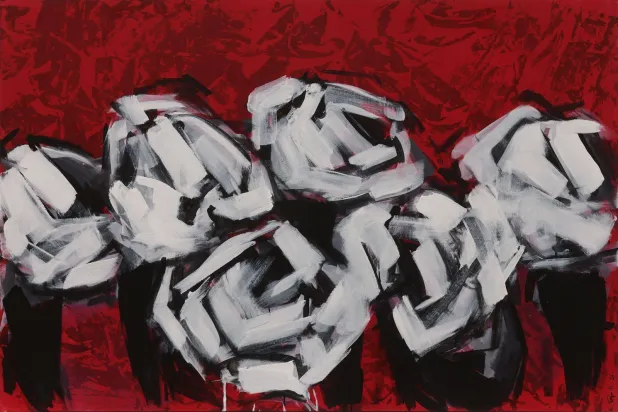
This introduction is because lately I have been thinking every time I write 'fine artist' about the new term 'visual artist'. Originally we used to say 'painter', then it changed to 'fine artist', and now it's become 'visual artist'.
Artists differentiate between a painter and a fine artist on the basis that 'painter' refers to someone who possesses skill but without the artistic vision and depth that a fine artist has. While I used to imagine that the reason was that a fine artist can be an artist without mastering the skill of drawing with high proficiency.
The new term 'visual artist' came not to be more specific but on the contrary, to broaden the scope of the concept of an artist, especially after the entry of digital art, video, and many other things in contemporary art that are not in the dictionary of the fine artist. Meaning that a fine artist is a visual artist, but not every visual artist is a fine artist, because fine art is a physical product, a painting or a sculpture.
This definition gave me some comfort, because I find myself comfortable using the word in its English form, but in Arabic I prefer the term 'fine artist' for a fine artist. In English, when I introduced myself, I would just say 'artist', without further description because the word 'fine' was not used; sometimes I added 'fine' meaning painter, because it is the same word for both in English, so it is easier then to say 'visual artist'.
In cinema as well, the term 'filmmaker' has become prevalent, which previously was 'director'. At least in our Arab world, and I don't know the directors' fascination with this word, even though the word 'director' is more precise, because 'filmmaker' includes directors, producers, writers, editors, i.e., anyone involved in filmmaking. Even though there are awards in the name of 'director' and not in the name of 'filmmaker'.
I mentioned two terms that I haven't fully adjusted to yet; perhaps I will become more flexible over time. I will return to mention a term we used in the past, which is a foreign word that we replaced with another foreign word, and the one who uses the old one is seen as 'old-school' and not sufficiently modern. We used to say 'mise', an Italian word, and we started saying 'buffet', a word of French origin, and we still don't have an Arabic word for this method of serving food.
Our use of words is subject to a logic that mostly depends on who controls us, from whom we derive our arts and customs. It is not random, I think.
Original source: Al-Riyadh


Comments (0)
Be the first to comment.