India evokes in Jeddah a centuries-old story of convergence between the Kingdom and India
Wednesday, July 15, 2026
«Al-Jazeera» - Wael Al-Otaibi:
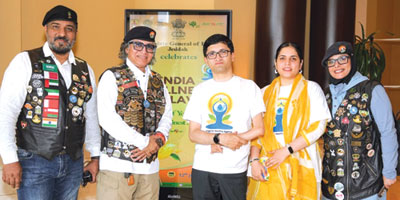
The Consulate General of the Republic of India in Jeddah organized the event «India: Health and Flavors», an evening that was not just a celebration of Indian cuisine or yoga, but a cultural reading of a human relationship that transcended geographical boundaries, proving that peoples can come together through culture as much as through interests.
The Park Hyatt Jeddah hotel, overlooking the Jeddah Fountain, hosted the event in the presence of the Consul General of the Republic of India, Fahad Ahmad Khan Suri, the Consul for Hajj and Trade, Sadaf Chaudhry, the Consul for Consular and Cultural Affairs, Piyush Sharma, along with a number of His Excellency the Consuls, members of the diplomatic corps, dignitaries of the Makkah region, and male and female media professionals.
The evening also saw the attendance of Indian explorer Captain Mir Shakil ur-Rahman and his wife, Saudi explorer Captain Amal Ahmed, along with Captain and adventurer Ahmed bin Faisal, in a scene that embodied that travel is no longer just moving between places, but has become a means to build bridges between cultures and convey the image of peoples to the world.
The deeper message of the event came through culture itself. The Consulate chose to combine yoga as a philosophy of life, Indian mango as a symbol of agricultural wealth, and Indian cuisine as one of the world's most connected cuisines to the idea of balance between flavor and health. In Indian culture, food is not seen merely as a means to satisfy hunger, but as part of an integrated wellness system, where herbs and spices blend with traditional medical knowledge, making the meal an extension of a philosophy based on harmony between body and soul.
This scene was not unfamiliar to a city like Jeddah, which has known India for centuries, when its ports received traders and pilgrims coming from the coasts of Kerala, Gujarat, and Mumbai, carrying with them their goods, culture, and the aromas of spices that over time became part of the memory of Saudi cuisine.
It cannot be separated from the long journey that spices have made across the Arabian Sea. Cardamom, cinnamon, cloves, cumin, turmeric, ginger, and black pepper are no longer just imported ingredients; they have become part of the Saudi food identity, reworked by the local community in its own character, until dishes like Kabsa, Mandi, Jareesh, and Bukhari have become purely Saudi in identity, despite their debt to this ancient commercial and cultural heritage.
In return, India was not only a recipient; it too was influenced by Arab cuisine, especially in its coastal cities, where Arab rice and meat recipes blended with local flavors, in a scene reflecting that civilizations do not grow in isolation but through ongoing dialogue and interaction.
The event included an interactive experience where guests performed simple yoga movements before tasting various varieties of Indian mango and traditional dishes, in an experience that combined taste and knowledge, affirming that culture can be read as it is tasted.
Original source: Al-Jazirah





Comments (0)
Be the first to comment.