Saddam Hussein: How the Iraqi president made an epic film Hollywood-style amid real battles?
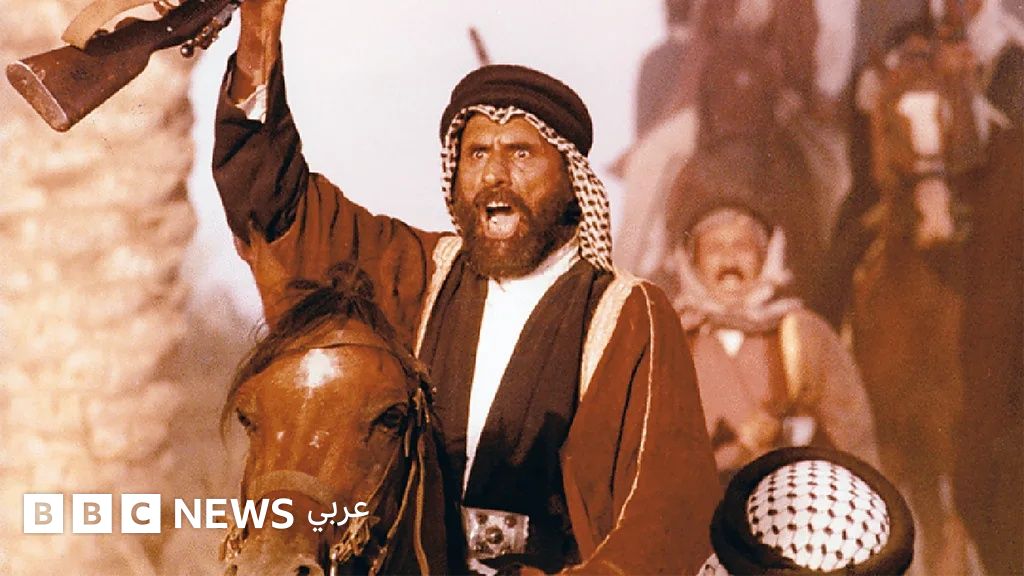
After its almost sole screening in 1983, the producer of the film "Clash of Loyalties" reveals to the BBC secrets from behind the scenes of the film that former Iraqi president Saddam Hussein hoped would be the start of an era for producing international Iraqi films in the style of Hollywood in the Middle East. What is the story?
Saddam Hussein: How the Iraqi president made an epic film Hollywood-style amid real battles?
Article Information
By, Fiona MacDonaldRole, BBC
Published 30 June 2026
Reading time: 7 minutes
In July 1983, the film "Clash of Loyalties" was shown for the first and almost last time. In 2020, the film's producer, Latif Griffani, recounted details to the BBC about forced recruitment, interrogations, and the behavior of actor Oliver Reed, who nearly caused the film to stop due to his drinking.
The outbreak of the Iran-Iraq war in 1980, just weeks after filming began in a desert near Baghdad, was not the biggest threat to the film "Clash of Loyalties", a Hollywood-style epic produced during the rule of then-Iraqi president Saddam Hussein. Nor were the constant call-ups of cast and crew to fight and their sudden disappearance from the set without warning, nor the difficulty of transporting World War I-era prop weapons across the Turkish border - problems faced by the film, such as when Turkish customs stopped the film's trucks, believing they were carrying a real arsenal to support Iraqi forces.
On the centenary of her birth: Marilyn Monroe's death remains an open mystery
But the film nearly faltered due to an incident in a hotel restaurant, where the film's star, Oliver Reed, in a drunken state, urinated into an empty wine bottle, and the British-born Iraqi producer, Latif Griffani, told BBC's "Witness History" program in 2020 that the actor "asked the waiter to carry it to the next table and said: with my compliments."
Griffani added: "The authorities were completely stunned, and I received telex messages from ministers in Iraq saying: 'Get this man out, we don't want him here now.' How could I, as a producer of a multi-million dollar film, remove the film's main star midway through production?"
Griffani succeeded in persuading the authorities to allow him to keep Oliver Reed, instead of having to reshoot the entire film, but it was extremely difficult. He recalled the incident saying: "I had to fight with all my might."
That incident was just one of many tough moments in the film's production, which lasted three years and cost $30 million at the time (equivalent to $100 million today), a budget close to that of "Star Wars: Episode VI – Return of the Jedi", produced in the same period.
Image caption, Late Iraqi President Saddam Hussein (in civilian clothes) in 1980 during a visit to soldiers in northern Iraq (archive photo)
After the completion of "Clash of Loyalties", it was only shown a few times, and won an award after its premiere at the Moscow Film Festival in July 1983, before being stored in film canisters in Griffani's garage in Surrey, England.
This ignominious end was in stark contrast to Saddam Hussein's ambitions. Shortly after taking power in July 1979, the Iraqi president put forward a vision to create an Iraqi film industry capable of producing huge national films targeting Western audiences.
Skip most read and continue reading
Do you really need to avoid gluten?
Ukraine strikes major oil depot in Russian city of St. Petersburg
"A meal I had during my holiday ended up with me getting 38 parasites in my brain"
Hossam Abu Safiya: Warnings of danger to his life after repeated assaults inside an Israeli prison
Skip podcast and continue reading
Worth attention
In-depth explanation of the most important events and topics, to help you understand the most important changes around you and their impact on your life
Episodes
Podcast end
Griffani told the BBC: "Saddam Hussein was very enthusiastic about encouraging Iraq to become a center for international film production, and he probably thought that one day Baghdad would become Bollywood on the Tigris."
Saddam Hussein was looking to implement a series of projects to enhance Iraq's image globally, and at the start of those projects, he wanted to produce a huge Hollywood-style film linking the Ba'ath Party to the Iraqi revolutionaries who overthrew British rule in 1920. Thus came "Clash of Loyalties", which tells the story of Iraq's emergence from Mesopotamia, described by one actor as: "Saddam Hussein's version of Lawrence of Arabia."
Death of Marjane Satrapi, the artist who broke stereotypes about Iran
Griffani said: "The story is based on a true incident that happened in 1920." During a nationalist movement aimed at ending the colonial occupation of Iraq, a British policeman named Gerald Leachman was killed by a dissident near Fallujah. "Clash of Loyalties" was intended to be an epic narrative by Saddam Hussein of the birth of a nation.
Griffani had been working in the film industry since the 1950s and had produced several low-budget films in the Middle East until officials connected to him within Saddam Hussein's government contacted him and offered him the project. Funding was not an obstacle, thanks to the financial flows Iraq received from the massive rise in oil prices during the 1970s.
He said: "Our friends in Baghdad went to the big man and said: 'If we want to enter the international film industry, we have to talk about money.' He replied: 'Whatever it takes.'"
The high-budget film "Clash of Loyalties" featured Hollywood-style sets, special effects, and hundreds of cast and crew, all transported to Baghdad. Then Saddam Hussein invaded Iran.
Griffani recalled that phase in a 2016 documentary titled "Saddam Goes to Hollywood" saying: "I had 140 people in Iraq during the war, and these were people working in film in Shepperton, Pinewood, and Hollywood, not used to being in a remote area while real rockets and bombs were exploding everywhere."
"Filming in a war zone"
Image caption, Promotional poster for the film "Clash of Loyalties" starring Ghazi al-Tikriti and Oliver Reed
The war disrupted the film's production several times. Griffani told BBC's "Outlook" program in 2016: "We had to stop production, but instructions came from higher-ups to give the impression that life was going on as normal. From the Iraqi leadership's point of view, the attitude was: 'It's okay, it will be over in a few weeks, keep working guys, and everything will be fine.'" Filming resumed after two weeks.
Despite the authorities' eagerness to show that there was nothing to worry about, cast members confirmed indicators to the contrary. One actor recounted that he traveled to Iraq with the film's star, Oliver Reed, and several colleagues, and noticed that a fighter jet was accompanying their plane when it entered Iraqi airspace.
Original source: BBC Arabic





Comments (0)
Be the first to comment.