“The National Museum of Egyptian Civilization” Hosts an Art Exhibition Exploring “Eternity”
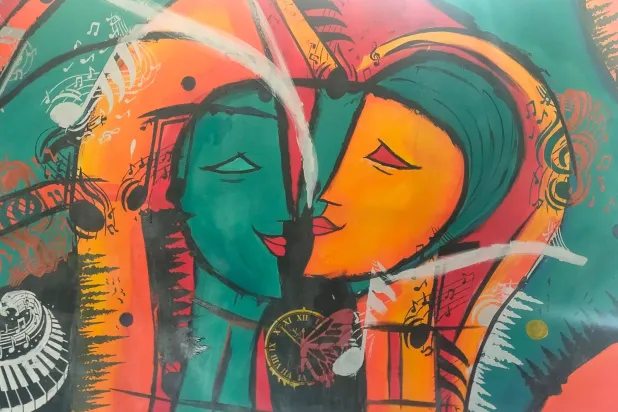
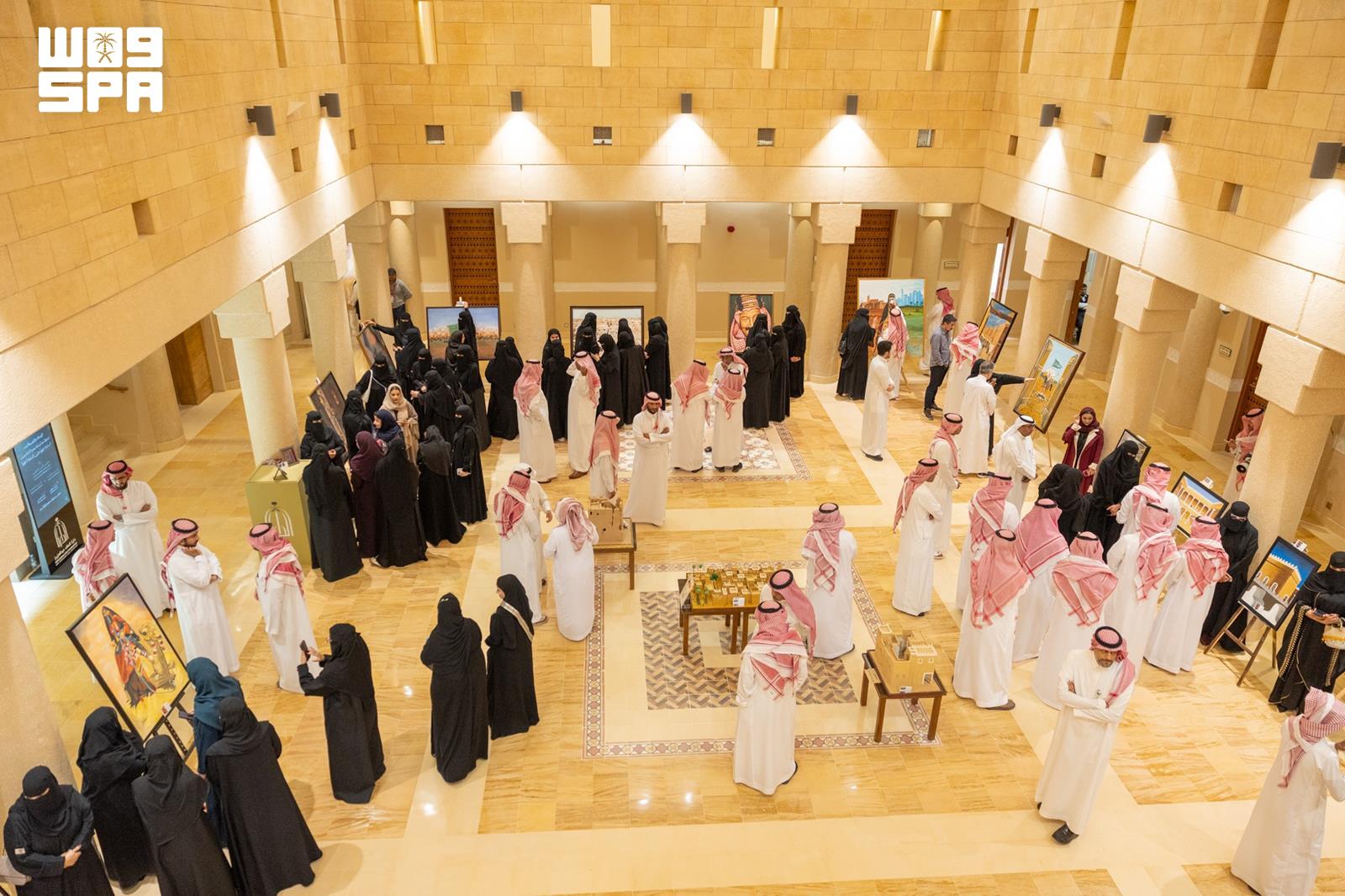
The National Museum of Egyptian Civilization has hosted an art exhibition that attempts to capture the concept of “eternity” through the paintings of Egyptian, Arab, and international artists.
Egyptian director Hisham Fathy said that the idea for the film *Ibn Meen Feehom?* (Whose Son Is He?) began when producer Darine El Khatib presented the script to him. She had been enthusiastic about the project for some time, written by Loai El Sayed, with whom he has shared a friendship for years. He noted that once he read the script, he was hooked and spent two weeks discussing and redeveloping its details with Loai, before holding working sessions with its stars, Laila Eloui and Bayoumi Fouad, to reach the final treatment before filming began.
Hisham added to *Asharq Al-Awsat* that the script development phase saw an effective contribution from actress Laila Eloui, whom he described as having great experience in reading texts and analyzing characters, noting that her observations were precise and helped improve a number of dramatic details.
The events of *Ibn Meen Feehom?* revolve within a social comedy framework around “Rushdi,” a man who was accustomed to entering into marriages and fleeting relationships without taking responsibility, before his life is turned upside down when a lawyer informs him of a huge inheritance left to him by his aunt, which he will not receive unless he manages to find his son from one of his previous marriages. During the search journey, he faces comedic and human situations that push him to reconsider his lifestyle and discover the meaning of responsibility and fatherhood, in a work that combines comedy with social messages.
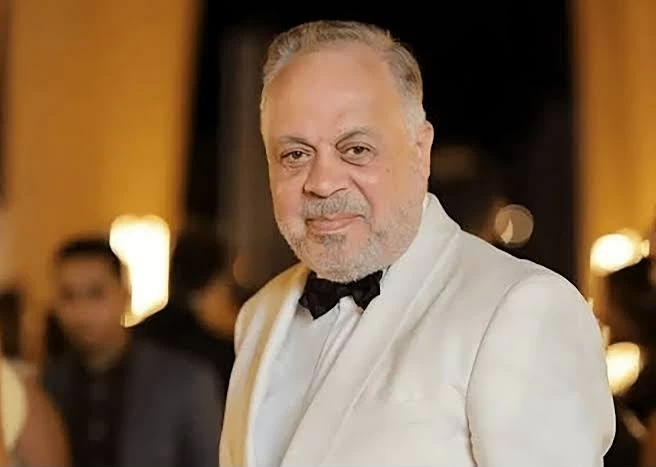
Egyptian Director Hisham Fathy (Asharq Al-Awsat)
The director explained that the preparation sessions were not just readings of the script, but continuous discussions about the characters and the pace of events, to ensure the film came out in the best possible form. He pointed out that “the choice of actor Ahmed Essam El Sayed to play the role of the son (Karim) came after a complete conviction that he was the most suitable for the role after watching him in the series *Aysha El Door* with Donya Samir Ghanem and noticing that he possessed the calmness and simplicity that the character needed, in addition to his ability to convincingly play the role of Laila Eloui's son on screen,” as he put it.
He added: “All nominations were based on the actor's suitability for the role, not just the level of stardom, which was preceded by intensive rehearsals before shooting began.” He noted that his interest during preparation was not limited to the stars of the film, but included all the characters, regardless of the size of their appearance, based on his conviction that small roles often create the most lasting moments in the audience's memory.
Hisham Fathy explained that he entered the film realizing that the previous works that brought together Laila Eloui and Bayoumi Fouad had achieved great popular and commercial success, but he refused to let that be a reason to restrict his directorial vision. He pointed out that he dealt with *Ibn Meen Feehom?* as an independent project, through which he seeks to provide a different experience, while maintaining the chemistry that brings the work's two stars together.
He praised the working method of writer Loai El Sayed, describing him as “one of the most flexible writers in dealing with the director, as he was willing to rewrite or modify scenes whenever the interest of the film required it.” He emphasized that the state of understanding between them continued throughout the preparation stages, which gave the script the opportunity for continuous development even before shooting began, which was reflected in the dramatic and comedic structure of the work.
He pointed out that the biggest bet in the film was on “situational comedy,” considering it one of the most difficult forms of comedy because it relies on creating a complete situation that generates laughter naturally, rather than just verbal quips. This is what he was keen to include in the action scenes and chases as well, so that the comedy remains present in all the details of the film without artifice.
Fathy with Bayoumi Fouad during the preparation for filming one of the scenes (Asharq Al-Awsat)
He added that “directing comedy works remains one of the most difficult tasks because the director does not have a real way to measure the audience's response during filming, which makes him rely on the general feeling of the scene and his experience in the rhythm of comedy.” He noted that he always prefers to discuss the performance details with the actors because the best result comes through dialogue and the exchange of ideas, rather than through executing the scene rigidly.
The Egyptian director confirmed that he does not believe in having one actor carry the responsibility for laughter within the film; rather, he is keen to distribute the comedy among all the characters so that the viewer feels that each character has their own moment. He considered the choice of actors to be a key element in the success of the comedy, which is why he was keen to choose actors who could each add a different touch to the events, even in the roles of guest stars.
He revealed that “all the guest stars agreed to participate as soon as the idea was presented to them, and there were no alternative names proposed, because each character was associated with a specific actor from the beginning,” confirming that some artists offered ideas to develop their roles.
Regarding Entesar performing a song and dance in the film, Hisham Fathy confirmed that she was enthusiastic as soon as he spoke with her about playing the role, and that she would sing and perform a dance routine. He noted that he does not prefer to force singers into cinematic works without there being a dramatic need for it.
Laila Eloui between Bayoumi Fouad and Ahmed Essam El Sayed (Production Company)
Regarding his upcoming artistic projects, the Egyptian director confirmed that he is preparing for a new work with author Loai El Sayed, in addition to a Saudi film titled *Nayef and Naomi* with artist Fahd Al-Mutairi, a work that is still in the preparation stage and selecting the rest of the cast.
He added that the film will be his second collaboration with Al-Mutairi after their experience together in *Fakhr Al-Suwaidi*, noting that he loves presenting comedic cinematic experiments in Saudi Arabia for several reasons, primarily the actors' eagerness to present their best.
It is noteworthy that the film *Ibn Meen Feehom?* stars Laila Eloui and Bayoumi Fouad, alongside Ahmed Essam El Sayed, and features a large number of guest stars, including Entesar, Rania Youssef, Shaimaa Seif, Wezo, Zeina Mansour, and Hala Fakher, in addition to a special appearance. It is produced by Vox Studios and Dubai Studios.
Original source: Asharq Al-Awsat


Comments (0)
Be the first to comment.