African Organization: Ebola Outbreak in DR Congo is 'Fastest Ever'
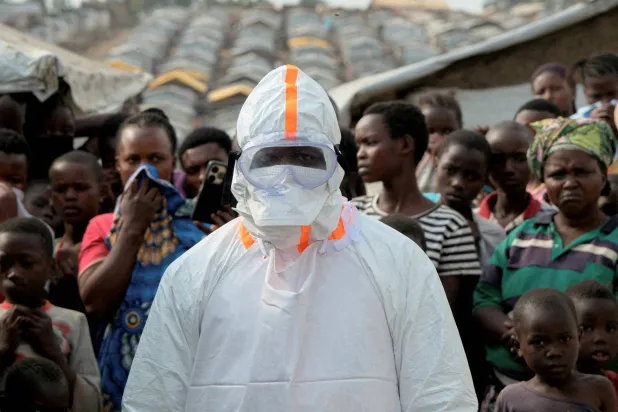
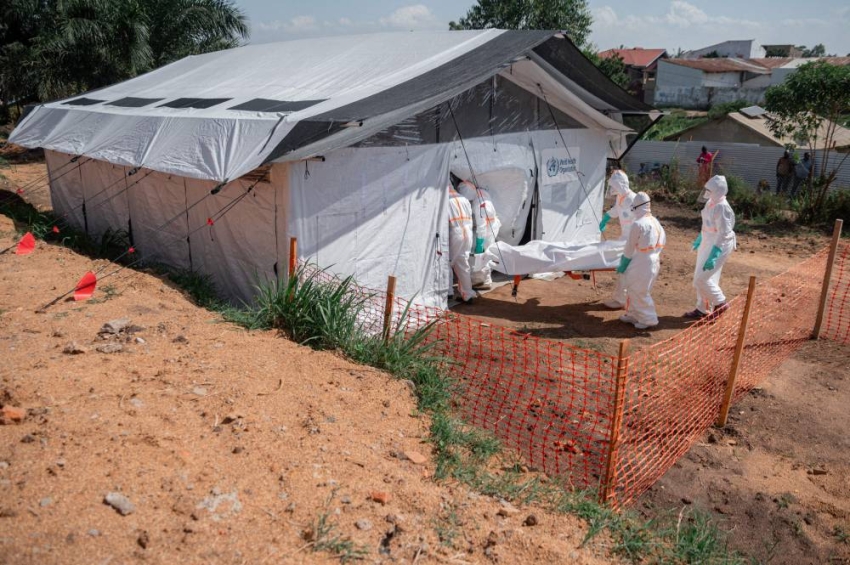
The Africa Centres for Disease Control and Prevention warned that the Ebola outbreak in the Democratic Republic of Congo is the 'fastest spreading ever'.
A delegation from the Nigerian Senate is set to meet President Bola Ahmed Tinubu soon to request the immediate halt of the policy of rehabilitation and reintegration of repentant terrorists from Boko Haram and the Islamic State West Africa Province (ISWAP), as they pose a 'significant risk' to society and national security. The delegation will also formally convey the Senate's concerns over the deteriorating security situation in the country and pressure him to 'take more decisive actions to curb the wave of violent attacks across the nation'.
Nigerian President Bola Ahmed Tinubu attending a hunting festival amid the deteriorating security situation in the country (EPA)
This follows the Nigerian Senate's approval of a motion of 'urgent national importance' addressed to the president, sponsored by Senator Abdulaziz Musa Yaradua, Chairman of the Senate Committee on Army Affairs. The motion highlights 'the escalating terrorist attacks, kidnappings, and killings targeting both active and retired military personnel across the country'.
Consequently, all eyes are on President Tinubu's meeting with the Senate delegation, which may lead to a review or amendment of the policy of rehabilitating and reintegrating Boko Haram and ISIS fighters, known as 'repentants'.
Experts note that the new resolution passed by the Senate on Tuesday is merely a recommendation 'without binding legal force on the president or the government,' but it is nonetheless a significant political stance, reflecting a consensus within the Senate opposing the program. This increases media and public pressure on the president, who is preparing for a crucial presidential election next year.
Group photo of ECOWAS leaders during their summit in Abuja, Nigeria, on December 15, 2024 (AFP)
The motion stated that 'the worsening wave of terrorism, armed robbery, and kidnappings across the country requires stricter measures,' instead of what it described as a 'reward policy' that terrorists receive when they lay down their arms and declare a 'doubtful' repentance.
Nigeria has faced an insurgency led by Boko Haram since 2009, resulting in heavy military losses and the displacement of millions of civilians from their villages in the north. Since 2016, the late President Muhammadu Buhari launched the 'Safe Corridor' program as an opportunity for 'low-risk defectors' from Boko Haram, involving disarmament, deradicalization, rehabilitation, and then reintegration into society.
US personnel in the 'Joint Task Force' between Nigeria and the United States (Reuters)
Official reports indicate that more than 10,000 former fighters have benefited from the program, which has been expanded to include areas in northern, northeastern, and northwestern Nigeria. However, the program has consistently faced severe criticism, with the public viewing it as a 'pardon for terrorists' or a 'reward for criminals' at a time when victims suffer without justice. There are also risks of these individuals returning to extremism. On the other hand, supporters argue that the program is a tool to weaken extremist groups and encourage defections, especially since military solutions alone have not ended the insurgency.
A soldier in Wuro village, Kwara state, after a terrorist attack (AP)
Targeting of military personnel
While presenting the motion, Senator Yaradua cited the killing of retired Major General Rabiu Abubakar by an armed group in Katsina state. Abubakar was a former director of defense information and a well-known figure. The senator said: 'The killing of Major General Abubakar and others by terrorists is not only a personal tragedy but a painful national loss that demands urgent action.'
Security deployment on the streets of Abuja on June 12, 2026 (Reuters)
The senator added that retired officers are vulnerable to targeting due to the sensitive responsibilities they held during service in operations, intelligence, and leadership. He warned that continued attacks on military personnel undermine troop morale and weaken public confidence in the state's ability to protect its citizens.
Strict penalties
During the debate on the motion, Senator Joseph Igiagbe Ikpia proposed an additional clause calling for the immediate halt of the policy of rehabilitating and reintegrating members of Boko Haram and ISIS, known as 'repentants,' as well as other terrorists and bandits. He considered this policy the real reason behind the escalating terrorist attacks and targeting of military personnel.
The new clause demanded 'the arrest of all terrorists, members of armed gangs, and other violent criminals, their prosecution, and subjection to the harshest penalties, instead of rehabilitating and reintegrating them into society.'
Nigerian soldiers passing by tanks ready for deployment in eastern Nigeria (Reuters)
Ikpia said: 'The issue of insecurity has become a matter of great concern to Nigerians. Among the files we must consider is the rehabilitation of Boko Haram and ISIS elements. So my additional demand is to stop their rehabilitation.'
For his part, Senator Adams Oshiomhole said the rehabilitation policy is 'illogical' at a time when 'victims of terrorism and families of fallen security personnel are still suffering the painful consequences of insurgent attacks.'
The clause received strong support from Senate members and was passed by an overwhelming majority. The Senate also approved other clauses including 'calling on security agencies to intensify arrests and prosecutions,' 'enhancing oversight of security agencies,' and 'forming a delegation led by the Senate President to meet President Tinubu to discuss the security situation.'
Original source: Asharq Al-Awsat


Comments (0)
Be the first to comment.