A Promising Blood Test to Predict Alzheimer's Risk: Do Experts Recommend It Now?

A new study reveals that older adults with good cognitive health who have elevated levels of the blood biomarker "p-tau217" are an estimated 38% more likely to show early signs of dementia within five years.
Blood tests for detecting Alzheimer's seem promising, but doctors still need to learn the best practices for their use. Credit: Anchiy/E+/Getty Images
(CNN) — A new study has revealed that older adults with good cognitive health who possess high levels of the blood biomarker "p-tau217" were an estimated 38% more likely to show early signs of dementia within five years. Over a 10-year period, the risk rose to 78%, though the data for this period were less robust.
"This suggests that in the future, we may be able to use blood tests to measure p-tau217 to understand each person's individual risk of cognitive impairment," said Rachel Buckley, an assistant professor of neurology at Harvard Medical School.
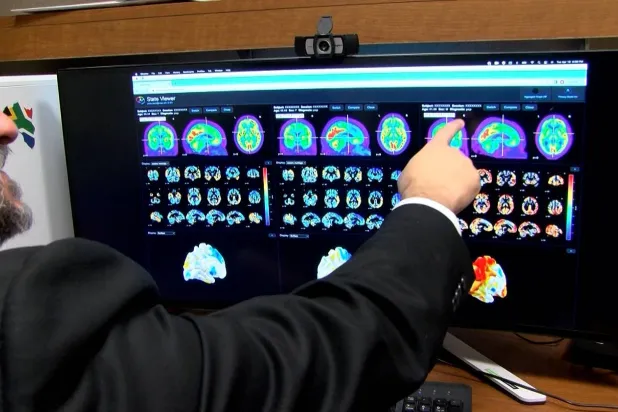
Buckley explained that diagnosing Alzheimer's disease has traditionally required expensive and invasive procedures, such as positron emission tomography (PET) scans or lumbar punctures. However, blood tests measuring levels of "phosphorylated tau 217" are "highly predictive" of the accumulation of sticky beta-amyloid plaques in the brain.
Beta-amyloid plaques, which trigger inflammation and damage communication between neurons, can accumulate in the brain decades before memory loss or cognitive decline appears—as early as a person's 30s or 40s.
As levels of beta-amyloid in the brain rise, tangles of a protein known as "tau" begin to form inside neurons, leading to their collapse and death. In some diseases, such as frontotemporal dementia, which damages executive functions more than memory, tau protein tangles may accumulate even in the absence of beta-amyloid.
Buckley explained that those with high levels of beta-amyloid will not necessarily develop dementia. Likewise, the presence of tau protein in the brain does not automatically mean cognitive impairment will occur later in life.
"But if the presence of early-stage tau combines with very high levels of beta-amyloid, it seems that beta-amyloid is the spark that ignites the spread of the disease throughout the brain," Buckley said. "We believe the p-tau217 test could show us the moment beta-amyloid begins to trigger this rapid spread of the disease."
These tests are not recommended for people who are cognitively healthy, but specialist doctors can use them for those showing signs of mild cognitive impairment or more advanced stages of dementia.
"We hope that p-tau217 tests will one day be similar to screenings that measure the risk of diabetes or heart attack, but this test will measure the risk of Alzheimer's disease and dementia," said Buckley, who also conducts research on memory disorders at the Mass General Brigham Neuroscience Institute in Boston.
How can blood tests be used?
Dr. Richard Isaacson, an Alzheimer's prevention researcher and director of research at the Institute for Neurodegenerative Diseases in Florida, who was not involved in the study, said that the information provided by Alzheimer's blood tests is very valuable, but their results should not be relied upon alone to determine disease risk.
"I would never order a p-tau217 test in isolation. The reason is that it only provides a small part of the biological picture, which is most often complex," he added, noting that he conducts a battery of blood and cognitive tests for his patients to verify (p-tau217) test results.
Isaacson explained, "Relying on a single test increases the likelihood of a less meaningful result, such as a false positive. If a person has a cold or is suffering from kidney dysfunction, that could skew the results." He pointed out that rather than using p-tau217 and beta-amyloid blood tests only to diagnose the disease, he uses them to monitor markers that show how patients are responding to treatment and lifestyle changes.
He noted: "In our lab, we are exploring the use of these tests as a point-in-time marker. If a person has one or two copies of the (APOE4) genetic variant, and their (APOE4) protein levels are high, they can use healthy nutrition, exercise, stress management, and other factors to perform 'preventative maintenance' to help lower these protein levels."
Isaacson pointed out that personalized lifestyle interventions, such as improving diet, exercising, getting enough sleep, enhancing social interaction, and managing insulin, cholesterol, and other risk factors, have helped reduce levels of beta-amyloid and tau protein in patients who committed to improving their health.
"Research has now indicated that about 45% of dementia cases can be prevented through lifestyle interventions, such as exercising, following a healthy diet, maintaining social interaction, cognitive training, and controlling vascular and metabolic risk factors," said Laura Nissenbaum, interim chief scientific officer at the Alzheimer's Drug Discovery Foundation, which funds research into the disease.
She added, "A blood test, in itself, is not a diagnosis for the disease. It is used alongside cognitive tests to rule out other causes that may lead to cognitive impairment."
Blood tests still require more study
This study re-analyzed findings from six observational and clinical studies conducted in Australia, North America, and Japan. The results are scheduled to be presented at the Alzheimer's Association International Conference on Wednesday, coinciding with their publication in the journal JAMA.
The study included about 2,700 older adults who did not show symptoms of cognitive decline. They underwent brain imaging via PET scan and (p-tau217) testing at the start of the studies, and researchers followed them for about 21 years.
The results showed that high levels of p-tau217 in initial tests were significantly associated with an increased risk of cognitive impairment, a risk that increased over time.
The study also showed that the blood test results remained significant even after accounting for brain imaging results and known genetic risk factors, such as the (APOE4) genetic variant. Possessing one copy of this variant may double or triple the risk of Alzheimer's disease, while having two copies of the risk variant may increase the risk by more than 10 times.
However, Buckley emphasized that this research is still in its early stages and needs to be replicated in larger studies involving people "from diverse backgrounds and with varying levels of health status."
In a separate study, researchers analyzed how specialist doctors and primary care physicians used a test combining beta-amyloid and p-tau217 measurements to diagnose and treat 1,300 patients who showed signs of dementia.
The analysis showed that primary care physicians used the test to rule out Alzheimer's disease in 30% of patients. For patients who tested positive, primary care physicians preferred referring them to specialists for further examinations rather than diagnosing Alzheimer's during the same visit.
Original source: CNN Arabic





Comments (0)
Be the first to comment.