Sleepwalking: Science Reveals the Mysteries of a Baffling Phenomenon
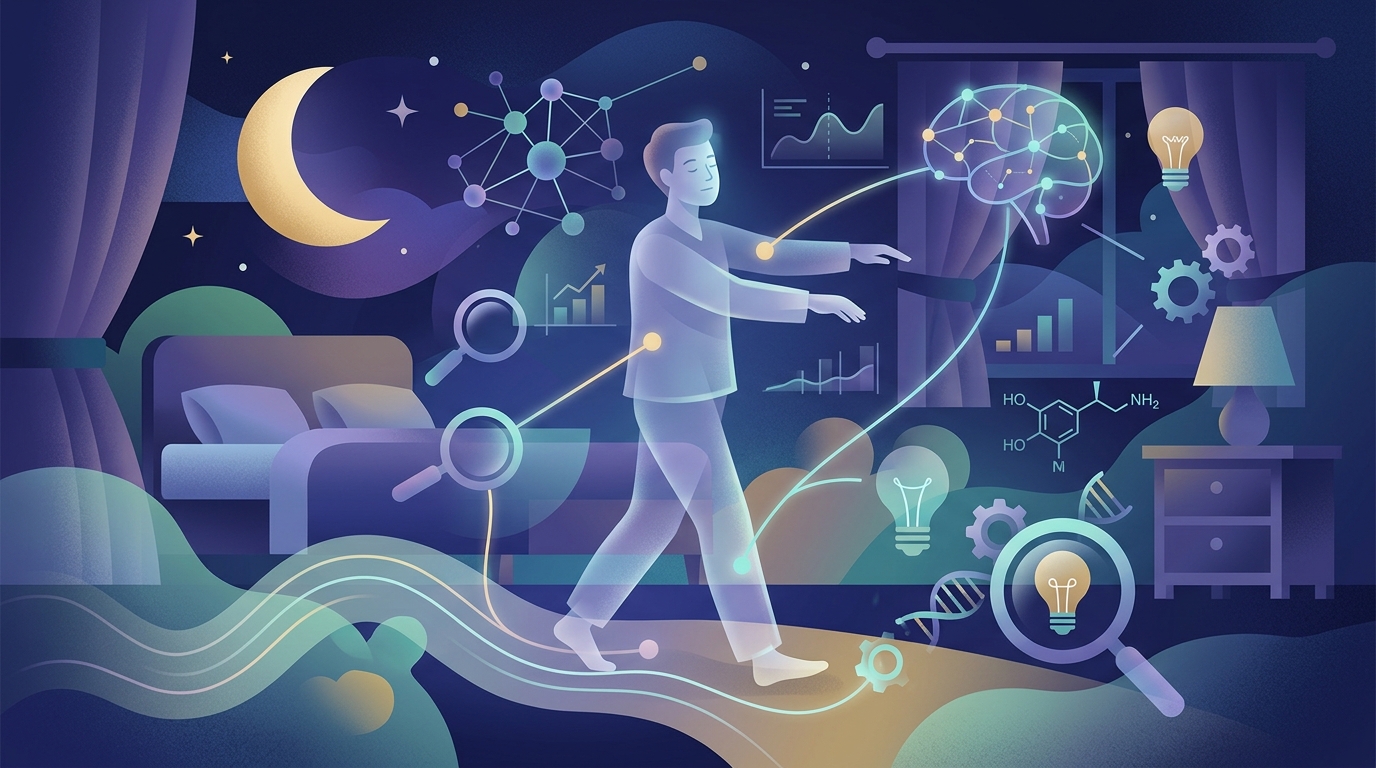
Sleepwalking affects about 1.5% of adults and 5% of children. Researchers explain that it involves a dissociation where motor brain regions awaken while consciousness remains asleep. It is largely genetic and can be triggered by sleep deprivation, stress, alcohol, and certain medications.
Sleepwalking has been associated in literature and cinema with mystery and humor, as it combines sleep and movement in a scene that defies the ordinary. This phenomenon affects about 1.5% of adults and 5% of children, and humans are believed to be the only creatures that suffer from it.
Researcher David Samson, a specialist in evolutionary anthropology at the University of Toronto, Canada, says that "performing motor gestures during sleep is not limited to humans alone, of course, but sleepwalking is largely a human phenomenon."
Samson describes sleepwalking as a "dissociation process" in the context of psychology, occurring primarily during deep non-rapid eye movement (NREM) sleep.
He says that during this phenomenon, "the parts of the brain associated with motor activity awaken, while other parts associated with consciousness, memory, and decision-making remain in a hibernation-like state."
From this perspective, during sleepwalking the body can perform complex actions that are surprising, such as climbing stairs, opening doors, and wandering through dark corridors. This makes people suffering from this problem appear as if they are walking with a purpose they are trying to achieve, while their conscious minds are unaware of what they are actually doing. Samson describes this state by saying: "The body moves before the conscious mind fully wakes up."
Related News
In his studies in the field of evolution, Samson does not see that this behavior evolved in humans to serve a specific purpose, and says it is a rare glitch in the precisely regulated sleep system of humans.
Samson says that among the most striking things to him about sleepwalking is that a person affected by this condition may perform intense actions and behaviors during a sleepwalking episode, and when questioned after waking up, he usually narrates what happened as if it were a dream or a story with some logic or emotional coherence.
Although modern science has not yet found the gene responsible for sleepwalking, Samson believes that this phenomenon is largely linked to genetic factors, and says that if a father or mother suffers from sleepwalking, it definitely increases the likelihood of a child having this problem.
One study has shown that children with no family history of sleepwalking have a 22% chance of experiencing this problem, but the rate rises to 47% among children whose one parent suffers from this condition, and jumps to 61% if both parents suffer from it.
While sleepwalking may seem like a strange habit or a fictional plot device for writers and authors, Samson believes it reveals many things about the health condition of those suffering from this disorder.
He says, "Sleep deprivation, fever, stress, alcohol consumption, certain medications, and some sleep problems and disorders are all factors that may lead to this problem." Therefore, if a person is predisposed to this condition for genetic reasons, it is advisable to avoid as much as possible those external factors that increase the risks of experiencing this condition.
Original source: Sky News Arabia



Comments (0)
Be the first to comment.