When the Doctor Becomes a Content Creator and the Patient a Customer
"); googletag.cmd.push(function() { onDvtagReady(function () { googletag.display('div-gpt-ad-3341368-3'); }); }); }
Summary
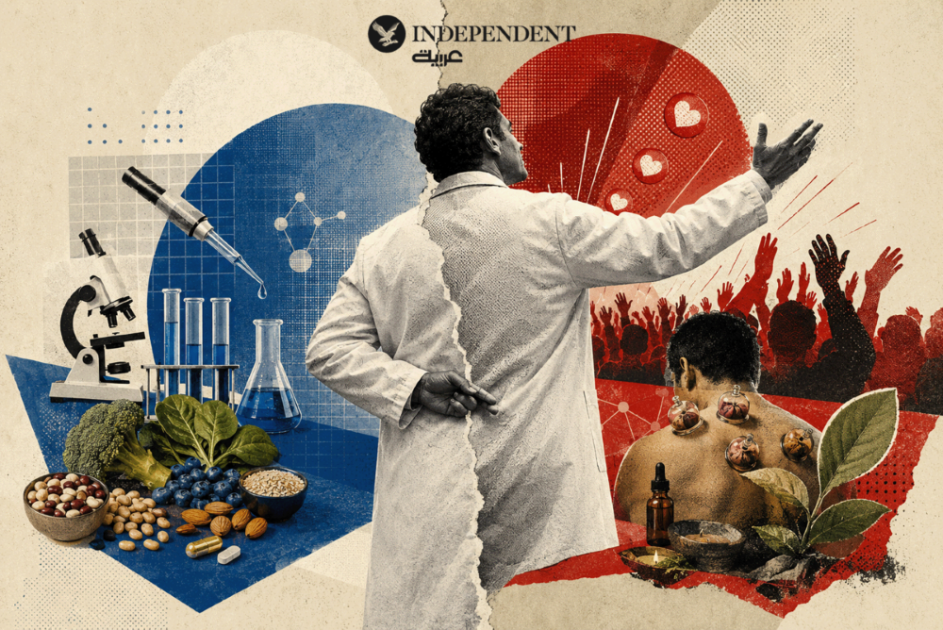
Some specialized doctors, not just impostors, seeking fame and followers have moved from medical education to promoting misleading health content on social media. Medicine has become just an influencer content creator promoting expensive drugs and procedures without solid scientific foundations, while authorities try to regulate this market by reminding of ethical and professional responsibility and adopting the principle of enlightenment so that patients make decisions based on proven information.
"I swear to point out to my patients the regimen I believe, to the best of my ability and judgment, is most beneficial for them in diet and medicine, and to abstain from all that is harmful and injurious," said Hippocrates, the Greek father of medicine who died 377 years before Christ. Considering this balanced and responsible pledge, how far the medical practices seen on social media seem from this meaning that doctors are supposed to swear after passing all required courses and training. While there are several versions of this oath, which was considered a reference that increases patient trust in the doctor, they all agree on the same meaning: no deception, accuracy, and safeguarding the patient's rights and dignity.
Read more
This section contains related articles placed in (Related Nodes field)
What happened is the transformation of sound medical advice, which gains absolute trust from its giver through scientific research, experience, and honesty, into a type of harmful folk medicine. The role of the doctor, who sets aside everything and focuses on prescribing medications with utmost integrity and providing his patient with complete information to make correct decisions, becomes mixed with the role of the influencer who ultimately seeks to sell a product. It matters not to him to cut half the truth or give his product false descriptions and catchy titles that ignite the internet regardless of accuracy, aiming for fame and enjoying all its perks.
Medical populism 'digital'
The talk here is not about the other sector that wears a white coat, falsely claiming the title of doctor or physician, appearing in dozens of reels while actually impersonating. Those are dealt with legally within a specific framework. But when some real doctors impersonate sales representatives, exploiting the great trust between them and patients, and exploiting the full aura that appears in the minds of those suffering from chronic health issues as soon as words like 'doctor, consultant, specialist, professor of treatment' are uttered, then the consequences become dire. The misleading information here gains the power of its speaker. However, if it causes severe harm, the process of proof requires a long legal battle and endurance that patients often lack, and evidence sometimes becomes nearly impossible.
It is observed that the chaos of medical prescriptions and promotion of drugs by specialists of the noble profession has been spreading through their verified social media pages for years in the Arab world. Each country tries to impose strict controls to protect recipients, but the situation has become more dangerous after the spread of what is called the 'Tayebat system' promoted by the late Egyptian anesthesiologist Diaa Al-Awady, who was struck off the medical syndicate for violating professional rules before his death. He urged his followers to consume sugars voraciously and leave their chronic disease medications, claiming they are a trick aimed only at increasing pharmaceutical companies' profits.
Despite the increasing deaths and deterioration among adherents of the system, especially those diagnosed with diseases requiring continuous medication, and despite strict measures taken by official health institutions to raise awareness and protect citizens, some still bid higher, doubt, and call for faith in this diet that some doctors have described as a complete crime.
The irony is that Hippocrates, whose famous oath all medical practitioners know, focused on codifying health procedures and compiling them in books with his students, moving medicine from a folk practice laden with superstitions, myths, and false promises to a systematic science. But in the age of advanced technology, medical populism has returned strongly; it is even licensed, with legal clinics and official pages promoting unproven or incomplete advice. Some of its promoters are doctors who have chosen the title of influencer and content creator and become 'reel' stars, questioning the very sciences of medicine and considering them commercial purposes that exacerbate patient suffering to urge them to buy medicine. So where is the Hippocratic oath here, and where is medical responsibility? Especially since the oath, described as non-binding, is equivalent to binding syndicate and legal texts calling for the same values.
Chaos without Ceiling
Dr. Samia Abdelrahman, a specialist in geriatric medicine and professor at the Faculty of Medicine, Ain Shams University, says she still receives cases of elderly people following the Tayebat system, putting themselves in a very critical health situation because due to their age and general weakness they are more susceptible to complications than others. She noted that the matter becomes complicated in societies with limited medical culture, and among those who believe it is their right to act on behalf of the elderly patient. She pointed out that some children and relatives exploit the elderly and make them follow this system and other harmful diets without their knowledge.
Abdelrahman added, 'They prevent them from taking indispensable medication and force them into those systems. The result is coma and deterioration that may cost the patient's life. The truth is that relatives of the elderly in our societies always have an obsession with hiding the medical truth, treatment plans, and nature of the disease from the patient at that age, claiming he cannot bear it psychologically, even though he is fully mentally competent. By law, he should make his own medical decisions. Compounding the problem is the existence of artificial intelligence applications that patients' relatives or patients themselves resort to, which may lead them into disasters. With millions of pages claiming knowledge and expertise while presenting a completely misleading health approach, the patient becomes prey waiting to be pounced on if he continues relying only on those sources.'
From her perspective, Dr. Samia Abdelrahman believes that the supervisory role should be tightened through an independent regulatory body, because the Medical Syndicate cannot monitor all this content, citing the example of Al-Awady's Tayebat. She noted that the seriousness of this phenomenon was not noticed and attempts to contain it only came too late, because the internet space is vast.
Original source: Independent Arabia


Comments (0)
Be the first to comment.