Brain injuries in former football stars may leave psychological and cognitive effects in midlife
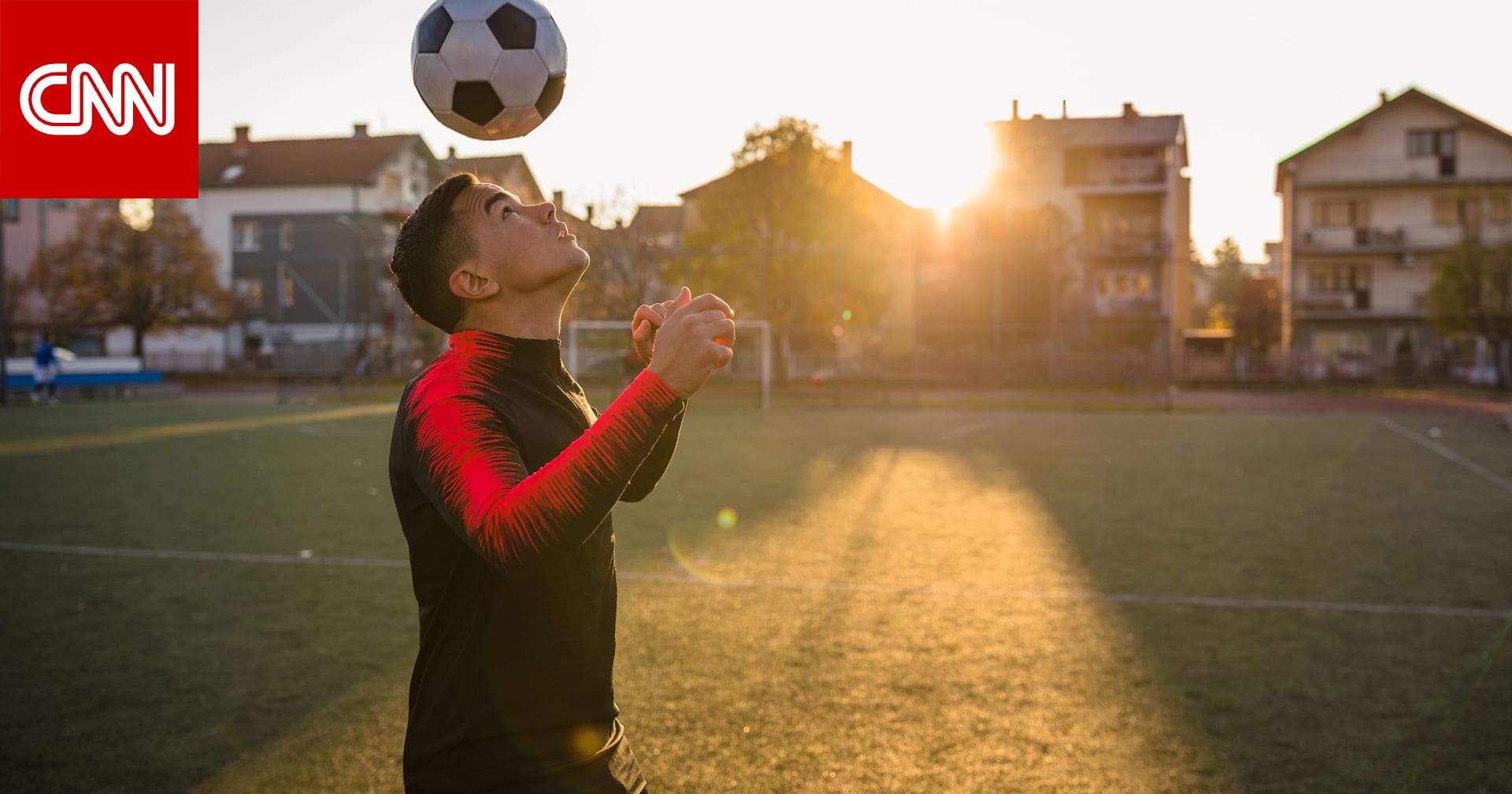
Heading the ball in football may become a problem for some players later in life. A new study has shown that former elite players reported, from midlife onwards, higher levels of anxiety, depression, and difficulties in concentration.
(CNN)-- While research on sports and its effects on the brain has mostly focused on American football, football players may also be at risk.
New research suggests that retired professional football players show signs of potential neurological effects in midlife.
As the World Cup approaches its final stages, the study, presented at the International Conference of the Alzheimer's Association in London in July, sheds light on a sport that has not been studied as much as American football. These preliminary findings suggest that neurological symptoms may appear in football players earlier than many people expect.
The study found that former professional football players were more likely to report anxiety, depression, and problems with thinking and decision-making compared to people who did not play contact sports, according to the study abstract which presents preliminary results and has not yet been published in a scientific journal.
Kalay Lynch, the study's lead researcher and a research technician at Imperial College London and the UK Dementia Research Institute, said: 'We do not know whether this is due to playing football for a long time and repeated head impacts, or whether people who choose to play football professionally and have high skills in it are inherently different from others.'
The research team used several methods to assess effects, including questionnaires, clinical examinations, and magnetic resonance imaging (MRI) of the brain.
The study included 142 former players, including 126 men and 16 women, aged between 30 and 60 years.
The researchers did not find significant effects on cognitive abilities, such as memory and attention, according to Lynch. However, brain images showed a reduction in gray matter, which is responsible for processing information in the brain, in areas associated with memory, decision-making, attention, and emotion regulation, compared to people who did not play contact sports.
These differences in brain structure, along with higher rates of reported psychological symptoms, may not be related to football, but they could also indicate neurological effects from repeated head injuries.
Dr. Thomas Parker, co-lead author of the study and consultant neurologist at Imperial College London, said: 'It is important that the participants in this study are middle-aged, because most previous research has focused on people over 70, the age at which dementia symptoms often begin to appear.'
He added: 'When we study people in detail before that stage, we can get an idea of the path the disease might take before dementia becomes apparent.'
Despite the importance of the findings in considering how to make the sport safer, the data is still preliminary. The researchers plan to expand the study to include more participants, conduct more tests, and follow them for a longer period to get a clearer picture of long-term effects.
Concussions are not the only problem
Most data on the long-term brain health effects of sports head injuries come from American football research, which makes sense because players are constantly exposed to head impacts.
Dr. Michael Alosco, co-director of clinical research at the Boston University CTE Center, who was not involved in the study, said: 'Doing more research on other sports, including football, which is perhaps the most popular sport in the world, is crucial to see if the risks apply to it as well.'
Where does the danger in football come from?
Alosco explains that there is a misconception that the main problem lies in concussions.
He said: 'Concussions can be, without a doubt, devastating for some people, but we know that most who suffer them recover fully.'
He added that the real concern is repeated head impacts over many years.
In football, these impacts can result from collisions between players, but a significant source is heading the ball, or what is known as 'headers'.
These findings align with research on American football, where players often report psychological symptoms, such as anxiety and depression, early in their lives.
Researchers are still trying to determine whether these symptoms are directly caused by head injuries or related to other factors in athletes. More studies are also needed to understand potential effects on memory in later stages of life.
This study focuses only on professional athletes, but broader research suggests that all players should be careful to follow safe practices to protect their brain health.
The question remains: Are people who play football for a period of their lives, without turning professional, also exposed to these risks?
Alosco believes it is too early to say for sure. Current results show associations only in professional players and cannot be generalized to the rest of the population, and researchers do not yet know how many head impacts might lead to long-term damage.
Dr. Steven Broglio, director of the Concussion Center at the University of Michigan, who was not involved in the study, said: 'What we see here cannot be directly generalized to middle school or high school players.'
Nevertheless, the available evidence on head injuries suggests that individuals and sports organizations should seriously consider protecting brain health.
In the United States, steps have already been taken to reduce these risks; the U.S. Soccer Federation banned heading the ball for players under 10 years old in 2016, and imposed limits on the amount of time children aged 11 to 13 can practice this skill each week.
Broglio said: 'The more you can reduce exposure to head impacts, regardless of the sport you play, it will benefit you in the end.'
He stressed that the goal is not to tarnish the image of the sport, but to make it safer. Broglio also emphasized the importance of athletes being aware of symptoms such as anxiety, depression, and problems with thinking and cognition, as many of them can be treated effectively.
He added: 'Talk to a healthcare provider if you notice these symptoms; you should not have to live with psychological or cognitive problems without seeking help.'
Original source: CNN Arabic


Comments (0)
Be the first to comment.