Cancer in Iraq: 'Fiercer' Pain and Cost
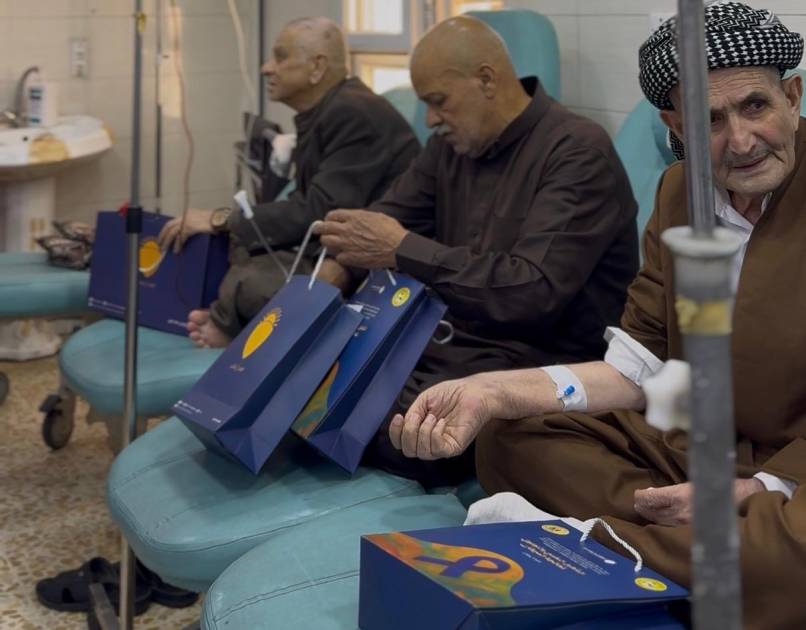
Summary: Patients, doctors, and pharmacists say that some doses are delayed or purchased from the private market at high prices. Among them is Muhammad, who suffers from chronic lymphocytic leukemia and needs the drug "Ibrutinib." He says he visited his treatment center multiple times looking for the drug and asked about it in private pharmacies and medical warehouses, but each time he left without treatment. When he found it in the private market, its price was beyond his financial means, leading to a delay in his treatment and his continued wait for the drug to return to the hospital.
Despite the Ministry of Health's announcement last April of the arrival of batches of cancer treatment drugs and their distribution to health departments in Baghdad and the provinces according to "actual need" to ensure continued supply, the announcement did not specify the names of the drugs received, their quantities, each province's share, or how long they would last in oncology centers.
In contrast, patients, doctors, and pharmacists say that some doses are delayed or purchased from the private market at high prices. Among them is Muhammad, who suffers from chronic lymphocytic leukemia and needs the drug "Ibrutinib." He says he visited his treatment center multiple times looking for the drug and asked about it in private pharmacies and medical warehouses, but each time he left without treatment. When he found it in the private market, its price was beyond his financial means, leading to a delay in his treatment and his continued wait for the drug to return to the hospital.
An extremely complex situation
Muhammad needs a daily dose of up to 420 mg, i.e., three capsules of 140 mg each per day. According to published Kimadia lists, the price of a box of Ibrutinib containing 90 capsules is about 4.8 million Iraqi dinars, more than $3,000, an amount sufficient for approximately one month for those taking the full daily dose.
Muhammad was supposed to receive this treatment from his government center, but its depletion forced him to search in private pharmacies and warehouses, where the price was much higher. Pharmacy workers tell him that the government bans the import of the drugs they bring, but the quantities are insufficient for the number of patients.
Some patients are torn between scarce government treatment and expensive private markets (from "Sahih" organization for cancer fighters in Iraq)
Kimadia documents for 2026 state that the need for Ibrutinib is confirmed for only 80 patients in the first year at the Hematology Center in Medical City, while the Iraqi Leukemia Patients Association warned, according to published statements, of the depletion of treatment in government hospitals and the need of more than 300 patients for it.
Global Cancer Observatory data records 2,258 new cases of leukemia alone in the country in 2022, and 6,512 prevalent cases over five years, without the Ministry of Health announcing the actual number of patients who need Ibrutinib nationwide, or the number of those deprived of it when it ran out in government hospitals.
Where does the patient go?
The shortage of some cancer drugs and the difficulty of accessing tests and treatment inside Iraq are among the reasons that drive patients to seek treatment destinations abroad, including India, Turkey, and Lebanon. It is not just about the cost of the drug; the patient also needs an appointment for a test, a medical report, a plane ticket, often a companion and translator, and accommodation near the hospital. With the high cost of treatment and travel, external options become a difficult door that many cannot enter, leaving some patients between government treatment that is not always available and a private market they cannot afford.
This crisis comes amid a rise in recorded cases, which reached 46,390 new cases, according to the latest comprehensive data from the Iraqi Cancer Board under the Ministry of Health, while Iraq and the Kurdistan Region recorded 46,390 cancer cases in 2024, compared to 43,062 cases in 2023. Baghdad topped the list with 11,642 recorded cases, followed by Basra with 3,558, then Nineveh with 3,234, while the statistics recorded 1,923 cases among children under 14.
Read more
Details of the dawn arrests in the Green Zone in Baghdad
Rapprochement between Baghdad and Washington... a sustainable partnership or transient understandings?
Iraq cancels Baghdad airport development project on suspicion of corruption
Al-Mutanabbi Street in Baghdad loses its readers: books gather dust
According to published sources, there is no precise national percentage determining the number of cancer patients able to receive full treatment inside Iraq, but scattered indicators reveal the scale of the gap. In the Kurdistan Region, a report by a local organization said 60 percent of cancer patients do not receive oncology drugs through public channels and bear the cost of private treatment, while only three public hospitals in Iraq provide PET scan services, and waiting times in Baghdad for MRI or PET scans can reach six months, a period that could change the fate of a patient needing rapid diagnosis or urgent treatment decisions.
Patients do not always travel abroad from the start; many first move between domestic centers such as Baghdad, Sulaymaniyah, and Karbala, then to foreign centers in Beirut, Istanbul, and Amman when diagnosis or treatment fails. Thus, medical travel for Iraqis sets off to treatment destinations including Delhi, Beirut, Amman, Tehran, and Istanbul. Furthermore, there are families who sell property, borrow money, or rely on charitable assistance to cover the cost of treatment, travel, and accommodation.
Dr. Muhammad Abdulkarim says that the collapse of the health sector generally affects citizens' sense of security. They try as much as possible to trust government hospitals and indeed begin their visits based on that, but doctors themselves kill this hope with advice that may seem disappointing but is true: the unavailability of treatment, its delay, or even the lack of guarantee that doses will arrive on time. The doctor has no choice but to acknowledge this collapse.
Ink on paper
Although cancer patients within the health system are covered by exemption under the Iraqi Health Insurance Law, and those exempted do not pay amounts when visiting health institutions nor any percentage of the drug's value, the Parliamentary Health Committee reported last May that cancer treatment drugs are not available in proportion to the increase in the number of patients. Kimadia linked the inability to supply to the lack of sufficient funds, and Parliamentary Health Committee member Bassam Al-Gharabi said that some injections may cost up to $250, and a chemotherapy dose may reach $900 outside the hospital.
Abdulkarim says that many cancer treatments are stolen from within government centers themselves, through collaboration between intermediaries, pharmacists, and implicated doctors for many reasons, including providing them to others at double prices. In 2026, the Parliamentary Health Committee spoke about monitoring the distribution mechanisms of cancer drugs to prevent leakage, indicating that the defect in the drug's delivery from warehouses to patients is still an issue within the regulatory institution itself.
It is noteworthy that the Iraqi authorities previously arrested individuals involved in selling cancer drugs designated for Ministry of Health centers, including drugs that left the Cancer Treatment Center in Medical City in Baghdad before reaching private pharmacies and being sold to patients at high prices.
Original source: Independent Arabia


Comments (0)
Be the first to comment.