Discovery of 'El-Hattab-Schmidts Syndrome' in the UAE Opens New Horizons for Genetic Treatment of Children
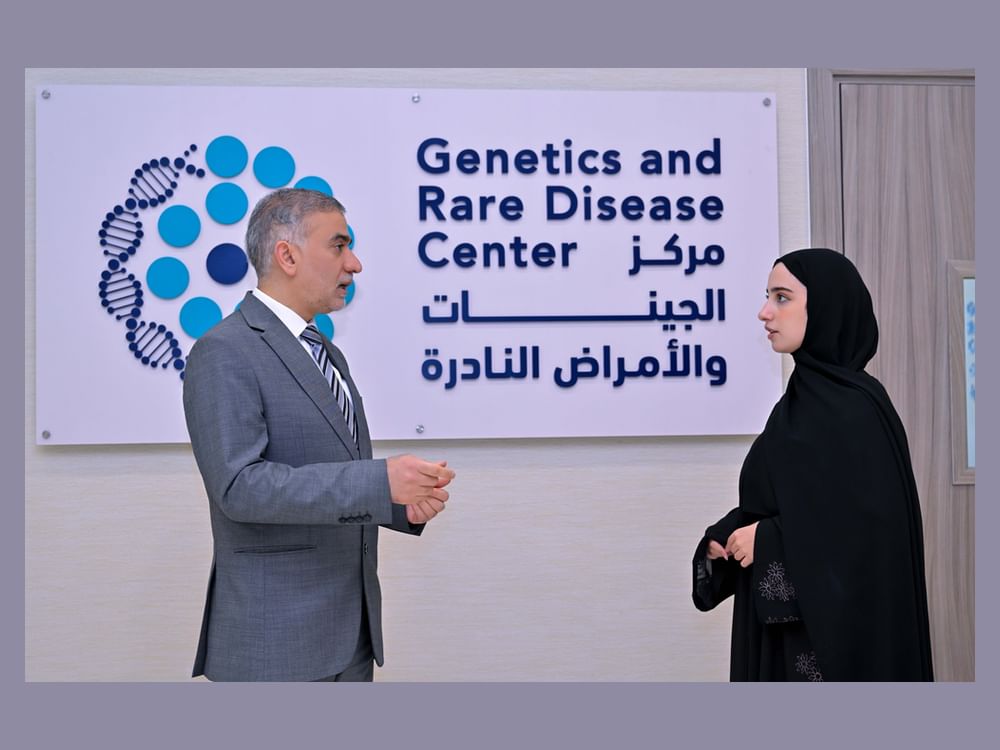
Professor Ayman El-Hattab announces the discovery of a rare genetic disorder named El-Hattab-Schmidts syndrome, characterized by developmental delay, intellectual disability, and low muscle tone. The syndrome follows an autosomal recessive inheritance pattern. Early diagnosis enables supportive care to improve quality of life.
Abu Dhabi, February 19 / WAM / Professor Ayman El-Hattab, consultant in genetic diseases and director of the Center for Genetics and Rare Diseases at Burjeel Medical City in Abu Dhabi, confirmed that children with 'El-Hattab-Schmidts syndrome' typically exhibit global developmental delay and intellectual disability, with one of their most prominent features being low muscle tone, which makes infants appear floppy and may cause feeding difficulties.
This statement came as part of the announcement of the discovery of a rare genetic disorder known as 'El-Hattab-Schmidts syndrome,' which affects brain development and muscle strength, and has not been previously reported in specialized scientific research, prompting its naming after its discoverer, in a remarkable scientific achievement for the medical research journey in the UAE.
Professor Ayman El-Hattab said that as these patients age, they may face educational difficulties and motor coordination problems, and some children may suffer from epileptic seizures, in addition to visual problems, distinctive facial features, and structural brain differences seen in imaging scans. In some cases, respiratory difficulties or heart problems may appear, requiring careful medical follow-up.
He pointed out that the syndrome follows an autosomal recessive inheritance pattern, meaning that both parents carry a silent copy of the genetic change without knowing it, explaining that confirming the diagnosis requires specialized genetic testing. Although there is no curative treatment, early diagnosis allows children to receive therapeutic sessions, neurological care, and developmental support that can significantly improve their quality of life.
These cases are considered the third rare medical disorder to be recorded in practical research, and this neurodevelopmental genetic disorder affects the child's brain and body development from the early stages of life.
Clinical research began in 2018 when Professor Ayman El-Hattab's team evaluated three children suffering from similar unexplained neurological and developmental symptoms. The results of their routine genetic tests did not match any known disorder, but the research revealed variants in the PPP1R21 gene not associated with any previous disease, confirming the existence of a new syndrome.
In 2019, a multinational research group led by El-Hattab published an independent study on clinically and genetically similar cases, strengthening the evidence. Additional reports followed, confirming that the disorder represents a distinct syndrome, and its name was officially adopted to honor the researchers' contributions.
The diagnosis marks the end of a long journey for families and helps in developing a personalized treatment plan. It also provides an understanding of the nature of the condition. Given its autosomal recessive inheritance, parents may consider in vitro fertilization with preimplantation genetic testing to reduce the risk of recurrence.
El-Hattab has participated in identifying more than 10 new genetic syndromes and characterizing extremely rare cases, emphasizing that the advancement of genetic testing in the UAE accelerates discoveries, helps provide answers to families, reveals disease mechanisms, and explores future treatments.
Original source: WAM




Comments (0)
Be the first to comment.