Discovery of "Phantom Substance" in Drinking Water Baffles Scientists
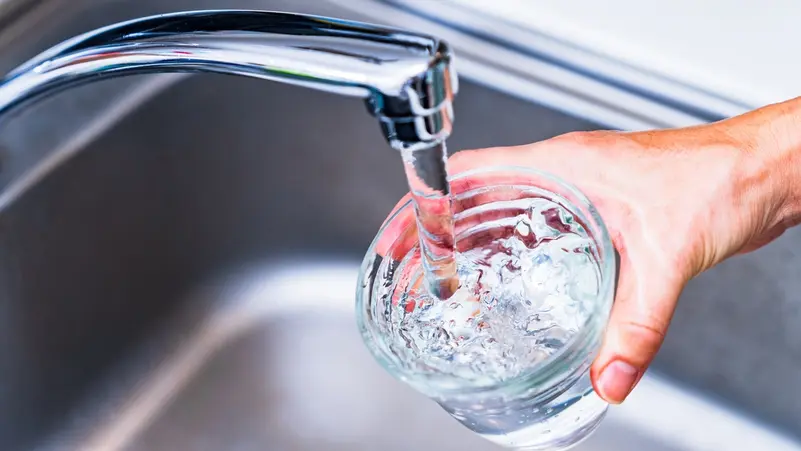
Drinking water in developed countries is largely clean, but hidden contaminants can still lurk. According to a report by New Atlas citing the journal Science, a team of scientists has identified a mysterious chemical known as the 'phantom substance' that has been contaminating drinking water for decades, and they have discovered that it is entirely new to science.
Drinking water is often treated with chlorine to disinfect it, and this process has proven effective in eliminating most waterborne pathogens. However, it can produce harmful byproducts for human health. A team of researchers discovered that a similar compound, chloramine, produces fewer harmful byproducts and lasts longer. Therefore, it is widely used in the United States and some other regions.
You may also be interested
But it turned out that chloramine also has its own byproducts. Chemical analysis has long shown that between 5 to 10% of expected nitrogen disappears, trapped in another molecule that scientists have been unable to directly identify for decades.
Scientists have recently managed to identify this strange 'phantom' chemical. It is called the chloronitramide anion, a negatively charged molecule composed of one chlorine atom, two nitrogen atoms, and two oxygen atoms.
The researchers synthesized and isolated this chemical, then analyzed it using high-resolution mass spectrometry and nuclear magnetic resonance spectroscopy to reveal its properties.
Then concentrations of this anion were measured in various water systems in the United States that are treated with chloramines. They were detected at levels up to 100 micrograms per liter, which is higher than the typical regulatory limits for disinfection byproducts, which range from 60 to 80 micrograms per liter.
Direct toxicity studies have not yet been conducted on this compound, but the research team says analyses indicate that the chloronitramide anion is completely harmless.
Oliver Jones, a professor of chemistry at RMIT University, expressed his agreement with 'conducting a toxicity study on this anion because it would be useful now that its identity has been determined,' noting that he is not very concerned about the tap water he drinks.
The compound in question is not a recent discovery; it has only been recently identified. Its presence in some (but not all) drinking water has been known for more than 30 years.
Original source: Al-Mowaten




Comments (0)
Be the first to comment.