Do some women see colors that others cannot?
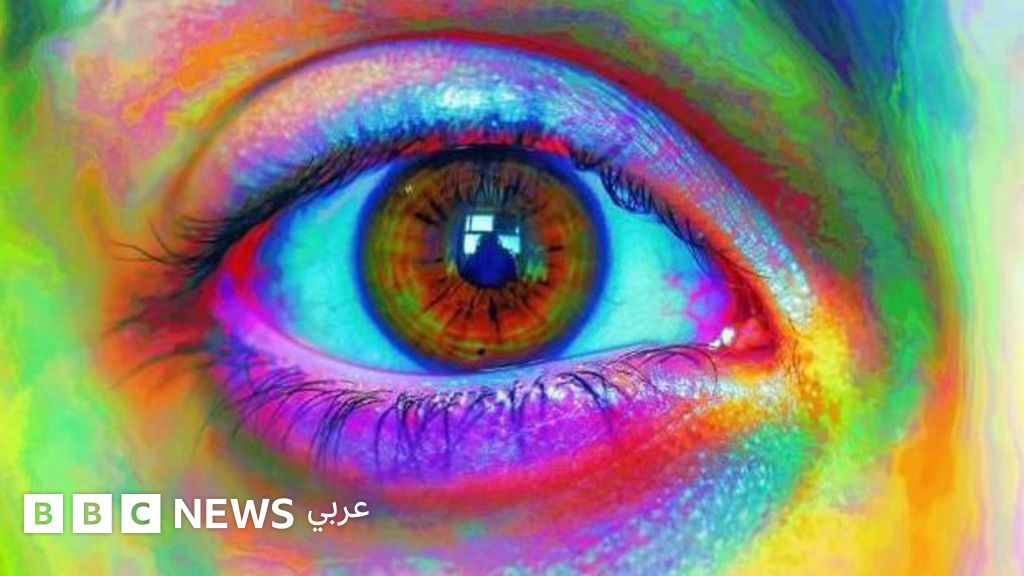
It is believed that about 12 percent of women may carry a genetic variant that could give them enhanced color vision, but proving what they actually see is extremely difficult.
Do some women see colors that others cannot?
Article Information
Author: Daisy Stephens, Role: BBC World Service
Published: 32 minutes ago
Reading time: 6 minutes
Fine artist Concetta Antico says that the moment she realized her students could not see the colors she saw was a "shock."
Antico says she sees "countless colors" in everyday objects, such as shadows, whereas most people see only one.
She assumed everyone saw the world the way she did, until it became clear to her from her students that they did not.
"I asked some of them later: 'Why didn't you tell me anything?'" she recalls.
They said, "Well, you're the teacher. We assumed... that you were practicing something artistic."
Antico later learned, through genetic testing, that she possesses the biological trait known as tetrachromacy—a type of enhanced color vision—which may enable an individual to see colors that others cannot.
Dozens of patients lose vision after cataract surgery at a hospital in Egypt
Why do heatwaves affect women more?
An extra cell type
Most people have three types of specialized cells in their eyes called "cones."
Each type is activated by a range of different wavelengths of light, which correspond roughly to red, green, and blue.
Skip most read and continue reading
Protests in Ukraine against Zelensky's dismissal of the Defense Minister
Indications of coordination between the Houthis and the Somali Al-Shabaab movement to control the Bab el-Mandeb Strait – The Telegraph
Tehran "asked the Houthis to close the Bab el-Mandeb Strait" if Washington attacked the Iranian power grid
Lionel Messi: "This is why he is the King"
The cones then send their signals to the brain. The specific color we see depends on the combination of signals the brain receives from the different cones.
Image caption: Different types of cone cells are triggered by different wavelengths of light
But some people may possess a fourth type of cone cell. Theoretically, this could mean that their brain receives more—and more varied—information, which could enhance color sensitivity across the visible light spectrum.
Two genetic variants
The two genes responsible for encoding red- and green-sensitive cones are located on the X chromosome. To be a "tetrachromat" and enjoy tetrachromatic vision, a person must carry and express two different variants of one of these genes.
Since women have two X chromosomes, while men typically have only one, only biological women can generally possess tetrachromatic vision. In men, the same genetic variant often leads to a form of color vision deficiency.
Possessing a fourth type of cone cell is called "retinal tetrachromacy," and genetic tests can identify people who carry the genetic types that produce the four types.
Estimates suggest that about 12 percent of women possess this genetic trait, according to the Tetrachromacy Project at Newcastle University in the UK, although research suggests that this percentage may vary between populations.
Image caption: Possessing an extra type of cone cell is called "retinal tetrachromacy"
Skip podcast and continue reading
Worth noting
An in-depth explanation of the most prominent events and topics, to help you understand the most important changes around you and their impact on your life
Episodes
Podcast End
But having an extra cone cell does not necessarily mean that the person has enhanced color vision.
This state (possessing enhanced color vision) is called "functional tetrachromacy," according to Dr. Kimberly A. Jameson of the Institute for Mathematical Behavioral Sciences at the University of California, USA, and it is a state that is difficult to prove.
However, there are reasons to believe that this genetic ability may indeed lead to improved color vision.
One study conducted by Jameson found that women who possess four types of cone cells are able to divide the color spectrum into more distinct shades, suggesting that they may perceive color aspects more clearly compared to people with trichromatic vision—that is, people who possess three types of cone cells.
There is also evidence from the animal kingdom. In some species of New World monkeys—types of monkeys found in Central and South America—males are dichromatic, meaning they have two types of cone cells, while females are trichromatic, meaning they have three types. Scientists have observed that trichromatic monkeys eat red fruit more quickly than dichromatic ones, suggesting that they may see the color more clearly.
If this applies to humans with tetrachromatic vision, women who possess the extra type of cone cell might see colors differently, according to Dr. Jenny Bosten, a visual neuroscientist at the University of Sussex in the UK.
But how this would look is still a matter of debate.
"Indescribable colors"
Dr. Michael Newall, a professor of philosophy at the University of Adelaide in Australia, who has written a paper on what tetrachromats see, says: "There is a school of thought... that if you have an extra color receptor... you might see colors that are impossible to describe, just as we cannot explain to a color-blind person what red or green looks like, if they have red-green color blindness."
He adds: "Another possibility... perhaps it is just that they are able to see more subtle shades of normal colors."
Image caption: It is impossible to measure a person's experience of colors accurately
Scientific assessment of the colors that people see is difficult.
Dr. Jenny Bosten says: "It is impossible to measure even the normal subjective experience of colors, even in the case of trichromatic vision."
Dr. Kimberly A. Jameson adds that the matter is further complicated because there are many types of tetrachromacy, with the potential for significant variation depending on the sensitivity of the extra cone cell type.
But analyzing things such as how well people can distinguish between colors, or how they evaluate the difference between their shades, can help researchers understand the differences in how people see, Bosten says.
How to identify a tetrachromat
Searching the internet will yield many sites that offer online tetrachromacy tests, but experts say it is impossible to identify a tetrachromat this way.
Most modern screens contain only three color channels—red, green, and blue—which means that even if tetrachromats were able to see new colors, they would likely not be able to see them clearly on the screen.
Original source: BBC Arabic






Comments (0)
Be the first to comment.