How to encourage children to eat vegetables if they don't like them?
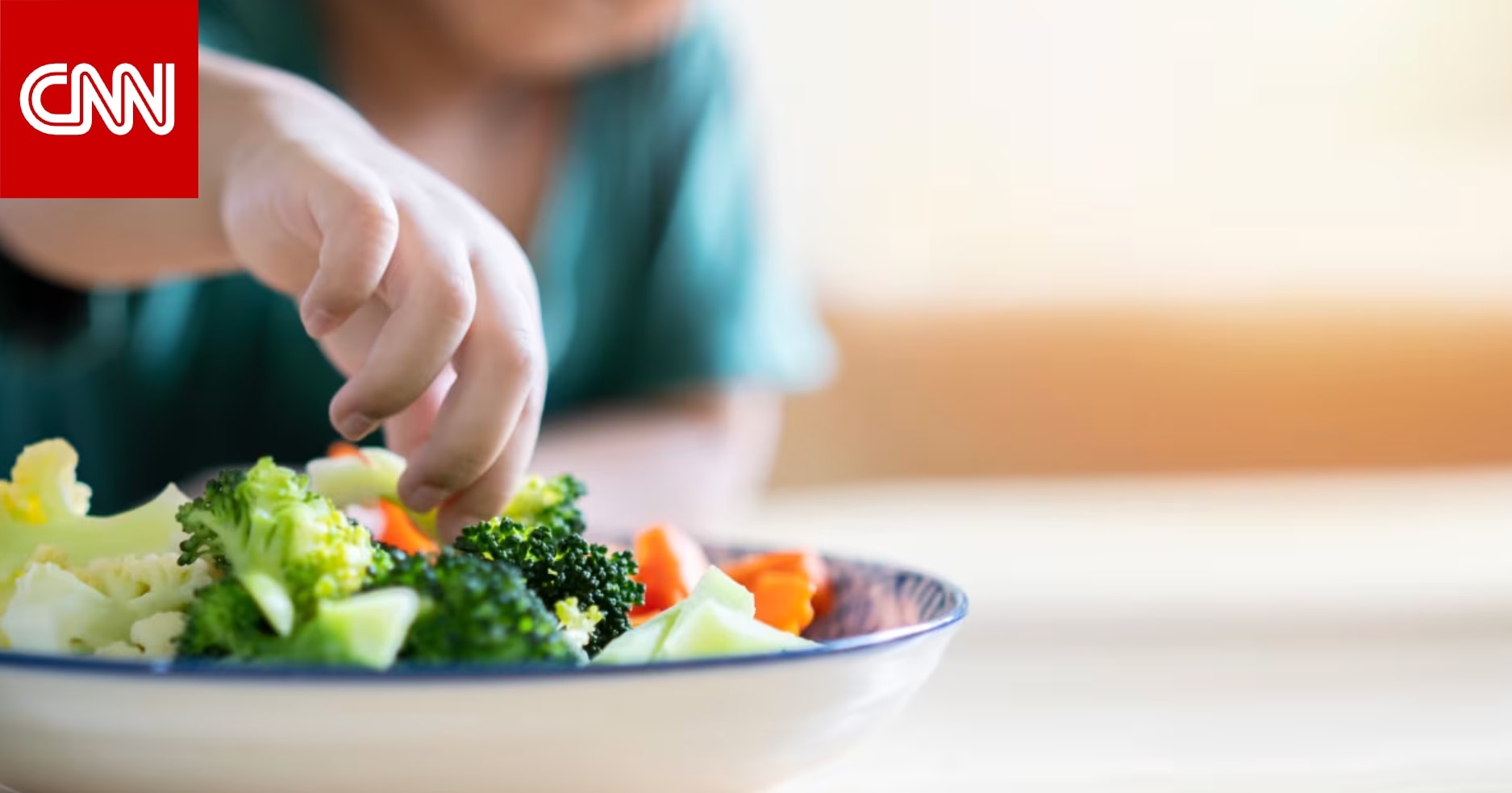
The outbreak of cyclosporiasis raises many concerns about serving vegetables and fruits to children, at a time when a global study reveals they are not consuming enough of them... What is the solution?
Despite the spread of memes glorifying biscuits as the only food that hasn't caused poisoning, many people are hesitant to eat salads and fresh vegetables amid the outbreak of cyclosporiasis infection in several US states.
This study is one of the broadest analyses focusing on children's dietary habits regarding healthy plant-based foods.
While some are looking for any excuse to eat biscuits, others are simply hesitant to eat salads and other fresh produce, amid the outbreak of cyclosporiasis infection in several US states.
Unfortunately, it is unlikely that this parasite will encourage children globally to eat more fruits and vegetables, even though they are already not consuming the recommended amounts, according to a recent study published in BMJ Global Health on July 8.
The researchers analyzed data from 185 countries to find out what children eat best and how their dietary habits have changed over time.
These findings come at a time when health officials are also investigating the outbreak.
Amid concerns about foodborne illnesses, your perspective on consuming fruits and vegetables may change. Thus, CNN health expert Dr. Leana Wen offers her advice on this topic.
Wen works as an emergency physician and clinical associate professor at George Washington University, and previously served as health commissioner for Baltimore City.
CNN: What do we know today about the foods children eat and those they don't?
Dr. Leana Wen: The new study showed that children in most regions of the world are not consuming adequate amounts of fruits, non-starchy vegetables, legumes, nuts and seeds, and starchy vegetables.
Although consumption of these foods has seen a slight improvement over the approximately 30 years covered by the study, the progress has not been significant.
This study is one of the most comprehensive analyses to date of children's dietary habits related to healthy plant-based foods.
The researchers sought to determine the amounts of these foods children consume worldwide, monitor differences by age, gender, and country, and track changes in dietary patterns over time.
The researchers collected data from more than 1,200 dietary surveys conducted between 1990 and 2018, covering children and adolescents in 185 countries.
The team used statistical models to estimate the amounts of these healthy foods children eat.
CNN: Among the most surprising findings of the study is that infants and young children in the United States were among the highest consumers of fruits and vegetables globally, while older children and adolescents in the US were among the lowest consumers among high-income countries. Why is that?
Dr. Leana Wen: The study found that children under age two in the US were consuming about three servings of fruits and vegetables per day. But this rate drops to less than two servings per day throughout childhood and adolescence. This does not align with US dietary guidelines, which recommend increasing fruit and vegetable consumption as children age.
Children under age four are advised to consume the equivalent of one to one and a half servings of fruit per day, and about one and a quarter to one and three-quarters servings of vegetables.
By adolescence, the recommended amount increases to about two servings of fruit and three servings of vegetables per day.
This decline may be partly attributed to the fact that parents largely control what infants and young children eat.
But as they grow older, other factors begin to influence their food choices, as they spend more time at school and with friends, and eat more meals outside the home.
They are also increasingly exposed to advertisements for ultra-processed products, high in added sugars, sodium, and unhealthy fats.
These findings suggest that improving children's nutrition does not only depend on educating parents of infants and young children, but also requires providing schools and communities that encourage healthy choices and make them easier to adopt during childhood and adolescence.
CNN: How important is it for children to eat fruits and vegetables?
Dr. Leana Wen: Fruits and vegetables are rich in vitamins, minerals, fiber, and many other beneficial compounds that work together to support health.
During childhood, these foods help provide the nutrients needed for growth and development.
It is also important for children to start eating fruits and vegetables at an early age, as healthy dietary habits are typically formed during the early years of life and often persist into adulthood.
Children who are accustomed to regularly eating healthy foods are more likely to maintain these habits later, which may reduce the risk of chronic diseases, including heart disease, type 2 diabetes, and some types of cancer.
CNN: Many parents complain about their children's picky eating... Is this normal?
Dr. Leana Wen: This behavior is normal, and many children go through it, especially in early childhood and preschool stages. It is common for a child to refuse an unfamiliar food, or to suddenly stop eating a food they liked days before.
It is important to note that a child's refusal of a particular food once does not necessarily mean they will always reject it.
Research has shown that repeatedly offering food to a child without forcing them to eat it is one of the most effective ways to expand the range of foods they accept.
CNN: Does it matter whether fruits and vegetables are fresh, frozen, or canned? What about fruit juices, smoothies, and dried fruit?
Dr. Leana Wen: The good news is that fruits and vegetables, in all their forms, can be part of a healthy diet.
Fruits and vegetables are often frozen shortly after harvest, which helps preserve their nutritional value. They are also usually cheaper than fresh ones, especially when bought in bulk, making them an economical choice.
Canned fruits and vegetables can also be nutritious, but it is important to check the nutrition label.
Vegetables should be chosen without added salt or sodium, while fruits are best preserved in water or their own juice rather than heavy sugar syrup.
As for other forms, the recommendations regarding them are not entirely clear.
Smoothies can be a good option, especially if they contain vegetables and are free of added sugars, but they do not replace whole fruits and vegetables.
The same applies to dried fruit, which can be part of a healthy diet, but removing water increases the concentration of calories and natural sugars.
In contrast, fruit juice has a different story.
The American Academy of Pediatrics recommends not giving it to infants under one year, because it provides no additional nutritional benefit compared to whole fruit at this stage.
Original source: CNN Arabic





Comments (0)
Be the first to comment.