Popular Supplement Among Athletes May Offer Promising Benefits for Depression Patients
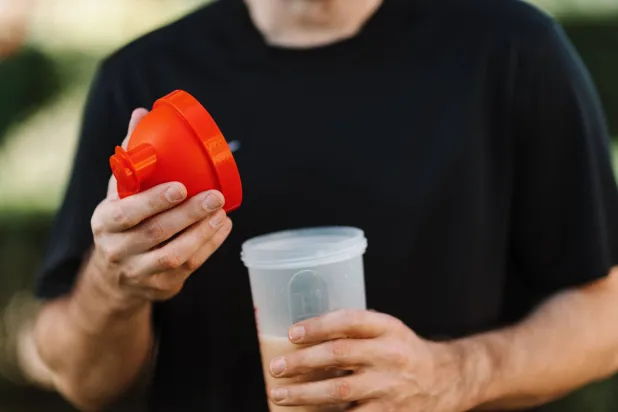
Creatine has long been associated with improving athletic performance and increasing muscle strength, making it one of the most commonly used supplements among gym-goers.
Daily walking improves blood lipid levels by raising 'good' cholesterol (HDL) and potentially lowering 'bad' cholesterol (LDL) and triglycerides. This activity stimulates enzymes that break down unhealthy fats. For optimal heart health, experts recommend 150 minutes of moderate brisk walking per week.
When it comes to lowering cholesterol, regularly increasing your daily step count is a great start.
Dr. Roger Blumenthal, a cardiologist, professor, and director of the Johns Hopkins Ciccarone Center for the Prevention of Cardiovascular Disease in Baltimore, Maryland, says: 'We don't know the complete mechanism of exercise benefits, but we know they occur. It is known that aerobic exercise helps raise good cholesterol (HDL) and lower triglycerides, a type of fat in the blood. Any movement that increases heart rate has beneficial effects not only on cholesterol but also on blood pressure,' according to the health website HealthCentral.
Walking at a steady pace achieves goals.
Dr. Blumenthal says: 'It is an easy exercise that can be incorporated into your daily routine.' One study found that regular walking at a moderate pace reduces the risk of high cholesterol as effectively as running at a brisk pace.
The American Heart Association recommends at least 150 minutes of moderate aerobic exercise per week to help lower bad cholesterol (LDL) – also known as 'bad cholesterol' – and reduce high blood pressure. Experts say that if you can increase this to 200 minutes per week, your health benefits will increase as well.
If this seems like a lot, remember that it amounts to just half an hour for five days a week – or just over 20 minutes daily – and you don't have to do all this activity at once. Doing 10 minutes here and 10 minutes there counts and makes a big difference.
The Ideal Plan to Lower Cholesterol
Wherever you are on your fitness journey, we have a plan to help you increase your steps, lower your cholesterol, and reduce your risk of cardiovascular disease.
Plan 1: Make Walking a Habit
Although the American Heart Association recommends 150 minutes of aerobic exercise per week, if you are sedentary so far, any additional movement is a step in the right direction. Dr. Blumenthal says: 'For people who don't exercise, even 10 or 15 minutes a day can have significant benefits.' Research confirms this; a study published in The Lancet medical journal found that just 15 minutes of intense exercise daily reduces the risk of death by 17 percent compared to those who do not exercise at all. So do not hesitate to start from scratch and try to increase your steps whenever possible.
Make sure to start walking a little every day. Experts say: 'Keep it very simple. Determine the number of minutes you can dedicate to walking daily.' If weekends are more suitable for you, for example, try walking longer on Saturday and Sunday, then shorter periods during the week – for instance, five minutes each morning and another ten minutes at lunch.
To help you stick to the plan, note down some ways that will motivate you. Experts suggest incorporating these motivators:
Schedule a walk with a friend every Monday and Wednesday evening (or any days that suit you) to encourage each other.
Instead of walking in your neighborhood, try a new area in the city; curiosity increases motivation, and a new place will help time pass quickly.
Create a new playlist; the music you love creates good feelings that you will associate with walking. This helps change people's perspective on exercise.
Consider getting new walking shoes dedicated solely to walking, to make walking a daily habit.
Plan 2: Gradually Increase Steps
To maintain continuous improvement in cholesterol levels and overall health, making walking an essential part of your daily routine is crucial. One study examining different types of physical activity found that a single session of aerobic exercise – like running in this case – did not affect cholesterol, whereas 160 minutes of aerobic exercise over 18 weeks led to a significant increase in good cholesterol (HDL).
Dr. Blumenthal says: 'You may not be able to reach the recommended 150 minutes per week, but if you can get close to that, you will notice tangible benefits on blood pressure, blood sugar, and cholesterol within two to three months.'
Use this plan for four weeks to make walking an indispensable activity. You will move a little each day at a moderate pace – so you feel an effort level between 5 and 6 on the Rating of Perceived Exertion (RPE) scale from 1 to 10 – and gradually work up to 30 minutes of walking daily.
Experts suggest breaking walking into short periods to make it easier for you, and to help build a sense of accomplishment with each day you complete. Start with short, enjoyable periods. This way, you can achieve success with each walk and avoid frustration.
Week 1: Walk for 10 minutes daily at a moderate pace. If you prefer, split it into two 5-minute sessions. Remember that these short periods are specifically designed to help you build motivation; the focus here is on maintaining a steady moderate pace to make each activity purposeful – rather than just increasing step count.
Week 2: Walk for 15 minutes daily at a moderate pace. Start your day with a five-minute walk in the morning, then another ten minutes later (or vice versa).
Week 3: Walk for 20 minutes daily at a moderate pace. You can walk for ten minutes in the morning, then another ten minutes later, or walk for a full 20 minutes at any time that suits you.
Week 4: Walk for 30 minutes daily. You can divide it throughout the day as you have been doing – if that is your usual pattern – or walk for a full 30 minutes. Bonus: you will exceed 200 minutes per week, and you will notice major benefits in lowering cholesterol.
After four weeks, when walking becomes a habit, start experimenting with different walking intensities. Walk faster for a few minutes, then slow down – that is, practice interval walking. Refer to Plan 3 below for ideas on how to do this.
Plan 3: Increase Walking Speed
To gain additional heart health benefits, you don't have to start running or even walk at an extremely fast pace like race walkers (unless you want to!). However, increasing your walking speed even slightly will enhance its heart benefits.
Research shows that high-intensity aerobic exercise – with a perceived exertion rate between 5 and 8 – effectively lowers bad cholesterol (LDL) and triglycerides. Dr. Blumenthal says walking at a very slow pace will have less impact, and recommends reaching a speed of at least 3 miles per hour, and challenging yourself to increase this speed to 4 miles per hour during some walks (or for short intervals during walking).
Original source: Asharq Al-Awsat



Comments (0)
Be the first to comment.