This is how Wegovy, the 'revolutionary' weight-loss drug beloved by Hollywood, works
"); googletag.cmd.push(function() { onDvtagReady(function () { googletag.display('div-gpt-ad-3341368-3'); }); }); }
Summary
In Britain, ministers announced plans that may allow tens of thousands of people to access the fat-burning drug. So how does Wegovy, the 'revolutionary' weight-loss drug beloved by Hollywood, work?
The British government announced plans to inject tens of millions into a trial aimed at expanding weight loss management programmes outside hospitals, in an effort to make weight-loss drugs more accessible to people.
This step comes as part of the government's efforts to reduce rising obesity rates in the United Kingdom. But what are these new weight-loss drugs, and what are the potential benefits and concerns we should be aware of?
Read more
This section contains related articles, placed in (Related Nodes field)
What is Wegovy?
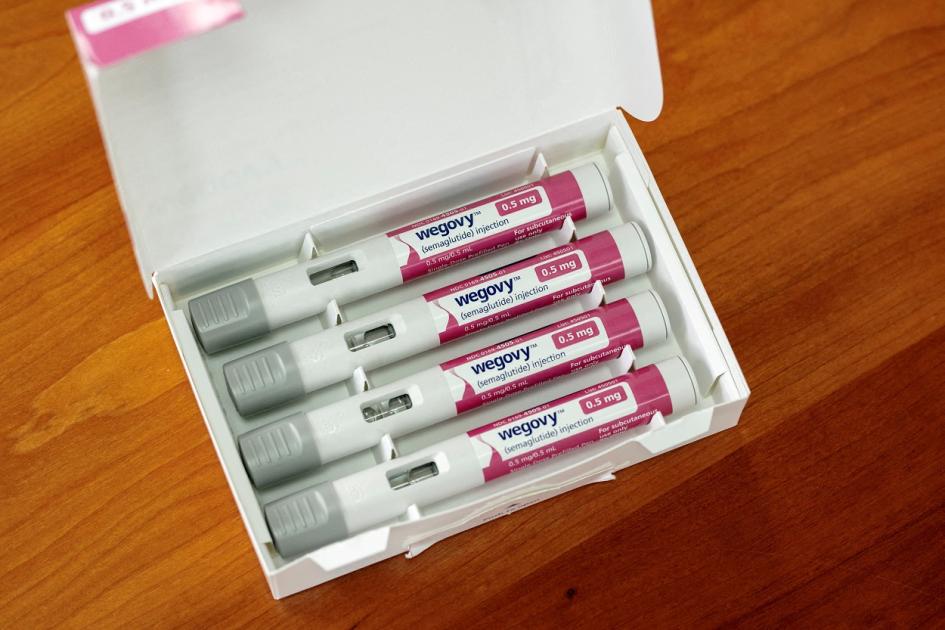
Wegovy is the brand name for semaglutide, a drug used for losing excess kilograms. It was developed and is owned by Novo Nordisk for weight loss. Semaglutide works by suppressing appetite.
In the United States, the drug is also marketed, but under the name Ozempic, which has been described as a miracle weight-loss drug among celebrities. Novo Nordisk stated that demand in the US has exceeded current supply, and it has had to limit quantities.
Earlier this year, the National Institute for Health and Care Excellence (NICE) in Britain recommended semaglutide, also known as Wegovy, for adults with a body mass index of 35 or above and who have one obesity-related health condition.
NICE also recommended Ozempic and Rybelsus (another brand name for semaglutide) specifically for people with type 2 diabetes to control blood glucose levels.
Side effects of semaglutide include nausea, constipation, diarrhoea, dizziness, and fatigue.
Under current decisions by the Medicines and Healthcare products Regulatory Agency, products containing semaglutide are only available in the UK with a prescription.
What plans has the British government set out regarding weight-loss drugs?
Under the current recommendation, Wegovy, recommended by NICE, will only be available through specialist weight management services, primarily provided by NHS hospitals.
But the British government appears to be seeking wider availability of the drugs, so it announced £40 million to fund pilot programmes that will explore how to expand weight management services outside hospitals. One thing the pilots will consider is ways to allow GPs to prescribe the drugs in the community, for example.
According to the Department of Health and Social Care (DHSC), NICE is currently considering approving another diabetes drug called tirzepatide for weight loss as well.
It is clear that ministers are now targeting the 'treatment' side of this ever-worsening public health problem. British Health Secretary Steve Barclay claimed that prescribing the weight-loss drug to more people could potentially have 'significant' economic benefits.
What do experts say?
For their part, experts welcomed the focus on tackling obesity that coincided with the government's interest in Wegovy. However, concerns arise about taking a short-term approach, which ultimately will not provide sustainable change in addressing obesity-related health problems.
But the DHSC press release this week did not mention that, according to current clinical research, weight loss from these drugs only lasts if they are continued, and that the duration of use should not exceed two years under current recommendations. It is also unclear whether the drugs prevent weight regain after stopping.
It is also unknown whether the British government intends to increase funding for community weight-loss programmes, outside of drugs and less glamorous public health programmes for obesity prevention.
Professor Keith Frayn, Emeritus Professor of Human Metabolism at the University of Oxford, gave his opinion on these plans, saying the decision is good news for overweight people, but it remains just 'a bandage covering a much bigger problem'.
According to Professor Frayn, the government should address the broader drivers of obesity and find solutions to its root causes rather than just treating it.
For his part, Dr Duan Mellor, a registered dietitian and senior lecturer, warned that 'while this investment in weight management to support people with obesity is a welcome step, it is far from being a turning point contrary to the Prime Minister's view. Working on solutions to the underlying societal problems behind the risk of obesity, ill health, and health inequalities... would be a braver step.'
'As a nation, we simply cannot rely on a drug to find our way out of a health crisis. We must be wise in using the drugs available to us, and organise our society in a way that gives people hope and the ability to enjoy a healthy lifestyle regardless of their background.'
Do these drugs raise greater concerns?
There are clear concerns that the weight-loss benefits of semaglutide are temporary and will not provide long-term solutions for patients.
Earlier, one doctor told The Independent that without helping people manage their weight through sustainable methods, they will experience rapid weight gain after stopping the drug, which may itself pose health risks.
A broader and less obvious problem, previously reported by The Independent, is circulating among psychiatrists and mental health professionals.
'We recognise that some messages framing semaglutide as a quick weight-loss aid could be a potential trigger for those struggling with an eating disorder, and pose a real risk of misuse of the drug by those who have no clinical need for it,' Dr Agnes Aiton, former chair of the Eating Disorders Faculty at the Royal College of Psychiatrists, told The Independent.
It remains that these drugs are currently not available without a prescription, but with the existence of digital and online weight-loss clinics not based in hospitals, are people who may be harmed by the drug obtaining it?
© The Independent
"); googletag.cmd.push(function() { onDvtagReady(function () { googletag.display('div-gpt-ad-3341368-4'); }); }); }
More about:DietHealthy dietMediterranean dietWegovy injectionOzempic
Original source: Independent Arabia





Comments (0)
Be the first to comment.