What's New in Colorectal Cancer Screening?

Amid rapid changes, certain facts about colorectal cancer remain confirmed: It is still one of the deadliest cancers in the United States, yet it is highly treatable if detected early.
Cancer threatening younger people. At the same time, other notable aspects are changing; younger adults are dying from this disease at much higher rates than just a few decades ago. Today, colorectal cancer has become the leading cause of cancer deaths in the United States among people under 50, after being the fifth leading cause in the early 1990s, according to a study published online in the medical journal JAMA on January 22, 2026.
The main obstacle to reducing these numbers lies in colorectal cancer screening methods, which many people avoid due to discomfort or difficulty. Here, Dr. Lawrence Friedman, a gastroenterologist and chief of the Anthony R. Fried endowed division of medicine at Newton-Wellesley Hospital, part of Harvard University, explained that this harsh reality drives ongoing efforts to expand and improve screening.
Dr. Friedman, who also serves as assistant chief of medicine at Massachusetts General Hospital, stressed the need to continue developing screening tests because the number of people undergoing recommended colonoscopy is 'disappointing.' He added, 'We expected that by the 2020s, 80% of the population would be screened on time, but it turns out that today the rate is only about 60%.'
He continued, 'All screening tests have advantages and disadvantages, but all offer some benefit in detecting colorectal cancer at an early, curable stage. Therefore, there is a continuous effort to give people more options.'
According to estimates from the American Cancer Society, about 159,000 Americans will be diagnosed with colon or rectal cancer in 2026, and about 55,000 will die from the disease.
Colonoscopy improvements. The rising death rates from colorectal cancer among younger adults have led to recent changes in colorectal cancer screening guidelines. Starting in 2021, the U.S. Preventive Services Task Force recommended beginning screening at age 45 for average-risk adults — those who have not had any precancerous growths (called polyps) and do not have a strong family history of the disease.
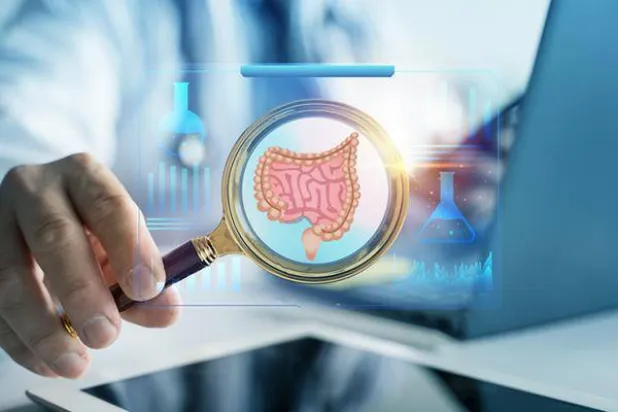
Colonoscopy, in which a doctor uses a special viewing instrument to examine the inside of the colon and rectum, remains the 'gold standard' because it allows the doctor to detect and remove polyps in a single procedure. Colonoscopy detects 95% of existing cancers in people undergoing the procedure.
However, colonoscopy requires prior bowel cleansing in a burdensome process (called 'prep'), which involves drinking large amounts of often bad-tasting liquids and spending hours in or near the bathroom. In recent years, bowel prep methods have become more convenient and tolerable, with better-tasting preparations and the adoption of a 'split-dose' option that does not require drinking 4 liters of liquid all at once.
At the same time, computer-aided diagnostic techniques have improved polyp detection, and doctors now spend longer examining the colon. Dr. Friedman said, 'All these factors together have enhanced colonoscopy in terms of appeal and effectiveness.'
Comfortable and convenient alternatives. Today, increasing alternatives to colonoscopy are available, offering greater comfort and convenience, though they are generally not as effective as colonoscopy in detecting abnormalities, and they also have other drawbacks. Below are the options available for people considered at average risk for colorectal cancer:
• Home stool tests: Available in two types:
- Annual fecal immunochemical test (FIT): Uses antibodies to detect invisible blood in stool.
- Stool DNA test: Looks for both blood and genetic markers of cancer cells in the stool. The newest option, Cologuard Plus, has shown about 94% accuracy in clinical trials. This test should be repeated every three years.
• Home tests: Dr. Friedman explained that they are convenient and noninvasive, but they remain less effective at detecting polyps.
• Blood test in clinic: In July 2024, the U.S. Food and Drug Administration approved the first blood test for colorectal cancer screening. Called Shield, it detects fragments of tumor DNA circulating in the blood and can be done during a routine doctor visit. The test's accuracy in identifying colorectal cancer is about 84%. Dr. Friedman described Shield as an attractive option because it does not require stool collection or bowel prep. However, like stool tests, it cannot accurately detect polyps, let alone remove them as colonoscopy can.
He added, 'If any of these alternative tests are positive, you will need to undergo a colonoscopy, which you were perhaps trying to avoid. I prefer to think of colonoscopy as a "comprehensive service."'
• Choosing the right test. Dr. Friedman explained that the best screening test is the one you will actually undergo. While your choice may be influenced by factors such as ease of procedure, frequency, and accuracy, any prior experience with tests — such as colonoscopy prep — is also likely to play a role. He added, 'If you have a family history of colorectal cancer or had high-risk polyps at a young age, you should really get a colonoscopy.'
* Harvard Health Letter 'Men's Health Watch'
- Tribune Media Services
"); googletag.cmd.push(function() { onDvtagReady(function () { googletag.display('div-gpt-ad-3341368-4'); }); }); }
Original source: Asharq Al-Awsat



Comments (0)
Be the first to comment.